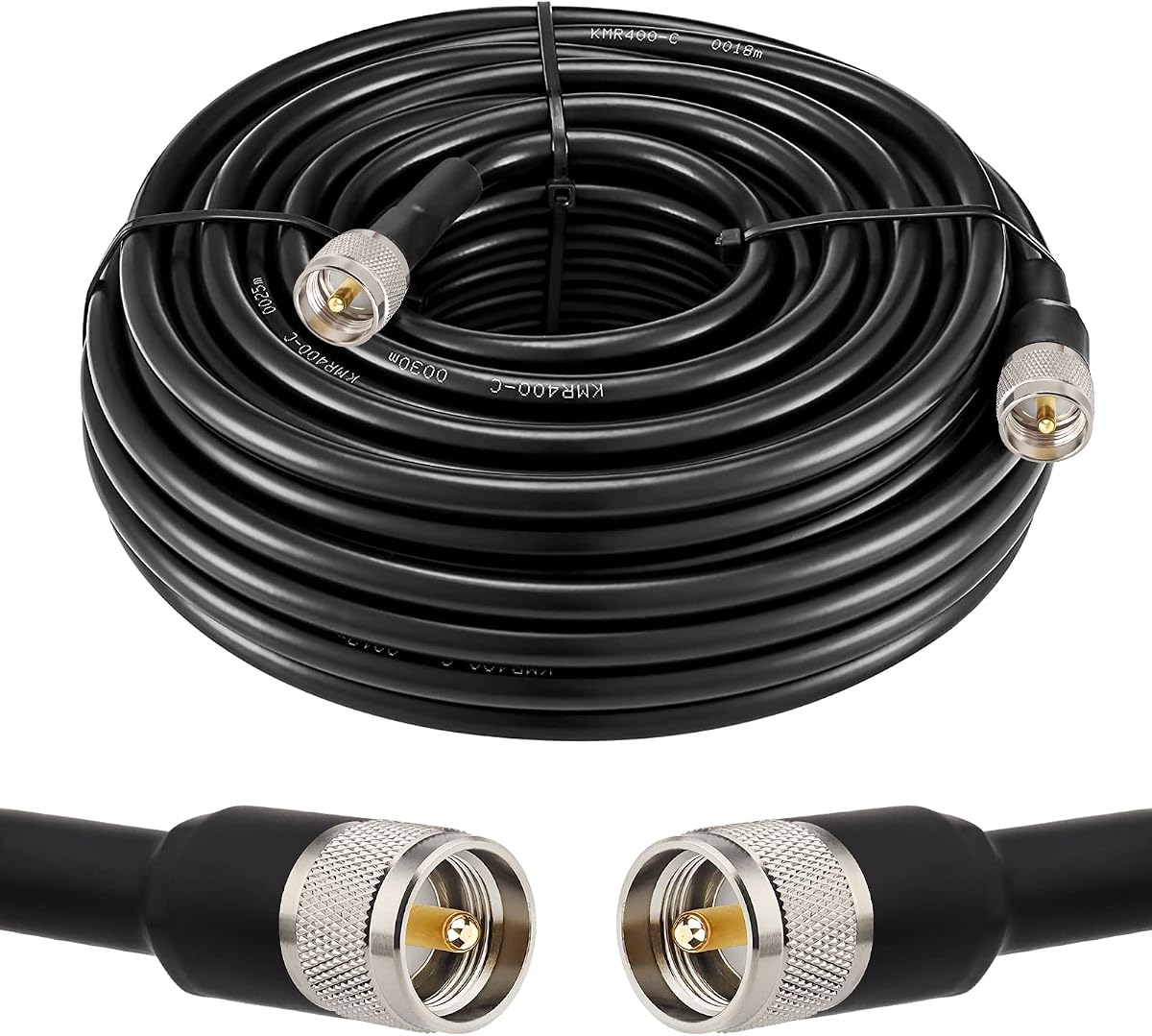
XRDS 100FT KMR 400 UHF Coaxial Cable
4.7Editor score
Large-diameter KMR400 construction
Clamp-style PL259 connectors
Adhesive-lined heat shrink
UV-resistant outdoor jacket
Best coax cables for ham radio compared by loss, length, shielding, connectors, construction, and compatibility to help you choose the right 50-ohm cable.
Coax cables for ham radio carry every signal between the transceiver, antenna, tuner, and measuring equipment, so their construction can shape an entire station’s performance. A quality cable should provide consistent 50-ohm behavior, effective shielding, secure connectors, manageable loss, and a jacket suited to its installation environment.
The ten options in this guide cover common RG8X, RG8, KMR400, RG58, and RG316 cable designs at lengths ranging from 15 to 100 feet. We compared their stated conductor materials, shielding, loss characteristics, impedance, connector design, strain relief, flexibility, and intended radio applications, while keeping practical installation needs in view.
Each review reveals what distinguishes its cable, from short jumpers for compact setups to heavier runs for base stations and mobile installations. Ratings reflect the supplied customer feedback, while current prices and availability can change, so readers should verify those details before making a final purchasing decision.
4.7Editor score

4.7Editor score

4.5Editor score
This side-by-side comparison highlights each cable’s length, core construction, shielding approach, connector system, and most suitable installation, making it easier to match a cable to a base station, vehicle, compact radio setup, or measurement chain.




This RG8X cable earns the Editor's Choice position because it combines a substantial 17AWG pure-copper conductor, double shielding, molded PL259 connectors, and a 50-foot length in a broadly useful package. Its 4.6 rating reflects generally favorable customer feedback, while the supplied specification makes it particularly suitable for CB and ham radio stations that need more conductor size than RG58 provides.
We may earn a commission when you buy through this link, at no additional cost to you.
The central advantage is the 17AWG pure-copper inner conductor. The manufacturer positions this as an upgrade for high-powered applications and for users who want a lower-loss path over longer runs. A pair of shielding layers helps prevent signal leakage and external interference from entering the transmission line, while the nickel-plated brass connector bodies and gold-plated center contacts are intended to provide stable, corrosion-resistant connections.
Its flexible PVC jacket is a practical benefit for routing through a radio room, around a mast, or along a vehicle installation. The manufacturer specifies indoor and outdoor suitability and says the cable can bend and remain securely supported. It is also compatible with antenna analyzers, tuners, dummy loads, SWR meters, transceivers, and other 50-ohm RF equipment, giving it more flexibility than a cable built for only one task.
The main compromise is cable size. A 50-foot RG8X run is less convenient than a short jumper for a compact radio, and it is bulkier than RG58 for tight vehicle routing. Even so, this cable is a balanced recommendation for operators who want solid conductor size, robust connectors, and dependable shielding without moving to the largest cable in this guide.
The 17AWG pure-copper core provides a sound reason to consider this cable when signal loss and power handling matter. It is a useful middle ground between thin, highly flexible RG58 and the larger KMR400 designs, particularly for common 50-ohm ham radio installations.
Fully molded nickel-plated brass PL259 connectors help resist connector movement, while the flexible PVC jacket supports indoor and outdoor routing. Care should still be taken around sharp bends and attachment points because every coax run is only as dependable as its weakest connection.
We may earn a commission when you buy through this link, at no additional cost to you.
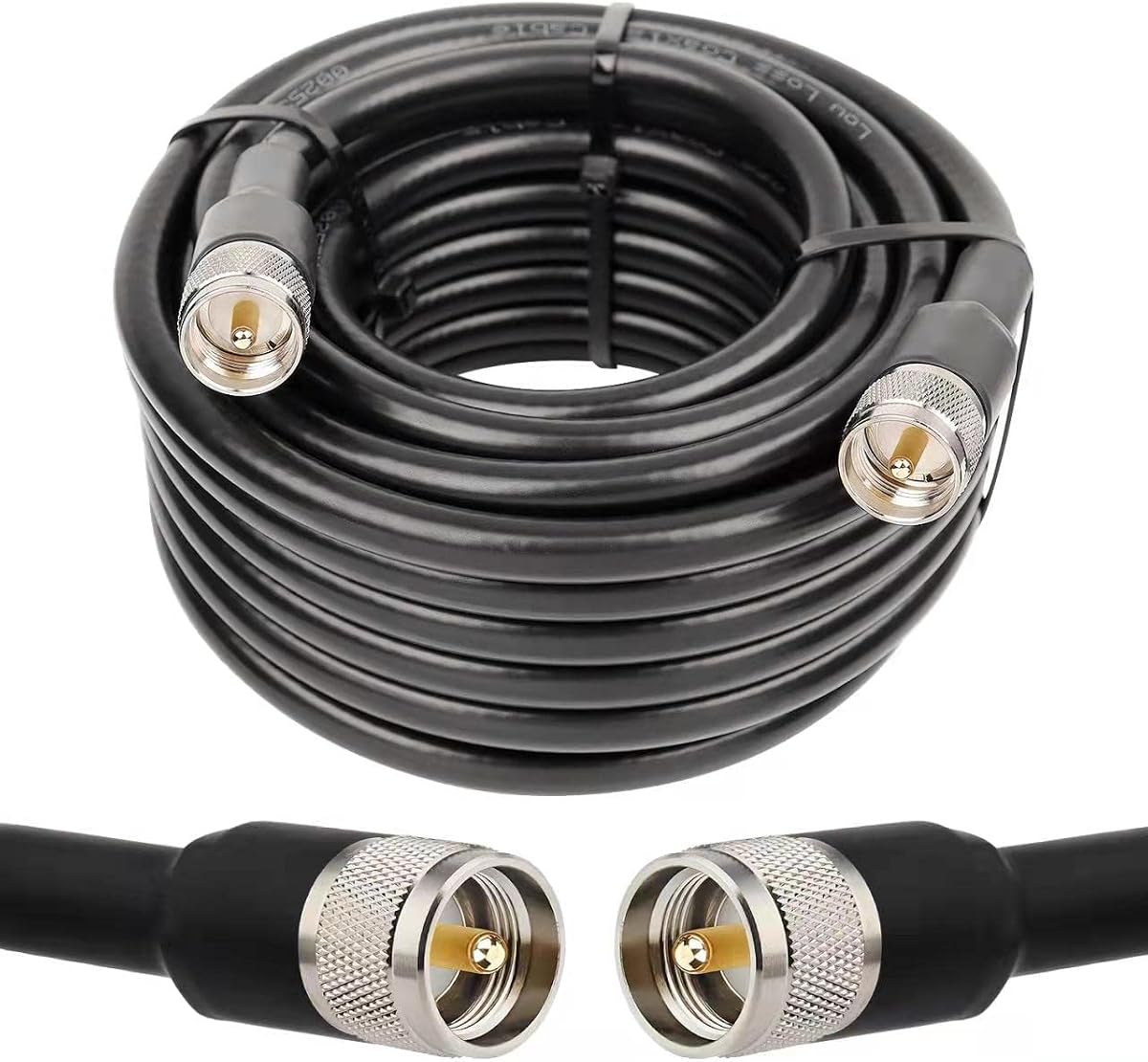
This MOOKEERF KMR400 cable combines a 4.7 rating with unusually specific performance information, including stated loss of less than 2.8 dB at 450 MHz and SWR at or below 1.25. That combination of low-loss construction, a copper-clad aluminum center conductor, and a 50-foot length makes it a strong choice for ham radio, VHF, and equipment interconnection applications.
We may earn a commission when you buy through this link, at no additional cost to you.
Its outer conductor combines aluminum foil with tinned copper braid, creating a layered shield intended to protect the signal over extended runs. The manufacturer also highlights the center conductor's resistance to oxidation and the connector shell's nickel-plated copper construction. These details matter for outdoor stations where moisture, temperature changes, and long-term metal exposure can undermine less robust connections.
One particularly thoughtful feature is the 2.2-inch adhesive-lined heat-shrink section at each connector-to-cable joint. Its stated purpose is to support the professional-style bond and reduce the chance that a connector will pull free. The waterproof PVC jacket and corrosion-resistant connector shell further reinforce its suitability for exterior use.
This is not the smallest cable in the list, and the copper-clad aluminum conductor means buyers should not mistake it for a solid-copper model. Even so, the combination of stated loss data, layered shielding, substantial strain relief, and broad compatibility makes it an excellent all-around choice, particularly for a fixed station or marine VHF installation.
The stated loss and SWR figures give buyers more than a general low-loss description. They also make this cable easier to compare with other 50-foot runs, although actual station results will depend on the antenna, connectors, environment, and the quality of the complete installation.
The extended adhesive heat-shrink tubing is designed to strengthen the point where strain and moisture commonly challenge a coax connection. It is especially relevant for permanent rooftop, mast-mounted, and vehicle installations where opening and reconnecting the cable is uncommon.
We may earn a commission when you buy through this link, at no additional cost to you.
The STEREN RG8X cable is a 4.7-rated, 50-foot 50-ohm cable designed to sit between lightweight RG58 and larger LMR400-class alternatives. Its molded PL259 connectors and broad compatibility make it a natural middle choice for CB, ham radio, HF antennas, antenna tuners, switches, SWR meters, and other common station equipment.
We may earn a commission when you buy through this link, at no additional cost to you.
RG8X is presented as a step up from RG58 for high-powered applications and installations that benefit from a larger conductor. A 50-ohm cable also fits the large majority of modern amateur radio transceivers, antenna tuners, analyzers, and dummy loads without an impedance-changing accessory. The molded connector shells add mechanical consistency at both ends of the run.
The supplied listing includes some inconsistent wording, including a reference to a six-foot cable despite the product title identifying a 50-foot length. Buyers should confirm the package contents and connector configuration before ordering. It is also less specialized than cables with clamp-style connectors and extended adhesive-lined sealing.
Despite those caveats, the product's 4.7 rating, flexible range of applications, and straightforward 50-foot format make it an attractive choice for a home base station, a vehicle installation, or a temporary field setup. It is particularly useful for operators who want a familiar RG8X run without committing to a very large cable.
RG8X gives operators a step beyond RG58 while remaining easier to route than the largest cables in the comparison. For common ham radio stations, that middle position often provides a more manageable balance of signal capability, cable size, and connector weight.
The listed compatibility with tuners, switches, meters, analyzers, base antennas, and portable radios makes this cable versatile for temporary and permanent setups. Matching the true 50-ohm system remains essential for predictable operation.
We may earn a commission when you buy through this link, at no additional cost to you.
The G-PLUG 15-foot RG8X is the compact choice in this guide, designed for ham radio, CB equipment, SWR meters, antenna analyzers, and other 50-ohm RF systems. Its 4.5 rating is the lowest among the ten products, but the construction details show a sensible short-run cable with a pure-copper core and double shielding.
We may earn a commission when you buy through this link, at no additional cost to you.
A 15-foot length is especially useful when the radio and antenna are close together. It reduces excess cable that must be coiled, concealed, or supported, and it is easier to transport for field days, portable stations, and temporary installations. The flexible PVC jacket also makes the short run simpler to route around desks, shelves, windows, and compact radio-room layouts.
Its connector assembly uses nickel-plated brass bodies and gold-plated center pins. The stated goal is a stable, corrosion-resistant connection, while the double shielding is designed to reduce external interference and signal leakage. Those features make the cable more than a simple short lead; they preserve much of the reasoning behind larger RG8X and KMR400 products.
The main limitation is reach. A 15-foot cable cannot accommodate the separation created by a tall rooftop or mast antenna without adding an extension, adapter, or different cable. The rating is also modest compared with the other choices. Even so, for a nearby antenna, bench work, or compact station, it offers a focused solution without unnecessary length.
A shorter lead can make an installation look and operate more cleanly by eliminating the loose loops that often accompany overlong jumpers. It also reduces the total surface area where the cable could be damaged or accidentally disconnected.
Dual shielding and metal connector bodies provide useful interference control for stations surrounded by computers, routers, switching supplies, or other electronics. Placement and grounding still influence overall noise performance.
We may earn a commission when you buy through this link, at no additional cost to you.
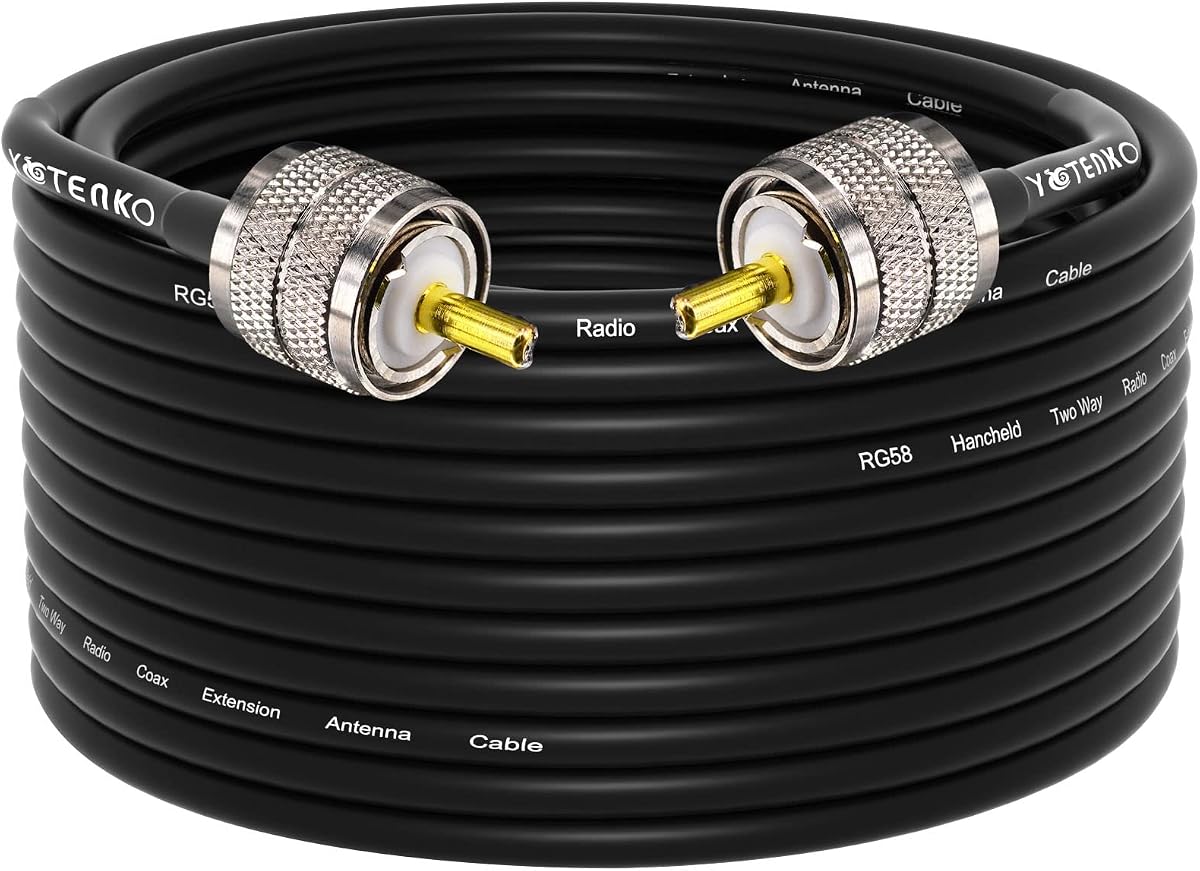
The YOTENKO 49.2-foot RG58 cable is built around flexibility and mechanical strain control. With a 4.6 rating, a 0.195-inch diameter, and pure bare-copper braid shielding, it is a practical option for mobile radio installations where a thicker RG8X or KMR400 cable would be difficult to route.
We may earn a commission when you buy through this link, at no additional cost to you.
Its most distinctive feature is the six-centimeter strain-relief section, substantially longer than the two-centimeter protection described for ordinary cables. The extended tubing is intended to distribute bending stress away from the UHF solder points, which can be valuable in cars, trucks, RVs, and field installations where movement near the connector is likely.
The bare-copper braid offers effective interference rejection while retaining flexibility and good soldering characteristics. According to the supplied information, the cable is optimized for HF and VHF amateur radio bands, including 10-meter and 2-meter use, as well as CB radio within the stated 1–300 MHz range.
The inherent trade-off is that RG58 uses a smaller conductor than RG8X or KMR400, so it is less attractive for long, high-power runs. However, for short mobile paths, temporary antennas, and routes through narrow conduits, this cable's flexibility can matter more. It is best understood as a routing specialist rather than a maximum-capability feed line.
A thinner coax can be the better choice when a route crosses a window frame, enters a vehicle conduit, or passes through a tight equipment opening. Easier routing also reduces the force applied to solder joints when the radio or antenna moves.
The extended heat-shrink section targets one of the most vulnerable points in a handmade or assembled cable. It does not make connectors immune to damage, but it can help limit the transfer of bending stress into the connection.
We may earn a commission when you buy through this link, at no additional cost to you.
The exgoofit 100-foot RG8X cable addresses stations that need a long run without moving to the larger KMR400 format. Its 4.6 rating, 16AWG tinned pure-copper center conductor, and double-shielded design provide a persuasive combination of reach, conductor size, and interference control.
We may earn a commission when you buy through this link, at no additional cost to you.
The center conductor uses 19 strands of 0.3-millimeter tinned pure copper. The manufacturer positions this as an improvement over a common 17AWG RG8X conductor and as stronger and more durable than average CB antenna cables. A flexible PVC jacket is specified for indoor and outdoor use, allowing the cable to function across a range of standard 50-ohm RF applications.
The connector system uses fully molded nickel-plated brass PL259 bodies with gold-plated center pins. This is a conventional and recognizable configuration for CB, ham radio, antenna analyzers, tuners, dummy loads, SWR meters, and transceivers. The design also makes the cable suitable for Jeep Wrangler CB installations.
A 100-foot run is only appropriate when the antenna is genuinely distant from the radio equipment. It adds weight, requires support along its route, and creates a larger loss budget than a shorter cable. Even so, operators seeking a long RG8X run will find a 16AWG core, double shielding, and a two-year warranty to be meaningful advantages.
The 16AWG conductor gives this cable a clear position between ordinary RG8X and much heavier coax designs. It may be especially useful when the run is long enough to need a larger conductor but a full KMR400 cable is unnecessary.
The waterproofable PVC jacket supports outdoor use, but a long cable should still be secured at regular intervals and routed so it is not pulled taut. Proper support protects connectors and reduces movement at vulnerable attachment points.
We may earn a commission when you buy through this link, at no additional cost to you.
The XRDS 100-foot KMR400 is the premium selection for operators who want a large-diameter feed line for a substantial installation. Its 4.7 rating and construction details—including a copper-clad aluminum center conductor, 0.41-inch diameter, clamp-style PL259 connector, and adhesive-lined heat shrink—distinguish it from conventional jumper cables.
We may earn a commission when you buy through this link, at no additional cost to you.
A larger cable diameter permits a larger center conductor, which the manufacturer says supports better signal retention than RG58 or 240-type coax. The flexible UV-resistant RF-PVC jacket is designed for long-term outdoor exposure in harsh environments. These characteristics make the cable a logical choice for base stations, elevated antennas, marine applications, and other extended routes.
The connector design receives particular attention. Rather than relying on a crimp-style attachment that may be easier to pull away, the product uses a clamp-style PL259 connector. Adhesive-lined heat-shrink tubing, stated as up to 2.2 inches long, seals the cable-to-connector assembly and is intended to keep moisture and contaminants away from the termination.
Its disadvantages are the practical ones associated with large coax. It is heavier and less flexible than RG58, so routing through confined spaces is more difficult. The listed applications are extremely broad, covering ham radio, VHF, HF, marine antennas, tuners, analyzers, surge protectors, scanners, dummy loads, and more, but users still need matching 50-ohm equipment and the correct connector interface.
Cable diameter is not a decorative specification. A larger body can accommodate more conductive material and preserve signal more effectively over long distances, which is valuable when the antenna is mounted on a tower, mast, roof, or elevated structure.
The clamp-style approach and adhesive-lined sealing are intended to make a permanent installation more resistant to separation and moisture intrusion. These are meaningful features for exposed runs where the cable will rarely be disconnected.
We may earn a commission when you buy through this link, at no additional cost to you.
The MOOKEERF 50-foot RG8 cable is positioned as a heavy-duty jumper with low-loss construction, secure clamp-style connectors, and a stated loss below 1.5 dB at 450 MHz. Its 4.6 rating and wide range of listed applications make it a serious alternative to lighter RG58 leads and smaller RG8X jumpers.
We may earn a commission when you buy through this link, at no additional cost to you.
The cable uses a copper-clad aluminum inner conductor, aluminum foil, and a tinned copper braid. The manufacturer describes the RG8 construction as equivalent to LMR400 and RG8U, while the clamp-style connector and 2.2-inch adhesive-lined heat shrink are intended to resist separation and seal the termination from moisture and contaminants.
Nickel-plated copper connector shells add corrosion resistance, and the high-quality PVC jacket is specified for outdoor conditions. Together, these features are aimed at stations where the cable will be installed once and left in service, particularly where long exposure, weather, and connector strain are concerns.
As with any large coax, bulk and weight complicate routing compared with RG58. The center conductor is copper-clad aluminum rather than solid copper, and the stated performance figures are manufacturer specifications rather than independent test results in this guide. Even so, the combination of 50-foot length, layered shielding, clamp connectors, and extended sealing makes this a robust general-purpose choice.
The stated loss figure gives this cable a clear performance target, while the RG8 body provides a larger conductor and shield than many lightweight alternatives. The complete installation still determines how much of that capability reaches the antenna.
Clamp-style connector attachment and extended adhesive-lined heat shrink are particularly useful when a cable is mounted permanently. The sealing system is intended to protect against water and other contaminants without requiring frequent connector maintenance.
We may earn a commission when you buy through this link, at no additional cost to you.
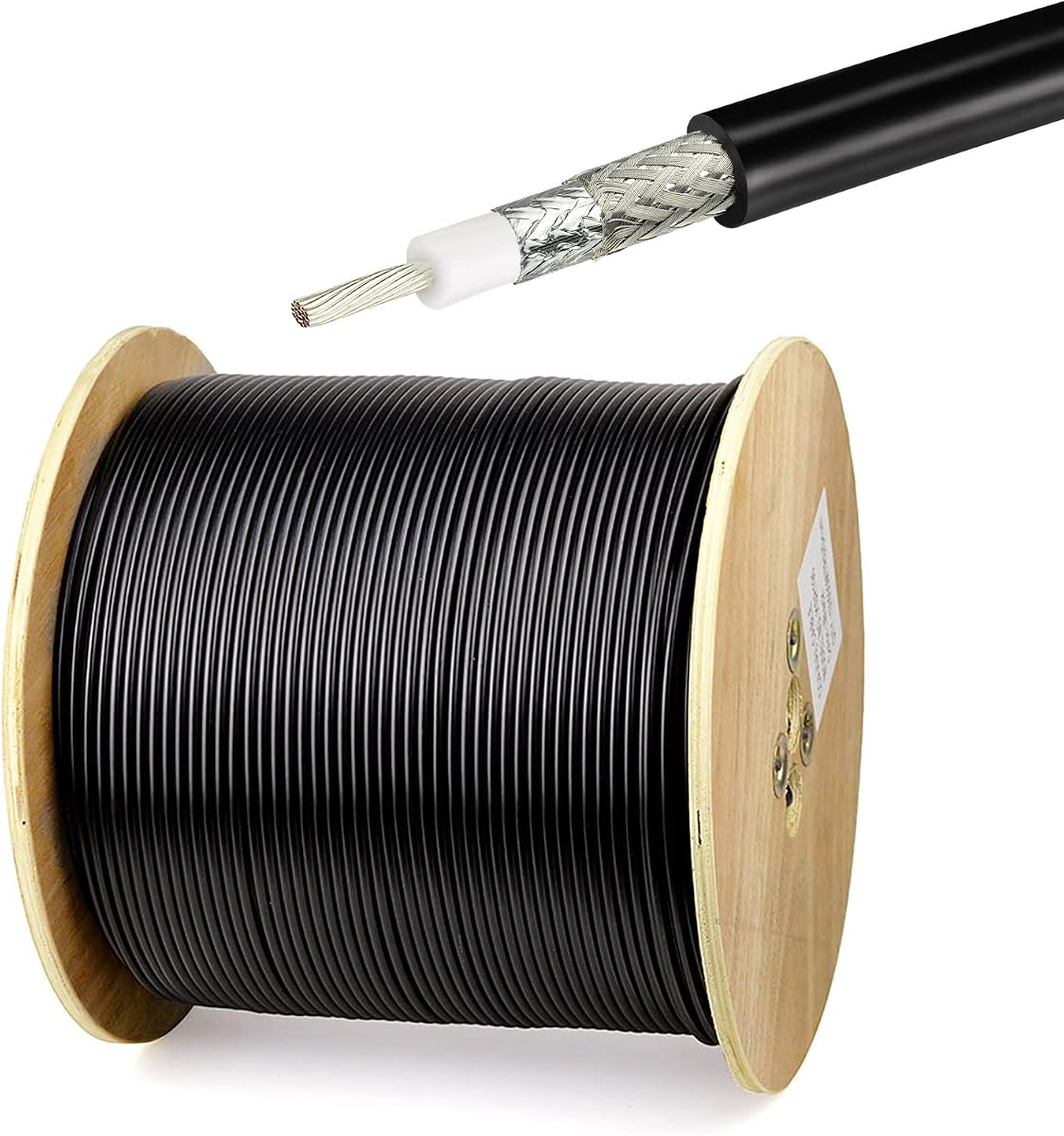
The XRDS RG316 is the most unusual selection in this guide. Rather than arriving as a conventional PL259-to-PL259 antenna jumper, it is a 50-foot, 0.1-inch-diameter coaxial cable intended for custom antenna-cable construction. Its 4.8 rating is the highest among the selected products, and the thin silver-plated copper construction is designed for demanding interconnection work.
We may earn a commission when you buy through this link, at no additional cost to you.
The inner conductor is stranded silver-plated copper, joined by a silver-plated copper braid. The stated maximum frequency is 6 GHz, with attenuation at or below 0.45 dB per foot at 3 GHz and VSWR at or below 1.15. The outer jacket is Teflon, selected for flexibility and resistance to harsh outdoor environments.
Because the product is bare coax rather than a terminated RF jumper, it suits operators who need to crimp their own SMA or other suitable connectors. The manufacturer specifically mentions building antenna cables with SMA connectors, making this relevant for compact VHF, UHF, ham radio, 4G LTE, ADS-B, Wi-Fi, and balun applications.
This specialization is both its strength and limitation. It provides exceptional flexibility and a strong stated specification profile, but it is not the ready-to-install PL259 cable that many ham radio operators expect. Buyers need the correct connectors, crimping tools, and assembly skills, and should verify that the selected connector is appropriate for the cable and frequency.
RG316 is particularly useful when a standard prefabricated jumper will not fit the required route or connector combination. It gives experienced builders a way to create a compact, purpose-specific lead with the proper termination.
The stranded silver-plated copper core supports repeated flexing, while the Teflon jacket provides a durable, weather-resistant exterior. Connector quality and assembly technique remain essential because a small cable can still suffer from a poorly made termination.
We may earn a commission when you buy through this link, at no additional cost to you.
The Superbat RG8X 50-foot cable offers a 4.7 rating, a stated SWR below 1.15, and a flexible waterproof PVC jacket. It is presented as a step up from RG58 for high-powered applications and for operators who want a low-loss cable suitable for common 50-ohm RF systems.
We may earn a commission when you buy through this link, at no additional cost to you.
The manufacturer says the cable can be bent and strapped without introducing interference, which is an important installation concern for runs passing near metal structures, masts, and building surfaces. It also states compatibility with cell boosters, Wi-Fi repeaters, CB ham radio equipment, antenna analyzers, and SWR meters.
Because the product title does not explicitly identify the supplied connector configuration, even though the description lists a range of connector standards, buyers should check the package details carefully. The stated compatibility does not mean every connector type is physically fitted. A ham radio purchaser should verify that the delivered cable has the PL259 or other interface required by the radio and antenna.
The manufacturer also mentions professional RF cable production and customization, including different lengths. For the standard package here, the included 50-foot RG8X lead remains a useful general-purpose option. Its strong rating, low-loss positioning, and easy-routing jacket are appealing, provided the connector format matches the station.
A flexible jacket makes it easier to follow walls, enter enclosures, and secure a run without forcing sharp bends. That flexibility is especially useful for temporary installations and stations with imperfect routing paths.
The description lists compatibility with several connector families, but the product title does not clearly name the fitted connectors. Verifying the actual male and female ends is essential because connector format cannot be changed by software or a simple adapter in every case.
We may earn a commission when you buy through this link, at no additional cost to you.
Selecting a ham radio feed line involves balancing electrical performance, mechanical strength, connector compatibility, and the physical demands of the installation. The right cable for a nearby base antenna may be entirely wrong for a rooftop tower, vehicle, or portable operation.
Choose a cable that matches the station's complete 50-ohm system and terminates with the correct connector on both ends.
Measure the actual route, then choose the shortest practical length and the cable size suited to the frequency and power demands of that route.
Prioritize a conductor and body size appropriate to the run rather than treating one material as universally superior.
Look for layered shielding when the route passes through electrically noisy areas, and ensure every connector is clean, secure, and properly assembled.
Prioritize secure connector retention, corrosion resistance, and strain relief that matches whether the cable is permanent or portable.
Map the route before choosing diameter, especially around vehicle interiors, window frames, small enclosures, and mast-mounted hardware.
Use an outdoor-rated cable and support it so wind, sunlight, moisture, and movement do not stress the jacket or connectors.
Select the cable after considering where each end will sit, how far apart they are, and which equipment must remain connected in the signal path.
Before installing a new coax, confirm that the cable length matches the route without creating unnecessary slack, that both connectors match the radio and antenna, and that the complete antenna system is intended to operate at 50 ohms. Inspect the jacket for damage and make sure the connectors are clean, tight, and free of moisture. Where possible, plan the route before attaching the cable so it does not need to be sharply bent or pulled around hardware.
Support the cable at regular intervals with appropriate weather-resistant hardware, particularly on towers, roofs, and vehicle mounts. Avoid crushing it beneath roof panels, pinching it in doors, placing sharp bends next to connectors, or allowing it to rub against metal edges. Keep separate from high-current wiring where practical, and maintain enough separation to minimize unintended coupling. For a permanently installed run, inspect connector entries and strain relief periodically, especially after severe weather or antenna maintenance.
When disconnecting a cable, do not twist the center conductor or pull it from the connector body. Support the plug and use the connector's intended removal method, then reinstall it carefully so the mating surfaces remain clean. Treat any damaged cable as a complete feed-line component: water inside the jacket, corroded contacts, or a loose shield can degrade the entire station even when the radio and antenna are in good condition.
For most fixed 50-ohm ham radio stations, RG8X is a practical middle ground, while RG8 or KMR400-class cable is better suited to longer or demanding runs. The ideal choice depends on antenna height, route length, frequency, transmitter power, connector requirements, and how much cable bulk you can accommodate. Measure the actual path and avoid adding excess length that creates unnecessary loss and physical strain.
RG8X generally uses a larger center conductor than RG58, making it a better fit for longer runs and higher-power applications. RG58 remains valuable when flexibility, lower weight, and easier routing are the priorities, especially in vehicles and temporary installations. For a short base-station jumper near the radio, either can work if the entire system is properly matched and well connected.
Loss depends on cable type, frequency, and construction, so no single number applies to every model. The supplied product information gives specific loss claims for the 50-foot MOOKEERF KMR400 and RG8 cables, while other products are described more generally as low loss. Compare the manufacturer's frequency-specific figures and allow additional budget for connectors and any adapters in the installation.
A PL259 termination is common on 50-ohm amateur radio equipment, but the cable still needs the correct impedance, frequency capability, conductor size, and connector construction. Also verify whether a listed product includes male-to-male plugs or another configuration. The Superbat listing mentions several compatible connector standards, so buyers should confirm the physical connectors included before ordering.
A heavier cable is often sensible when the rooftop or tower run is long, elevated, exposed to weather, or used with a powerful transmitter. RG8X can serve many such installations, while KMR400 provides a larger and more substantial option. Connector quality, secure mounting, weatherproof entry points, and careful strain relief are just as important as the cable body.
RG316 can be appropriate for compact interconnections, custom antenna cables, and some VHF or UHF applications when the length, frequency, and power are within its design limits. The XRDS RG316 in this guide is a bare coax intended for custom connector termination rather than a ready-made PL259 jumper. Experienced users should select the proper connector and use sound crimping or soldering practices.
Choose connectors and heat-shrink systems designed for the outdoor environment, keep mating surfaces clean before installation, and avoid leaving unused connector ports exposed. Flexible adhesive-lined heat shrink and molded or clamp-style connector bodies can improve resistance to water and mechanical strain. A weatherproof enclosure or additional protection may be worthwhile where the run is directly exposed to rain, spray, or persistent condensation.
A well-chosen cable can reduce avoidable loss and improve mechanical reliability, but it cannot compensate for a poor antenna, inadequate grounding, mismatched impedances, noisy equipment, or an incorrect antenna length. The antenna system and every connection in the signal path influence final performance. Use a quality feed line as one part of a coherent installation rather than treating it as a substitute for good radio practices.
The STEREN RG8X stands out as the most versatile general recommendation, combining a 4.7 rating, a 50-foot format, molded PL259 connectors, and broad 50-ohm station compatibility. The MOOKEERF 50-foot KMR400 offers detailed low-loss specifications and robust heat-shrink sealing, while the XRDS 100-foot KMR400 is the premium choice for long, exposed, mechanically demanding installations. For a compact or budget-conscious setup, the G-PLUG 15-foot RG8X provides pure copper and double shielding without excess length.
The most important buying priority is matching the cable to the installation rather than simply choosing the thickest option. Measure the route, verify both connector ends, consider the frequency and transmitter requirements, and check whether flexibility or permanent mechanical security matters more. The YOTENKO RG58 is a strong mobile-routing choice, the exgoofit RG8X provides a long run with a substantial conductor, and the XRDS RG316 serves specialized custom-built interconnections where extreme thinness is valuable.
Ratings and product specifications provide a useful starting point, but current prices, availability, and package details can change. Before purchasing, confirm the cable length, fitted connector configuration, impedance, and intended applications. A final check of the product listing will help prevent an avoidable mismatch and ensure that the chosen coax integrates cleanly with the rest of the ham radio station.