
Smart Watch for Women, Health Monitor Fitness Watch for Android iPhone 2Band
5.0Editor score
Blood oxygen and heart tracking
Bluetooth calls and notifications
Up to 30-day battery claim
A smartwatch with pulse oximeter can turn everyday health tracking into a convenient wrist-based routine, but the strongest models differ in accuracy, battery life, outdoor tools, and app support. The best choice depends on whether your priority is affordable wellness monitoring, navigation, training guidance, or seamless integration with your phone.
We compared all ten models using the information available from their product listings. The list covers built-in blood-oxygen monitoring alongside heart-rate and sleep tracking, with additional attention given to fitness modes, water resistance, battery claims, notifications, calling, GPS, and platform compatibility.
Each review identifies the product's strongest use case and trade-offs, while the comparison table makes the differences easier to scan. Features can vary by software update, phone, region, and subscription, so current availability, pricing, and manufacturer guidance should be checked before making a final purchase.
5.0Editor score

4.3Editor score

4.2Editor score
As an Amazon Associate we earn from qualifying purchases.
The table below compares each watch by its most decision-relevant attributes, including pulse oximetry, workout support, connectivity, and battery expectations. Specifications reflect the supplied product information and may change with settings, usage, and software updates.
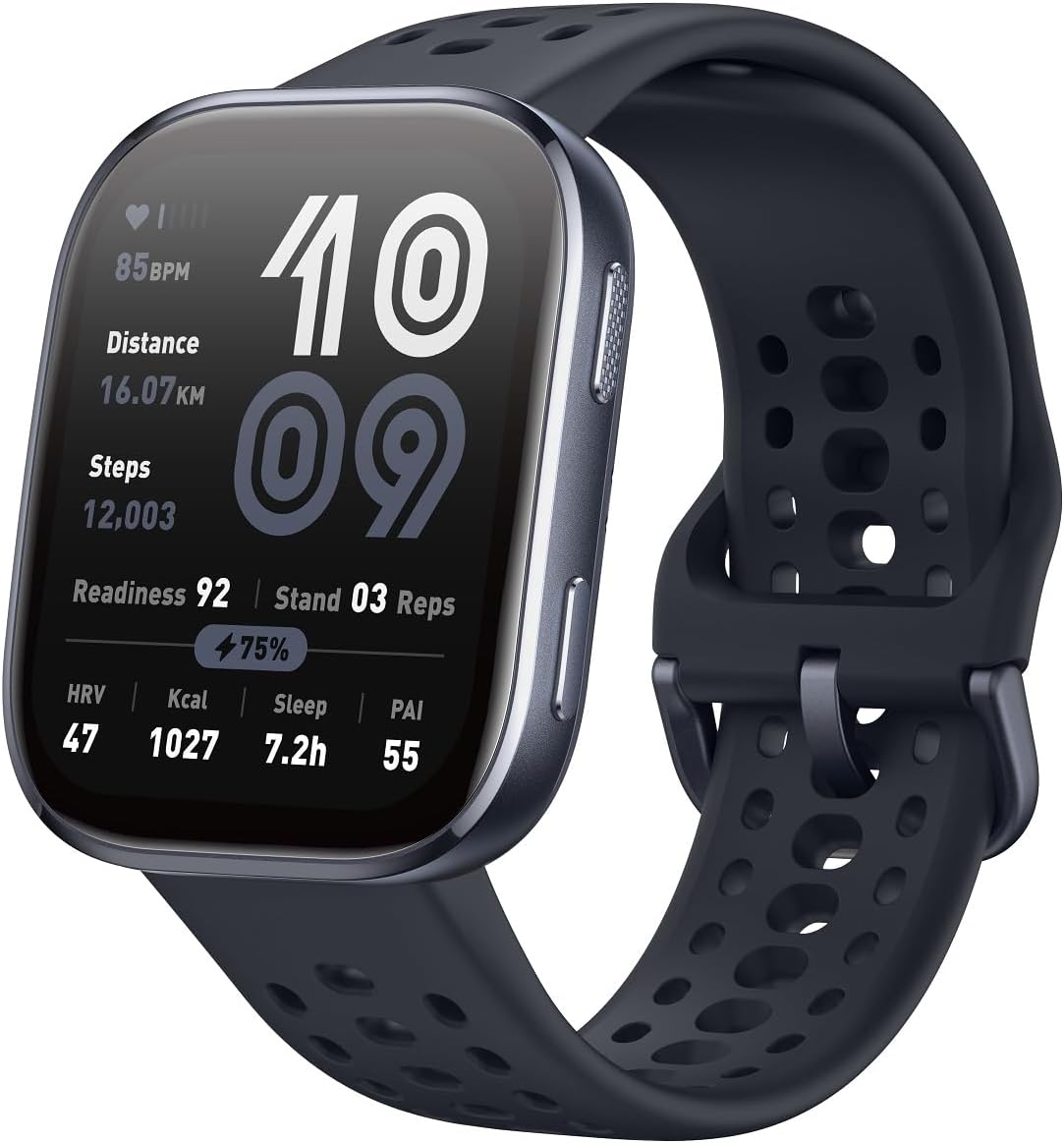


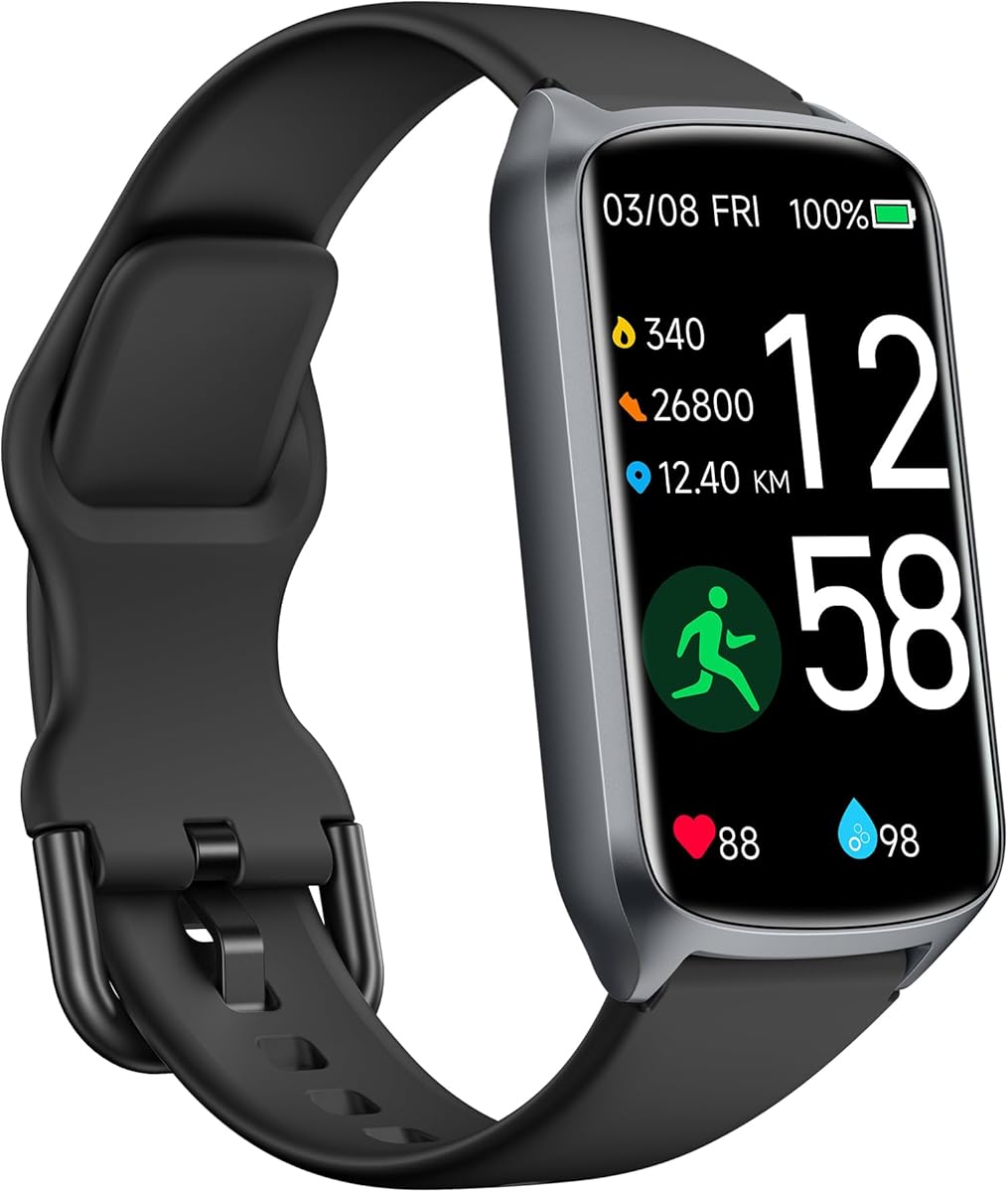


The Amazfit Bip 6 is a versatile smartwatch with pulse oximetry that combines a large, bright AMOLED display, GPS navigation, extensive workout tracking, and a strong battery proposition. It carries a 4.2 rating, making it a solid all-around choice for users who want meaningful health data without paying for the most advanced smartwatch platform.
We may earn a commission when you buy through this link, at no additional cost to you.
Its headline advantage is the combination of a 1.97-inch AMOLED screen and up to 14 days of advertised battery life. The display should be easy to inspect during workouts and daily navigation, while the battery claim reduces the likelihood of frequent charging. Free downloadable maps, turn-by-turn directions, and support for five satellite systems strengthen its value for runners, walkers, and hikers.
The health suite covers real-time heart rate, sleep, blood oxygen, and stress, alongside 140-plus workout modes and personalized AI coaching. A 50-meter water-resistance rating is suitable for many aquatic activities, although it is not equivalent to the 5 ATM ruggedness claimed by some alternatives. As with all optical wrist sensors, readings should be treated as estimates rather than medical measurements.
This is the strongest recommendation for an active buyer who wants broad functionality in a lightweight package. It suits users who prioritize navigation, display quality, workout variety, and battery life over advanced smart features such as voice response or richer calling controls. The Bip 6 is especially attractive for iOS and Android users seeking a capable general-purpose fitness watch.
Continuous heart-rate, blood-oxygen, sleep, and stress monitoring gives the Bip 6 a useful daily baseline. Reviewing trends in the companion app can reveal changes in recovery or routine, while the watch's one-tap access encourages more consistent check-ins.
Built-in GPS, downloadable maps, turn-by-turn directions, and 140-plus workout modes make the watch practical for both outdoor exploration and varied training. Its long battery claim is especially helpful during long days and multi-event training weeks.
We may earn a commission when you buy through this link, at no additional cost to you.
This 1.83-inch smartwatch focuses on accessible everyday fitness and communication, earning a 4.9 rating. Its large HD touchscreen, Bluetooth calling, notifications, and 130-plus sports modes make it appealing for people who want a multifunctional companion without a specialized outdoor or premium health ecosystem.
We may earn a commission when you buy through this link, at no additional cost to you.
The watch tracks heart rate, sleep duration, steps, and other daily activity while supporting running, cycling, yoga, hiking, gym work, and ball games. Bluetooth calling allows users to answer or place calls from the wrist, while compatibility with iOS and Android keeps it relevant across different phone ecosystems. IP68 protection is suitable for sweat, rain, splashes, and routine hand washing.
The principal limitation for this guide is that the supplied product information does not explicitly confirm a pulse oximeter or blood-oxygen sensor. It should not be selected on the assumption that it measures SpO2, and buyers should verify that specification in the current listing and manual. GPS is also not confirmed, making it less attractive for users who require standalone route tracking.
Despite that limitation, it is a capable everyday option for people who prioritize calls, notifications, a large display, and many activity profiles over advanced recovery metrics. It may suit students, commuters, and casual fitness users. Those specifically seeking a smartwatch with pulse oximeter should choose a model whose blood-oxygen measurement is explicitly documented.
Bluetooth calling and message alerts are the watch's most distinctive everyday advantages. They reduce the need to reach for a phone while commuting, working, or exercising, although call quality will depend on the phone, environment, and wireless connection.
With more than 130 workout modes and automatic daily metrics, the watch supports both structured exercise and routine movement tracking. It is a practical choice for users who want variety without navigating a complex training platform.
We may earn a commission when you buy through this link, at no additional cost to you.
The KOSPET Pulse 2 is the most purpose-built outdoor watch in this group, combining pulse oximetry with a rugged body, dual-band GPS, calling, and a walkie-talkie. Its 4.2 rating reflects a feature-rich design aimed at hikers, campers, cyclists, and users who regularly expose their watch to rain, dust, sweat, and rough handling.
We may earn a commission when you buy through this link, at no additional cost to you.
The watch has passed 12 SGS-tested MIL-STD-810H tests and includes 5 ATM and IP69 water protection. A built-in LED flashlight, digital compass, tide forecasts, moon phases, earthquake alerts, and walkie-talkie functionality add practical value beyond ordinary fitness tracking. These tools can improve preparedness when cellular service is limited or conventional maps do not cover every trail.
Dual-band L1 and L5 GNSS across six satellite systems is designed for faster acquisition and more precise positioning in challenging environments. The watch includes 170-plus sports modes, automatic activity recognition, route maps, heart rate, SpO2, stress, sleep, and one-tap health measurements. Battery life reaches up to 15 days in typical use, 11 days under heavy use, or five days with the always-on display.
This is the best choice for buyers who regularly hike, camp, cycle, or work outdoors and want more than basic wrist tracking. Its bulk and large feature set may feel excessive for casual users seeking a discreet dress watch. Even so, the combination of robust protection, independent positioning, and outdoor communication tools makes it the strongest specialist choice here.
The combination of MIL-STD-810H testing, Gorilla Glass, 5 ATM protection, and IP69 sealing gives the Pulse 2 a substantial durability advantage. It is better aligned with rough trails, rain, dust, and frequent outdoor use than many fashion-oriented fitness watches.
The flashlight, compass, tide forecasts, moon phases, earthquake alerts, and walkie-talkie extend the watch beyond pulse oximetry and workouts. These additions are particularly useful for campers and hikers, though active users should still carry appropriate safety equipment.
We may earn a commission when you buy through this link, at no additional cost to you.
The 1.58-inch health smartwatch is built around a broad monitoring dashboard, with a 4.9 rating and explicit support for blood oxygen, blood pressure, heart rate, and sleep stages. That density of wellness features makes it a logical option for users who want multiple health indicators visible from one device.
We may earn a commission when you buy through this link, at no additional cost to you.
Its high-resolution screen, always-on clock, full touch controls, and side button create a straightforward everyday interface. The watch records blood oxygen, heart rate, and blood pressure in real time, tracks light and deep sleep stages, and notes waking periods. It also monitors steps, distance, and calories across the day, with more than 120 exercise modes for specific activities.
Call and message notifications are supported for compatible iPhone and Android phones, adding basic smartwatch functionality without requiring the watch to handle every communication task. The IP68 rating is appropriate for daily wear, workouts, rain, and splashes. However, the supplied listing does not specify battery duration, built-in GPS, or direct calling, so those features should not be assumed.
The product is best recommended to buyers who want a large roster of health and activity measurements at a straightforward operating level. It may be especially useful for people comparing several wellness indicators over time. The key caveat is that wrist-based blood-pressure readings and other sensor estimates should inform routine tracking rather than replace validated medical equipment or professional advice.
Blood oxygen, blood pressure, heart rate, stress-adjacent activity patterns, and detailed sleep information are stored for review through the companion app. Having several indicators in one place makes the watch convenient for establishing a personal baseline.
More than 120 exercise modes, combined with automatic step, distance, and calorie tracking, make the watch flexible across daily routines. Users can move from casual walking to structured gym sessions while retaining broader activity totals.
We may earn a commission when you buy through this link, at no additional cost to you.
The Amzhero Health Fitness Tracker offers 24-hour monitoring across heart rate, blood oxygen, blood pressure, stress, and sleep, with a 3.7 rating. It is a feature-heavy alternative for buyers seeking broad wellness tracking in a simpler package, particularly when included interchangeable bands are useful for different fit preferences.
We may earn a commission when you buy through this link, at no additional cost to you.
Its health tools include heart rate, blood oxygen, blood pressure, stress, and sleep-quality analysis. Daily activity tracking records steps, distance, calories, miles walked, and active minutes. The listing describes support for 25 sports modes, including walking, running, mountaineering, swimming, yoga, hiking, cycling, and treadmill work, giving it more variety than a basic step counter.
A 1.47-inch color display handles notifications, customized goals, real-time weather, and music control. The 5 ATM water-resistance rating is robust for swimming, rain, and hand washing, while the 300mAh battery and 15-day standby claim reduce charging frequency. Compatibility extends to iPhone and Samsung devices through the Gloryfit app using BLE 5.0.
This tracker makes the most sense for cost-conscious users who want blood-oxygen monitoring, a sleep tracker, and multiple included bands without chasing advanced navigation. Its lower rating and less refined feature set are the main reasons to consider alternatives if sports analytics, premium materials, or a more established ecosystem are important. The one-year warranty and broad phone support offer additional reassurance.
The watch brings several useful wellness measurements into a straightforward 1.47-inch interface. It is an accessible option for users who want heart rate, blood oxygen, sleep, and activity data but do not need a large training ecosystem.
Two included bands allow users to change the fit or style, while 5 ATM protection supports swimming and demanding wet conditions. Custom fitness goals, vibration alerts, weather, and music control add useful everyday functions.
We may earn a commission when you buy through this link, at no additional cost to you.
The Reebok Pulse Smartwatch combines pulse oximetry, built-in GPS, and broad fitness-platform syncing in a conventional sports-watch design. It holds a 4.2 rating and is a particularly good fit for runners, cyclists, and swimmers who want health readings without relying on their phone for location data.
We may earn a commission when you buy through this link, at no additional cost to you.
The watch continuously monitors heart rate, SpO2, sleep quality, and stress patterns. More than 80 sport modes cover activities such as running, cycling, yoga, and swimming, while steps, calories, and distance are recorded automatically. Syncing with Google Fit, Apple Health, and Strava means users can keep their data in a familiar ecosystem or move it to a dedicated training platform.
Bluetooth 5.0 connectivity supports call, text, and app notifications with Android 9.0 and later or iOS 15 and later. A curved HD touchscreen, scratch-resistant glass, and IP68 rating help it handle daily wear, sweat, rain, and splashes. The battery can last up to 10 days in typical use after a two-hour charge, with GPS operating independently from the phone.
This is a worthwhile recommendation for fitness users who value portable tracking and ecosystem compatibility over voice-response features. Its 80-plus workout modes are fewer than the largest libraries, and it is not positioned as a rugged expedition watch. Nevertheless, the combination of SpO2, GPS, familiar app connections, and solid battery endurance makes it an easy-to-understand all-rounder.
The combination of continuous SpO2, heart rate, stress, sleep, and workout metrics creates a useful daily health record. Users can review trends without removing the watch, then use those insights alongside activity data.
Built-in GPS supports route capture without carrying a phone, and compatibility with Google Fit, Apple Health, and Strava broadens the ways data can be reviewed. Bluetooth 5.0 also provides standard wearable notifications.
We may earn a commission when you buy through this link, at no additional cost to you.
The 2-Band Women's Health Smartwatch has a 5.0 rating and combines blood-oxygen monitoring with calls, notifications, fitness tracking, and women-focused wellness tools. It is a strong budget-oriented choice for buyers who want a feature-rich companion for everyday use rather than a specialized professional sports watch.
We may earn a commission when you buy through this link, at no additional cost to you.
Health monitoring covers heart rate, blood oxygen, blood pressure, menstrual cycle, and automatic overnight sleep tracking from 10 p.m. to midnight. The watch also logs steps, distance, and calories and offers more than 100 sports modes. Bluetooth calling, caller identification, silent mode, social notifications, a voice assistant, and music control add a substantial smartwatch layer.
The 1.83-inch screen is supported by 200-plus watch faces, custom photo options, and two included bands. Its 1000mAh battery reportedly charges in two hours and can last up to 30 days with regular use. Pairing works with iOS 10 or later and Android 6 or later. IP68 protection handles sweat, rain, and hand washing, but the watch is not intended for diving.
This is the top budget selection for users who prioritize pulse oximetry, women-specific health features, communication, and exceptional advertised battery life. It is less suitable for trail runners who require confirmed standalone GPS, and wrist-based health readings should not be considered diagnostic. For general wellness, commuting, and varied workouts, however, it delivers an unusually broad feature set.
Menstrual-cycle monitoring, overnight sleep detection, and blood-oxygen measurements distinguish this model from a basic step tracker. These features can help users organize a broader view of rest, activity, and general wellness.
Direct calling, app alerts, a voice assistant, customizable faces, and two bands create a highly personalized everyday device. The claimed 30-day regular-use battery is the standout specification, although actual runtime depends on feature use and charging habits.
We may earn a commission when you buy through this link, at no additional cost to you.
The Garmin vívoactive 5 is a polished health and fitness smartwatch with a 4.3 rating, combining a bright AMOLED display, GPS, recovery guidance, and an extensive training ecosystem. It is an excellent general-purpose watch for users who value coherent health interpretation over simply collecting raw measurements.
We may earn a commission when you buy through this link, at no additional cost to you.
Body Battery monitoring estimates when the body is ready for activity or in need of rest using sleep, naps, stress, and workout information. A sleep score, personalized coaching, heart-rate variability status, stress tracking, fitness age, menstrual-cycle tracking, pregnancy tracking, and meditation add depth. The data is explicitly presented as close estimation rather than laboratory measurement.
More than 30 built-in indoor and GPS sports apps cover walking, running, cycling, HIIT, swimming, golf, and other activities. Preloaded workouts, Garmin Coach adaptive plans, custom workouts, recovery-time guidance, and wheelchair mode make the watch adaptable to different training needs. The battery lasts up to 11 days in smartwatch mode, or five days with the display always on.
This is the best recommendation for people who want a coherent fitness platform and long-lasting health guidance. One important qualification is that the supplied product information does not explicitly list a pulse oximeter, so buyers whose requirement is specifically SpO2 should confirm the sensor configuration. Subject to that check, the vívoactive 5 remains one of the most complete and balanced watches in the roundup.
Body Battery, sleep coaching, HRV status, and recovery metrics transform raw activity information into practical guidance. The result is more useful for planning a training day than a simple dashboard of isolated numbers.
Wheelchair mode records pushes rather than steps and includes activities designed for wheelchair users. More than 30 sport apps, preloaded workouts, custom training options, and Garmin Coach make the watch relevant across ability levels and routines.
We may earn a commission when you buy through this link, at no additional cost to you.
The Samsung Galaxy Watch 8 is a polished 40mm smartwatch with a 4.4 rating, emphasizing sleep coaching, running feedback, assistant functions, and a refined user interface. It is a compelling choice for Android users who want a versatile wearable with a modern interface and deep health context.
We may earn a commission when you buy through this link, at no additional cost to you.
Advanced Sleep Coaching and Bedtime Guidance help users establish consistent sleep routines. The Running Coach analyzes performance and provides real-time feedback, while programs cover 5Ks, marathons, and other distances. Energy Score combines the previous day's sleep, activity, and heart-rate information into one daily overview, making it easier to interpret multiple signals.
The slimmer cushion design is intended for comfortable all-day wear, and the Now Bar provides concise sports, news, and weather updates. A personal AI assistant supports hands-free task navigation, while the Quick Button offers direct access to functions. The watch also supports heart-rate tracking, notifications, and an energy-based view of the user's day.
This model is best for Samsung and other Android phone users who prioritize software polish, sleep guidance, and running tools. Its blood-pressure function requires separate calibration with a cuff sold separately, and the supplied information does not explicitly confirm pulse oximetry, so SpO2 capability should be verified before purchase. The two-year warranty is a meaningful added benefit.
Advanced Sleep Coaching, Bedtime Guidance, and the Energy Score make sleep information actionable rather than merely historical. These features help users connect rest, movement, and heart-rate patterns when planning each day.
Real-time Running Coach feedback and distance-based programs add structure to running routines. The Now Bar, Quick Button, notifications, and personal assistant deliver a more complete smartwatch experience than many basic fitness trackers.
We may earn a commission when you buy through this link, at no additional cost to you.
The Garmin Venu 3 is a premium 45mm fitness smartwatch with a 4.4 rating. It combines long battery life, a bright display, wellness guidance, built-in GPS, wrist calling, and broad sport support, making it a natural choice for users who want a polished watch for both daily wear and active routines.
We may earn a commission when you buy through this link, at no additional cost to you.
Body Battery uses sleep, naps, stress, and workouts to estimate daily energy readiness. Sleep score, personalized coaching, HRV status, and recovery-oriented insights offer a more complete view than basic step tracking. The watch supports more than 30 indoor and GPS sports apps, including walking, running, cycling, HIIT, swimming, and golf.
Its stated battery life reaches up to 14 days in smartwatch mode, giving it an advantage over many AMOLED wearables that require frequent charging. Calls can be made and taken from the wrist, and compatible phones can be used to access a voice assistant, respond to messages, or send replies. The 45mm case is larger than some compact alternatives but provides room for clear on-screen information.
The Venu 3 is best recommended to buyers who want a premium watch with strong health interpretation, extensive fitness support, and strong battery endurance. The supplied specifications do not explicitly identify a pulse oximeter, so buyers whose primary requirement is SpO2 should confirm that detail. For premium fitness, smart communication, and recovery guidance, it remains a strong all-round recommendation.
Body Battery, sleep coaching, HRV status, and personalized guidance help users balance activity with recovery. These tools make the watch especially useful for people who train consistently and want context around readiness.
Wrist calling, voice-assistant support, and message responses turn the Venu 3 into a useful daily companion. Its up-to-14-day battery claim allows the watch to perform both as a smartwatch and a continuous fitness tracker without constant charging.
We may earn a commission when you buy through this link, at no additional cost to you.
The right health smartwatch should measure the features you care about, survive your routine, and present information in a way you can understand. Comparing sensor support, battery behavior, sport tools, connectivity, and water resistance is more useful than choosing solely by display size or mode count.
A pulse oximeter estimates blood-oxygen saturation, usually through light-based sensors on the wrist. Because some watches use similar terminology for heart rate or generic health tracking, verify that SpO2 or blood oxygen is explicitly supported. It is also worth checking whether the watch offers automatic readings, manual measurements, continuous monitoring, or only data recorded during a workout, because that distinction affects how consistently the feature can be used.
Choose a model with the specific health measurements you need rather than assuming a long sensor list means every function is equally developed. Heart rate, blood oxygen, sleep, stress, and blood pressure are related but separate tools. A watch that measures all five may appeal to wellness enthusiasts, while a buyer focused on workouts and recovery may prioritize reliable heart-rate and sleep information.
Workout mode counts indicate variety, not the quality of the measurements. Look for the activities you perform, automatic activity recognition, workout metrics, route mapping, recovery guidance, and training-plan support. A watch with 120 modes may be more useful to someone switching between running, yoga, hiking, and gym workouts than to a runner who wants detailed pace, route, and coaching tools.
Also consider how the data appears in the companion app. Good recordkeeping, clear charts, and useful history can be more valuable than an enormous list of modes. Before buying, check the stated phone compatibility and confirm that the manufacturer's app supports your operating system and preferred fitness platform.
Battery claims are often based on typical use and can change dramatically with always-on display, GPS, calls, workouts, and notification activity. A watch advertising up to 30 days may be ideal for a casual wearer, while GPS-heavy users should pay closer attention to heavy-use estimates. Models such as the Amazfit Bip 6, KOSPET Pulse 2, and Garmin Venu 3 provide especially long stated smartwatch-mode runtimes.
The best battery experience is the one that fits your charging routine. Consider how often you exercise, whether you leave the display on overnight, and whether you use connected features continuously. Also check charging time and whether the charging method is convenient for travel.
Built-in GPS is valuable when you want route data without carrying a phone. The KOSPET Pulse 2 and Reebok Pulse are clearly designed around standalone positioning, while the Amazfit Bip 6 adds downloadable maps and directions. For hiking or trail use, dual-band GNSS, satellite support, water protection, a compass, and local maps may matter more than smartwatch calling.
Water-resistance ratings are not interchangeable. IP68 generally addresses dust and ordinary water exposure, while 5 ATM supports stronger water use but still has operating limitations. Read the manufacturer's guidance before swimming, diving, showering, or exposing the watch to hot water, and do not rely on a fitness watch as the only safety device in remote areas.
Notification support is common, but direct calling, voice assistants, music control, and third-party app integration vary. The KOSPET Pulse 2 and Reebok Pulse provide wrist calling, while the 1.83-inch models include Bluetooth calling and message notifications. Samsung Galaxy Watch 8 is oriented toward Android users and emphasizes a personal assistant, Now Bar, and daily summaries.
Compatibility should be checked before purchase, including operating-system version and phone brand. Bluetooth features may work differently across devices, and some advanced functions can depend on regional availability, paired-phone settings, or separate applications. A watch that reliably syncs with your existing phone is more useful than one with extra features you cannot access.
Display size affects readability, comfort, and battery use. The 1.97-inch Amazfit Bip 6 offers a large AMOLED canvas, while the KOSPET Pulse 2 and Garmin Venu 3 place more emphasis on outdoor readiness and premium everyday wear. The 1.58-inch health watch, 1.83-inch models, and 1.47-inch Amzhero tracker cover a range of compact and large formats.
Consider wrist size, case thickness, band flexibility, and how the watch feels during sleep. A bright display is helpful outdoors, but always-on operation and high brightness can increase energy use. The best choice should remain comfortable enough to wear consistently, because consistent wear is necessary for meaningful trend monitoring.
Consumer smartwatches are designed for general wellness and activity insights, not diagnosis. Wrist-based blood-oxygen, blood-pressure, sleep, and stress readings can be influenced by movement, fit, skin contact, and algorithmic interpretation. Products from Garmin explicitly state that many metrics are close estimations, and similar caution should be applied to generic wrist sensors.
Look for features that help interpret the readings, such as trends, sleep coaching, recovery guidance, or a one-number daily summary. If you have a medical concern or need to monitor a condition, follow clinical advice and use validated equipment. A smartwatch should complement, not replace, professional care.
Start by fully charging the watch, installing the correct manufacturer app, and completing the on-screen setup. Pair the device with your phone, enable the required Bluetooth permissions, and allow notifications and health data syncing. Set a realistic activity goal, choose the most relevant workout modes, and confirm that the watch appears in the app before relying on the data.
For a pulse-oxygen reading, follow the manufacturer's instructions exactly. Keep the watch snug, flat, and still, and avoid taking a measurement while running, lifting weights, or making vigorous gestures. Wear it consistently for a meaningful baseline, then compare readings over days rather than expecting a single result to define your health. If a value seems unusual, repeat the measurement under calm, comfortable conditions.
Clean the watch and band regularly with a soft, slightly damp cloth, and avoid exposing the sensors to soap, harsh cleaners, or prolonged direct heat. Dry the charging contacts before attaching the charger. Check water-resistance guidance before swimming or showering, replace worn straps when fit becomes loose, and keep the device's software and firmware updated for the most accurate compatible feature set.
A smartwatch pulse oximeter estimates the percentage of oxygen saturation in blood, commonly displayed as SpO2. It uses light-based sensors rather than the finger clip found on many medical devices. Results can be affected by movement, a loose fit, skin characteristics, and ambient conditions, so use a calm, consistent measurement method and view the output as a wellness estimate.
The Amazfit Bip 6, KOSPET Pulse 2, 1.58-inch health smartwatch, Amzhero Health Fitness Tracker, Reebok Pulse, and 2-Band Women's Health Smartwatch explicitly mention blood-oxygen or SpO2 monitoring in the supplied information. Other watches offer extensive heart-rate and sleep monitoring without explicitly confirming a pulse oximeter, so buyers should verify that requirement before ordering.
Consumer smartwatch readings are not equivalent to those from validated medical equipment. They can be useful for observing trends, but fit, movement, skin tone, battery condition, and the device's algorithm may influence the result. Anyone with a medical concern should use approved equipment and seek guidance from a qualified healthcare professional.
Wearing it consistently for several days or weeks usually provides more useful trend information than an occasional reading. Daytime wear can support activity and heart-rate context, while overnight wear helps many watches capture sleep stages and recovery indicators. Comfort and consistent sensor contact are more important than checking a single number frequently.
That depends on the specific water-resistance rating and manufacturer guidance. The KOSPET Pulse 2 lists 5 ATM and IP69 protection, while the Amzhero tracker lists 5 ATM, but other models primarily list IP68. Even water-resistant watches may have restrictions on diving, hot water, high-pressure exposure, or operating buttons underwater, so check the manual first.
GPS is not essential for basic step counting, heart-rate monitoring, or notifications. It becomes valuable for outdoor runs, cycling, hiking, and route recording because it captures distance and location without the phone. If you regularly exercise outside, confirm that the watch has standalone GPS rather than relying only on a connected phone's location.
A long battery makes continuous monitoring and regular wear easier because the watch is less likely to miss sleep, workouts, or daily health trends. The best duration depends on your usage: always-on displays, GPS, calls, and intense workouts consume more power. Compare typical-use and heavy-use estimates, and consider how often you are willing to charge the device.
Choose calling if phone-free communication is a regular priority, especially for commuting or exercising. Focus on fitness if your main goals are accurate workout records, GPS routes, health trends, and recovery guidance. Some options provide both, but the most important comparison is whether the watch supports the specific features you use rather than whether its mode count looks large.
The 2-Band Women's Health Smartwatch stands out as the best budget option, combining pulse oximetry, calling, sleep monitoring, menstrual-cycle features, and exceptional stated battery life. The Garmin vívoactive 5 is the best-balanced choice for buyers who value an established health and training ecosystem, while the KOSPET Pulse 2 is the strongest pick for rugged outdoor use and independent navigation.
Prioritize the features you will actually use. Confirm blood-oxygen support, consider battery life under your preferred settings, and check phone compatibility before deciding. GPS, water resistance, calling, sleep coaching, and recovery tools can add value, but a watch with many functions is less useful if its app, sensors, or charging routine do not suit your daily life.
Prices, availability, warranty terms, and feature support can change, so check the current listing and manufacturer documentation before purchasing. Comparing the latest product page with your phone model, activity habits, and health goals will help ensure that the selected smartwatch remains a useful daily companion.