
AudioControl LC1i
4.7Editor score
Built-in line driver
Selectable GTO turn-on
Optional dash remote
Ground isolation switch
Compare 10 Line Driver Car Audio Options, with key specifications, product ratings, pros and cons to help you choose.
A car audio line driver sits between your source and amplifiers, converting or strengthening weak signals so downstream components receive a cleaner input with more voltage headroom. The right unit can reduce noise, improve gain control, integrate factory stereos, and add useful bass or equalization without replacing major components.
This guide compares 10 line drivers, line output converters, active crossovers, equalizers, and bass processors based on their stated channels, input compatibility, output voltage, signal features, distortion, noise, remote-control support, and installation requirements. It covers simple factory-radio conversions as well as more advanced signal-processing systems.
Each pick highlights the product's most useful role, from budget-friendly signal conversion to premium bass restoration and multi-channel amplification. Ratings and technical details reflect the supplied listings, while availability and pricing can change, so confirm the current specifications and cost before purchasing.
4.7Editor score
4.8Editor score

4.8Editor score
The comparison below covers dedicated line drivers, line output converters, bass processors, crossovers, and equalizers. Each product serves a different signal-chain role, so channel count, input flexibility, output voltage, bass control, remote access, and installation requirements deserve close attention.




The AudioControl Matrix Plus 6-Channel High Voltage Car Audio Line Driver earns a 4.5 rating and stands out as the most complete dedicated line driver in this group. It accepts three sets of balanced differential inputs and provides three sets of low-impedance line-level outputs, making it well suited to systems that need more than a basic subwoofer conversion.
We may earn a commission when you buy through this link, at no additional cost to you.
Its strongest technical argument is the combination of high output voltage and low distortion. The listed maximum is 13V peak, or 9.5V RMS at 14.4V, while the claimed total harmonic distortion is below 0.005% across a 10Hz–100kHz frequency range. A signal-to-noise ratio of -110dB also supports clean operation in an appropriately installed system.
The trade-offs involve size, complexity, and one optional accessory. Its 8.7-by-6.7-by-1.15-inch chassis is larger than a compact converter, the ACR-1 remote is sold separately, and installers must select the appropriate common, ISO, or 200-ohm configuration. Those complexities are justified when several downstream amplifiers or processors need a consistently strong signal.
This is the pick for an enthusiast who has already chosen the rest of the system and now needs a technically robust, multi-channel signal hub. It offers the most balanced combination of channel flexibility, voltage headroom, low-noise claims, protection, and installation control, making it our overall recommendation.
A higher-voltage line-level signal gives downstream amplifiers more room before clipping and can simplify gain matching in complex installations. The Matrix Plus can reach 13V peak, making it a more specialized choice than converters designed primarily to provide standard RCA-level output.
The coated circuit board, selectable ground configuration, LED voltage indications, and top-accessible controls make the unit practical for installation and maintenance. Phoenix-style terminal blocks also support secure connections and removability.
We may earn a commission when you buy through this link, at no additional cost to you.
The AudioControl LC1i receives a 4.7 rating and is a practical choice for adding an amplifier or subwoofer to a factory stereo. It combines a two-channel line output converter with an integrated line driver, giving installers a more capable signal path without requiring a large multi-channel processor.
We may earn a commission when you buy through this link, at no additional cost to you.
It can convert speaker-level signals up to 400W, or 40V, per channel from an OEM radio or amplifier into preamp output for aftermarket equipment. Load-selection switches offer 20-ohm, 60-ohm, and 20k-ohm settings so many modern factory amplifiers can continue detecting their speaker loads. A selectable GTO mode handles turn-on while a ground-isolation switch can help reduce unwanted buzz or whine.
Its limitations are relatively minor. The optional ACR-1 dash remote is not included, and the supplied data does not describe balanced inputs. The 4.8-by-3-by-1-inch chassis is also less specialized than a high-voltage, multi-output system, but that compactness is an advantage when installation space is limited.
Choose the LC1i when you need a dependable two-channel factory integration tool with useful noise-control and turn-on features. It offers a strong rating, clear purpose, and flexible load handling at a budget-oriented level, making it one of the easiest ways to introduce line-level signals into a car audio upgrade.
Modern vehicles may use speaker-load sensing to determine whether a factory amplifier is connected to a speaker. The LC1i's selectable load options help preserve that behavior while making the signal available to aftermarket amplifiers.
GTO signal sensing can power the converter or a downstream remote input when audio is detected. This reduces the need to locate a separate turn-on trigger, although installers should still verify the vehicle's electrical behavior.
We may earn a commission when you buy through this link, at no additional cost to you.
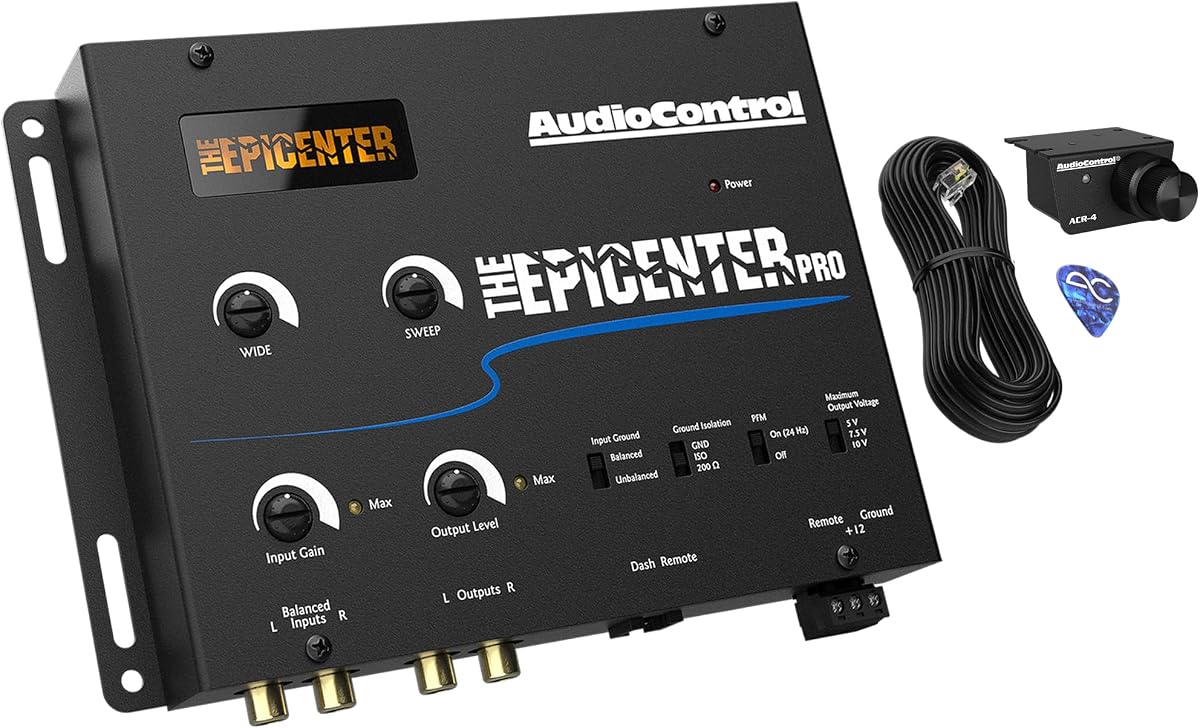
The AudioControl The EPICENTER PRO has a 4.8 rating and is the most advanced standalone bass-restoration choice in the roundup. Unlike a plain converter, it detects upper-range harmonics and synthesizes low-frequency content intended to give compressed or bass-limited recordings greater foundational impact.
We may earn a commission when you buy through this link, at no additional cost to you.
The processor includes one set of balanced line-level inputs and outputs for downstream equalizers, crossovers, and amplifiers. Load-select switches provide the same 20-ohm, 60-ohm, and 20k-ohm options found on other modern AudioControl processors. Its line driver produces a claimed signal-to-noise ratio above 105dB and total harmonic distortion of 0.03%.
Fine bass shaping is another major attraction. The center frequency can be swept from 27 to 63Hz, the bandwidth is adjustable, and the programmable frequency-match filter helps eliminate wasted amplifier power. Selectable output voltage supports gain matching, while a backlit indicator visualizes restoration activity. The ACR-4 remote is available separately.
This processor is best for listeners who have a properly configured subwoofer system and specifically want to recover low-end impact. It is not simply a generic line driver, and users who prefer completely unprocessed playback may find the harmonic synthesis excessive. For a premium, feature-rich signal path, however, it is a compelling choice.
The separate center-frequency and bandwidth controls let an installer match restored harmonics to the vehicle's cabin and subwoofer system. That control is more useful than simply adding fixed low-frequency content with no adjustment range.
Balanced line-level connections give the processor a natural place in a larger chain of crossovers, equalizers, and amplifiers. The selectable output voltage helps control gain structure between the processor and the next stage.
We may earn a commission when you buy through this link, at no additional cost to you.
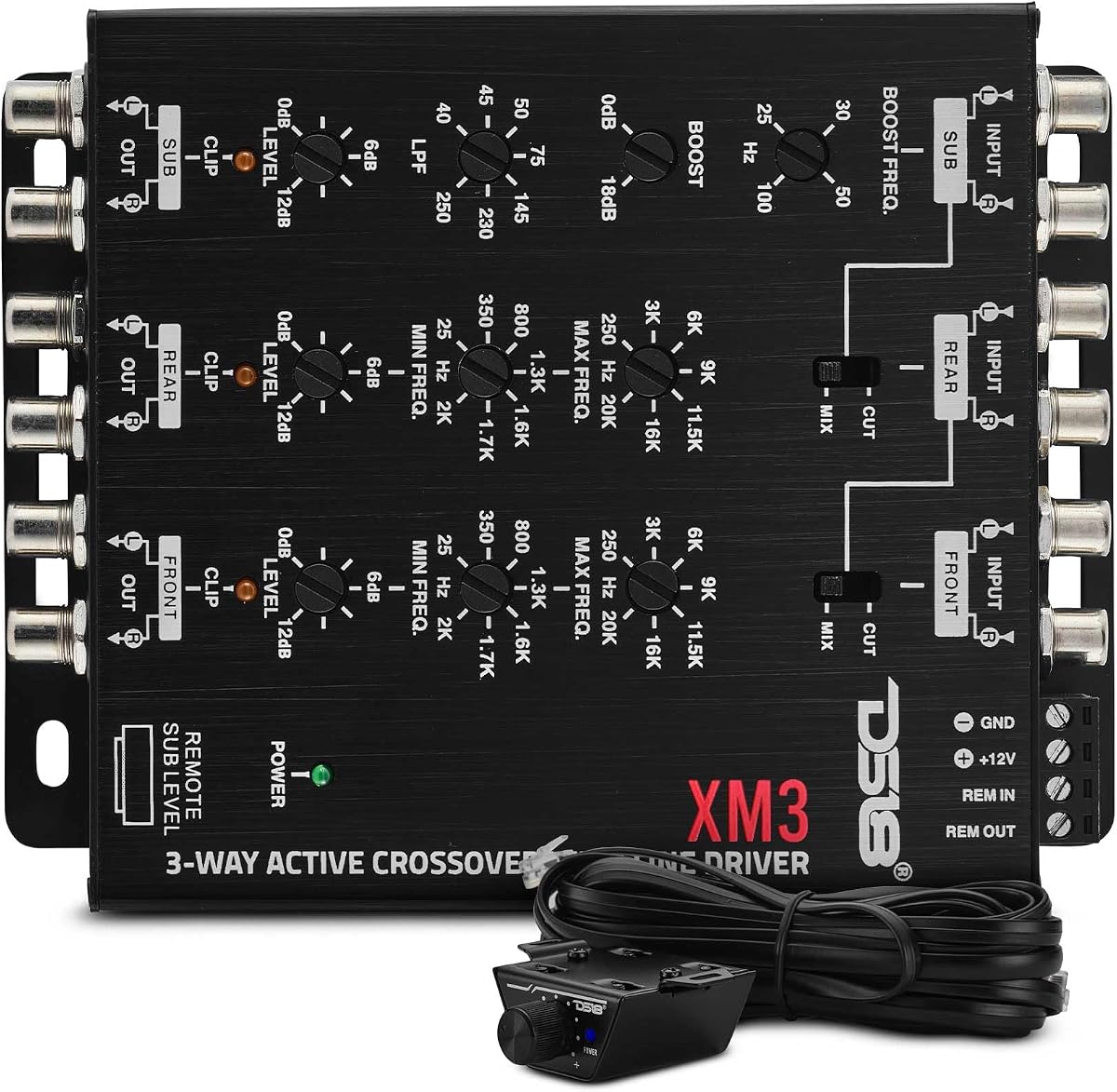
The DS18 XM3 has a 4.1 rating and combines a three-way active crossover with an 11V line driver. That combination makes it more specialized than a typical line output converter because it divides the frequency spectrum for front speakers, rear speakers, and the subwoofer while strengthening the outgoing signal.
We may earn a commission when you buy through this link, at no additional cost to you.
Its stated output reaches 11V with 0.01% total harmonic distortion. The included remote subwoofer controller includes a clip indicator, allowing bass level to be adjusted while watching for distortion. Internally, the filters cover high-pass ranges of 25Hz–2kHz and low-pass ranges of 250Hz–20kHz, and the unit can support three-, two-, or one-way arrangements.
The trade-off is that the XM3 asks the installer to manage a more elaborate signal path. Its 4.1 rating is lower than the other highly rated products here, and the listing notes fixed passive-crossover operation, which may not suit every installation. The 6.25-by-5-by-1.2-inch enclosure is nevertheless compact for a multi-way processor.
Choose the XM3 when system design is the priority and you want crossover functions and line driving in one box. It is a good fit for installers building a carefully balanced three-way system, provided the vehicle's electrical system can support the unit's stated operating range of 9–15V.
Independent front, rear, and subwoofer tuning reduces the need for separate crossover modules. That can simplify wiring, but each output still requires correct filter settings and appropriate amplifier channels.
The included remote puts basic subwoofer level control within reach while its clip indicator provides a useful warning. This helps users adjust bass by ear without pushing the output into visible clipping.
We may earn a commission when you buy through this link, at no additional cost to you.
The Timpano TPT-EQ7 earns a 4.6 rating and brings together seven-band equalization, a high-level converter, a crossover, subwoofer level control, and a six-channel RCA output. It is a flexible central control point for installers who want more tonal adjustment than a basic line driver provides.
We may earn a commission when you buy through this link, at no additional cost to you.
Its seven bands cover 50Hz, 125Hz, 320Hz, 750Hz, 2.2kHz, 6kHz, and 16kHz, with plus or minus 12dB adjustment at each frequency. The built-in speaker-wire-to-RCA converter allows connection to a factory radio, while the stated 10V output provides additional signal headroom over conventional line-level signals.
The compromise is that a large number of controls can make installation more involved. The supplied information does not mention a remote level controller, and the unit's crossover and subwoofer controls must be coordinated with the rest of the system. Even so, the 7.25-by-1-by-2.25-inch profile is relatively slim for the feature set.
Choose the TPT-EQ7 when you want a single accessible module for factory integration, equalization, bass adjustment, and system routing. Its strong rating, high-voltage output, and broad adjustment range make it particularly appealing for entry-level custom builds that need more control than a basic converter.
The EQ7 combines input conversion, equalization, crossover functions, and output routing. That consolidation can be attractive in vehicles where separate processors would be difficult to mount or wire.
Its high-level input path makes it possible to retain a factory radio while sending line-level signals to aftermarket amplifiers. The subwoofer level control and high-voltage RCA output are particularly relevant to common subwoofer-upgrade layouts.
We may earn a commission when you buy through this link, at no additional cost to you.
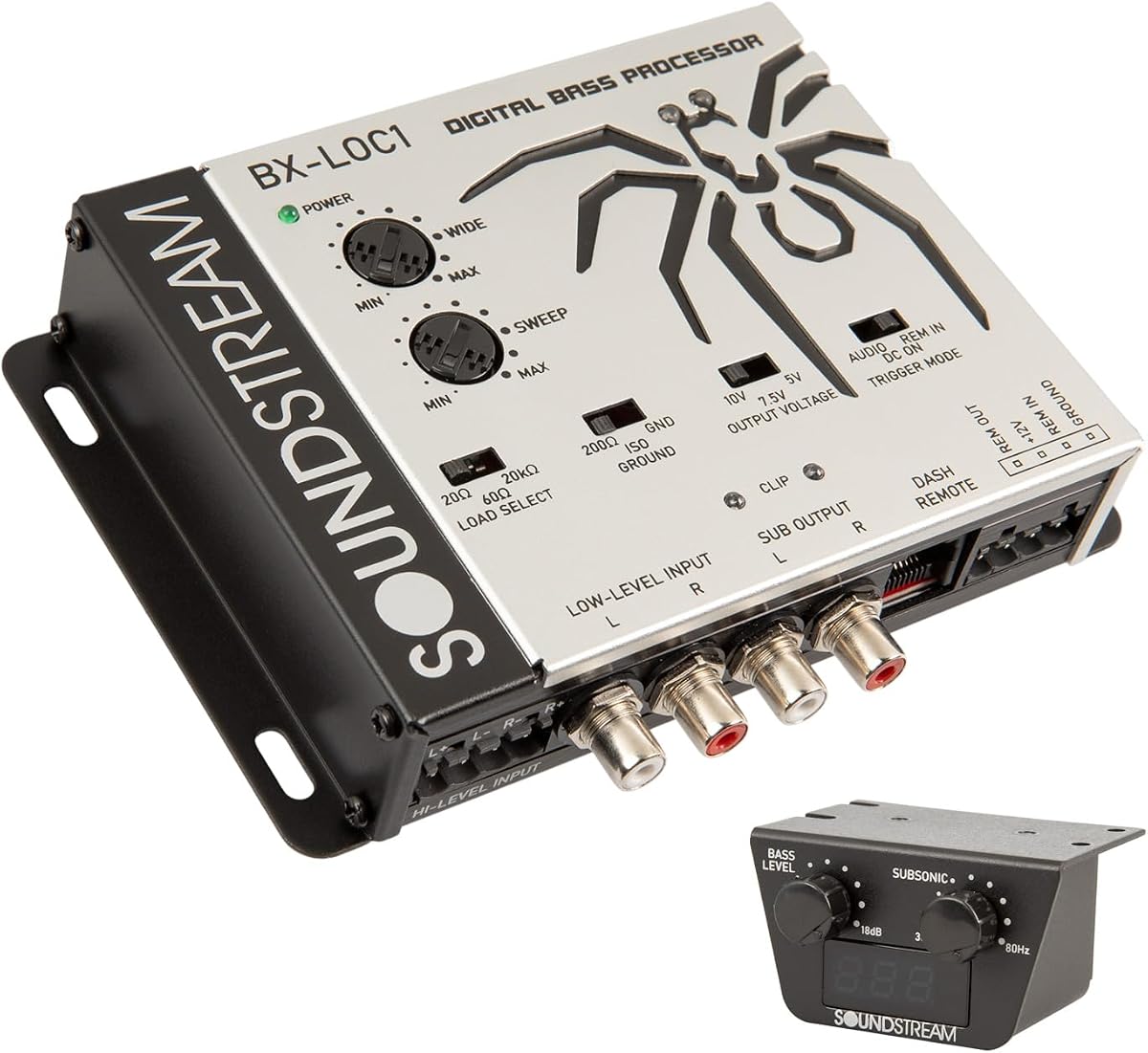
The Soundstream BX-LOC1 has a 4.2 rating and is designed as a compact bridge between factory or aftermarket sources and upgraded amplifiers. It accepts both speaker-level and RCA inputs, then offers an adjustable high-voltage output of up to 9V for a downstream amplifier, subwoofer, or other processor.
We may earn a commission when you buy through this link, at no additional cost to you.
Its defining feature is digital bass reconstruction. The processor is intended to restore perceived low-end impact in compressed or factory audio rather than merely convert signal levels. Shielding, ground isolation, impedance matching, selectable turn-on methods, and an onboard LED clipping indicator support clean, protected operation.
Its limitations reflect its narrower role. The supplied details do not indicate balanced connections, multiple output-channel pairs, or a remote level controller. Its 4.2 rating is also below the strongest alternatives. Still, the combination of dual input types, bass restoration, and a compact footprint may be more than some installers need in a basic converter.
Choose the BX-LOC1 for a straightforward factory-radio or OEM amplifier upgrade where bass presence matters and a compact signal processor is desired. It is especially relevant for users adding a subwoofer or amplifier without replacing the original head unit, provided they understand that bass reconstruction changes the original signal character.
Accepting speaker-level and RCA inputs means the same unit can serve an OEM radio or an aftermarket source. That flexibility simplifies planning when the final source configuration is not yet fixed.
The clipping indicator gives installers and listeners an immediate reference during gain adjustment. Ground isolation and shielding can also help reduce hum, hiss, and engine-related noise when the wiring is correctly installed.
We may earn a commission when you buy through this link, at no additional cost to you.
The AudioControl LC2i has a 4.6 rating and is aimed at adding subwoofers or amplifiers to a factory receiver. Like the LC1i, it converts speaker-level output into RCA line-level signals, but AccuBASS processing gives it a particular emphasis on correcting bass roll-off as the factory volume rises.
We may earn a commission when you buy through this link, at no additional cost to you.
The converter accepts speaker-level signals up to 400W per channel and can operate with factory volume and steering-wheel controls. Selectable GTO sensing handles automatic turn-on, and the remote output can trigger up to two downstream devices. Fixed and variable outputs with onboard level controls provide basic routing flexibility.
There is an important limitation noted in the product data: it does not retain fader control when running multiple amplifiers. Installers who require that behavior are directed toward other AudioControl models. The optional ACR-1 remote is also sold separately, and the supplied specifications do not emphasize a built-in high-voltage line driver.
Choose the LC2i for a typical factory-radio subwoofer upgrade, particularly when bass tends to disappear at higher source-volume settings. It combines a favorable rating with straightforward integration, but installers should verify fader behavior and remote compatibility before finalizing the design.
Many factory systems reduce low-frequency output as the head unit's volume increases. AccuBASS is designed to correct and restore bass in that operating range, making it a targeted solution rather than general signal beautification.
GTO sensing, an optional dash remote, and a remote output for downstream devices cover the common needs of a subwoofer installation. The compact chassis and integrated brackets help keep the installation tidy.
We may earn a commission when you buy through this link, at no additional cost to you.
The Wavtech linkDQ carries a 4.7 rating and combines the functions associated with Wavtech's linkD, linkQ, and bassFREQ products. Its standout feature is an adjustable parametric equalizer that can use narrow or wide ranges to correct a low-frequency deficiency rather than applying a broad, fixed boost.
We may earn a commission when you buy through this link, at no additional cost to you.
The unit is designed as a two-channel line output converter and line driver for integration with an upgraded audio chain. An RJ45 port allows a separately sold remote level control to be added later, while auto turn-on can operate through DC-offset or audio signal detection. OEM load detection compatibility is another useful factory-integration feature.
The limited supplied data makes detailed comparison difficult. Specific output voltage, THD, signal-to-noise ratio, and channel input types are not stated, so buyers should verify them against their installation requirements. The separately sold remote also means the full feature set is not available from the standard package.
Choose the linkDQ if the priority is controlled low-frequency correction rather than broad bass synthesis. It is well suited to a factory system that needs line-level conversion, load compatibility, and a parametric tool for refining a specific frequency problem in a clean, upgradeable design.
A parametric equalizer concentrates correction around a selected low-frequency region. The narrow and wide options let an installer choose between a focused adjustment and a broader tonal change.
The RJ45 remote port adds a path to dashboard level control without changing the core signal architecture. It is a practical approach for installations that may begin with basic signal conversion and later add user controls.
We may earn a commission when you buy through this link, at no additional cost to you.
The AudioControl Epicenter Micro PRO earns a 4.8 rating and combines many of the features sought in a premium car audio signal processor. It accepts speaker-level and balanced line-level inputs, provides balanced outputs, and includes a powerful bass-restoration circuit intended to synthesize missing low-frequency fundamentals from upper-range harmonics.
We may earn a commission when you buy through this link, at no additional cost to you.
The signal path is specified at more than 105dB signal-to-noise ratio and 0.03% THD. Selectable output voltage helps match the next amplifier's input stage, while the bass center frequency can be swept from 27 to 63Hz and its bandwidth adjusted for the vehicle. A programmable frequency-match subsonic filter reduces wasted power and can be bypassed for 10V-plus maximum output.
The processor is sophisticated rather than universally simple. The ACR-4 dual-knob remote is sold separately, and the user must set the effect, bass level, frequency, width, and filter correctly. The compact 1-by-8-by-3-inch chassis, coated circuit board, GTO mode, and 1A fuse recommendation are practical features for a permanent installation.
Choose the Epicenter Micro PRO for a premium build that combines line conversion, high-voltage output, bass restoration, and system protection. It is best suited to an enthusiast willing to tune it carefully, but it offers the most complete feature package among the compact processors reviewed.
Speaker-level and balanced line-level inputs allow the unit to sit after either a factory amplifier or an aftermarket source. Balanced outputs provide a useful connection point for equalizers, crossovers, and amplifiers in a larger system.
Separate frequency, width, effect, and bass controls allow the restoration to be matched to the vehicle rather than applied as a single fixed boost. The programmable subsonic filter adds another layer of amplifier protection and efficiency.
We may earn a commission when you buy through this link, at no additional cost to you.
The AudioControl Matrix Plus 6-Channel Line Driver has a 3.6 rating, the lowest in this group, but it remains a direct option for installers seeking a dedicated multi-channel signal driver. It provides up to 24dB of gain with a listed 9.5V RMS maximum output.
We may earn a commission when you buy through this link, at no additional cost to you.
The primary convenience is its straightforward layout. Top-mounted controls make output adjustments accessible without dismantling the installation, while indicator lights show one-, two-, or five-volt output and a separate maximized condition. Those indicators can make it easier to avoid clipping during setup.
The 3.6 rating warrants more attention before purchase. The supplied listing provides less information about input topology, noise, distortion, turn-on behavior, and physical dimensions than the listings for the newer high-voltage Matrix Plus. Buyers should compare those missing specifications with the rest of their planned system.
Choose this Matrix Plus if you specifically want a six-channel, high-gain line driver and can verify compatibility with your source and amplifiers. It may be a sensible value-oriented alternative to the feature-heavy processors, but it is not the strongest recommendation for buyers who need detailed bass processing or extensive installation flexibility.
The generous gain range allows an installer to match a variety of source levels to downstream components. That makes the unit potentially useful in mixed systems with different input sensitivities.
The output-voltage lights provide immediate feedback when setting gain. The dedicated maximized indicator can help the installer recognize when the available output range has been fully used.
We may earn a commission when you buy through this link, at no additional cost to you.
The right line driver depends on your source, amplifier inputs, channel count, signal level, noise concerns, and desired control features. Start with the signal chain rather than the product category, then compare specifications that directly affect installation and sound quality.
A line output converter is generally needed when your source only provides speaker-level output, particularly an OEM radio or factory amplifier. A conventional line driver usually starts with RCA line-level input, while versatile processors may accept balanced line input, unbalanced RCA input, and speaker-level input. Confirm that the unit's input terminals match the connector type and electrical level used by the head unit or factory amplifier without an adapter that changes the intended signal path.
Count how many independent amplifier channels need a signal and whether those channels come from a stereo source or a factory system with more complex routing. A two-channel converter is often sufficient for one subwoofer or a stereo amplifier, while a six-channel driver may be necessary for front, rear, and subwoofer amplification. Extra channels are not automatically better if they force inconvenient splitting or leave unused outputs that add installation complexity.
Standard RCA line-level signals are adequate for many modest systems, but high-voltage outputs can provide more headroom and simplify gain matching in demanding installations. Review the stated maximum voltage and whether it is adjustable. Pay attention to the conditions behind the claim, such as supply voltage and load, and compare distortion and signal-to-noise specifications when those figures are available.
Modern vehicles often use speaker-load detection to determine whether their factory amplifiers have connected speakers. A converter without a suitable simulated load may trigger a protection warning or interfere with that behavior. Selectable load options are therefore more than a convenience; they can be essential to a clean integration. Confirm the available resistance settings and the vehicle manufacturer's guidance before installation.
Car electrical systems can introduce alternator whine, engine noise, and ground-loop hum, especially when aftermarket equipment is installed near the vehicle harness. A ground-isolation option can interrupt an unwanted ground path, while a stated signal-to-noise ratio helps compare expected performance. Correct grounding and routing remain essential because no processor can fully compensate for poor installation practices.
GTO or audio-signal sensing can switch the processor on when music is present, while a manual 12V input offers more control over timing. Downstream remote outputs can trigger amplifiers and crossovers so the entire chain starts together. Dash remotes are useful for volume or bass adjustments, but many are optional purchases. Check whether a remote is included, whether the correct cable is required, and whether the control supports only level adjustment or additional functions.
Bass restoration processors detect upper-range harmonics and synthesize lower frequencies, while parametric equalizers correct selected frequency deficiencies. These approaches are not interchangeable. A restoration processor suits listeners seeking fuller bass in compressed or factory material, whereas a parametric EQ addresses a defined tonal problem. Track-based harmonic synthesis may not suit every recording, so the best option depends on the desired result and the rest of the signal chain.
Some line-driver products also divide frequencies for tweeters, door speakers, and subwoofers or provide graphic equalization. Integrated functions can reduce the number of boxes in the vehicle and simplify wiring, but they also add controls that must be set correctly. Review filter ranges, crossover slopes, channel output structure, and adjustment bands. If the system already has dedicated processors, a simpler line driver may preserve a cleaner and more predictable signal path.
Begin by disconnecting the negative battery terminal before wiring the vehicle. Identify the source output, amplifier inputs, remote leads, and grounding point. Route power and signal cables away from moving components and high-current wiring, use suitable connectors, and avoid long parallel runs between unrelated power and audio cables. A properly planned installation is as important as the processor's stated signal specifications.
Install the unit in a protected location where it will not be crushed by mounting panels or exposed to moisture and excessive heat. Many listings recommend fused 12V connections, and some specify 18 AWG power wire and a 1A fuse. Follow the manufacturer's wiring instructions, keep speaker-level and RCA connections secure, and verify that all ground points are clean and electrically sound.
Turn the amplifier gain down before powering the system, then make initial adjustments at low listening levels. Set source and processor controls to neutral positions where applicable, engage the correct load selection, and choose an appropriate turn-on method. Increase gain carefully while watching the processor's clipping or maximized indicators. After tuning, save the settings and recheck them after driving because temperature and electrical conditions can affect component behavior.
A line driver strengthens and conditions a line-level audio signal before it reaches amplifiers, subwoofers, crossovers, or other processors. It can provide greater voltage headroom, simplify gain matching, and help maintain a clean signal. Some models also convert speaker-level factory-radio output into RCA line-level signals, while others add bass restoration, equalization, or crossover functions.
Usually not. A quality aftermarket head unit with strong RCA preamp outputs can often feed amplifiers directly, provided cable length and gain settings are appropriate. A line driver becomes more useful with factory systems, long cable runs, multiple downstream devices, low-output sources, or system architectures that benefit from adjustable high-voltage output.
No. A line driver may reduce noise through shielding, filtering, and ground-isolation features, but improper grounding, poor power connections, damaged cables, or electrical interference can still produce hiss, hum, and whine. Correct installation and the appropriate load and turn-on settings remain essential.
A line output converter primarily changes a speaker-level signal into a line-level RCA signal for amplifier integration. A line driver receives an existing line-level signal and boosts or conditions it before sending it downstream. Some products combine both functions, while others add equalization, bass restoration, or crossover controls.
Higher voltage can improve headroom and make gain matching easier, but it is not automatically better for every amplifier. The output should be matched to the downstream input, and excessive gain can create clipping. A processor with selectable voltage is often the most flexible choice because the installer can set the appropriate level.
A dash remote is convenient but not always necessary. It is particularly useful for adjusting subwoofer level or the effect level of a bass processor without opening the trunk or reaching into the cabin. If the selected unit does not include a remote, verify the compatible model, cable length, and mounting options before installation.
GTO and similar signal-sense modes detect an audio signal and automatically activate the processor or provide a remote turn-on output. This can simplify installation when finding a reliable manual trigger point is difficult. Manual 12V control may be preferable for some systems, particularly when the vehicle's factory electronics use unusual wake-up behavior.
A line driver can feed multiple downstream devices when its output capacity and channel configuration support the planned arrangement. It does not power speakers in the way an amplifier does; it provides the audio signal. Check output voltage, channel count, impedance requirements, and the number of remote outputs before connecting multiple amplifiers or processors.
The AudioControl LC1i is the most approachable budget choice for a two-channel factory-system upgrade, while the AudioControl The EPICENTER PRO and Epicenter Micro PRO stand out for advanced bass restoration and premium processing. The high-voltage six-channel Matrix Plus is the leading choice for a dedicated multi-channel signal driver, and specialized products such as the DS18 XM3 and Timpano TPT-EQ7 add crossover or equalization functions.
Prioritize compatibility before features. Confirm the source input, amplifier input type, required channels, turn-on method, factory load behavior, and available installation space. Once those fundamentals are satisfied, output voltage, noise specifications, bass processing, remote access, and adjustable filter controls can help refine the result.
Finally, check the current product listing, technical sheet, included accessories, and price before ordering. Car audio wiring requirements vary by vehicle, and optional remotes or mounting hardware can affect the complete cost. Confirm that the chosen processor has the connections and controls your finished system actually needs.