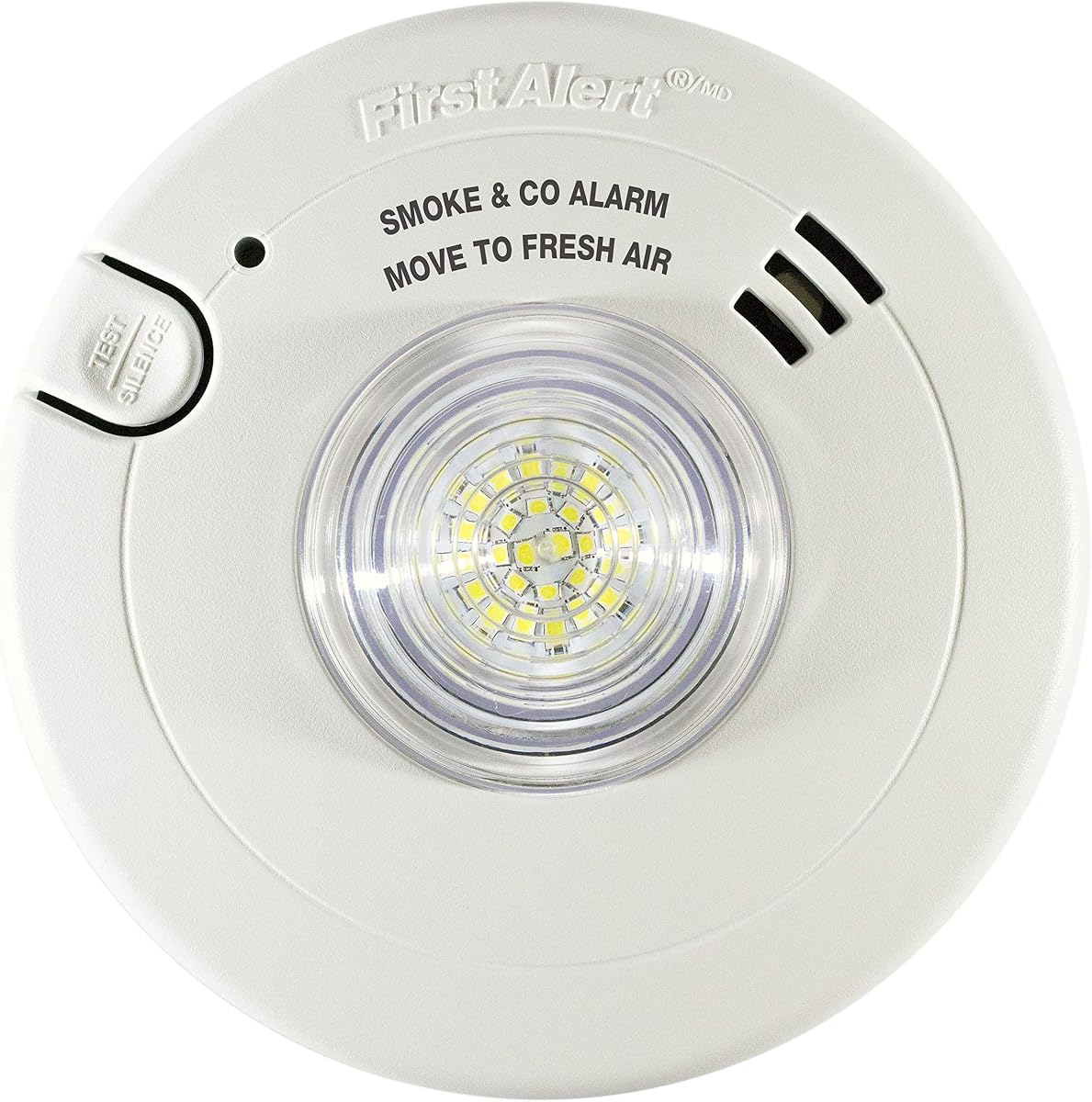
First Alert BRK 7030BSL Combination Alarm
4.2Editor score
Integrated smoke and carbon detection
Distinct visual alert patterns
Synchronized LED strobe
Direct chamber access
Fire alarms for deaf people compared for visual alerts, vibration, power options, installation needs, compatibility, and accessibility features.
Fire alarms for deaf people must communicate emergencies reliably without relying solely on sound. The strongest options combine bright visual warnings, bed vibration, clear text messages, or integrated smoke and carbon monoxide detection, making them useful across homes, apartments, and supported living environments.
This guide compares ten products according to alert type, detection function, installation requirements, electrical power, accessibility features, compatibility, and suitability for deaf or hard-of-hearing users. It includes complete alarm units, add-on strobes, notification accessories, and professional fire-alarm components rather than treating every option as a universal solution.
Each review explains what the product does best, where it falls short, and who should consider it. Ratings reflect the supplied customer feedback where available, while prices and availability can change, so readers should confirm current details and their home's wiring or alert-system requirements before buying.
4.2Editor score

3.8Editor score

4.4Editor score
The comparison covers integrated household alarms, visual notification devices, bed shakers, and professional notification appliances so readers can distinguish complete protection from components that require an existing system.



The Sonic Alert HomeAware II Basic Starter Kit is an accessibility-focused notification system with a supplied rating of 3.8. Its standout feature is the ability to convert signals from compatible existing smoke and carbon monoxide alarms into bright flashes, strong bed vibration, audible tones, and scrolling text. It does not detect smoke or carbon monoxide itself, so it is an alert relay rather than a replacement detector.
We may earn a commission when you buy through this link, at no additional cost to you.
The kit offers several ways to convey an emergency. A flashing strobe provides high-visibility notice, the bed shaker creates tactile output for a sleeping user, and the large display spells out the alert so the wearer does not have to infer meaning from a generic flash pattern. Bluetooth connectivity adds call and text visibility through the HomeAware app, while the product information also notes support for connected landline call alerts.
Its main limitation is environmental. The unit must be placed in the same room as the smoke or carbon monoxide alarm so it can recognize the T3 or T4 alarm pattern. Ambient noise, a weak alarm signal, incorrect placement, or incompatible alarms can prevent activation. The app-dependent call display and the need to test the entire setup also make it more involved than a straightforward hardwired strobe.
This is the most flexible choice in the guide for someone who wants visual, tactile, and text-based warnings from existing household alarms. It may also serve heavy sleepers who benefit from vibration and people who want calls shown on a large display. Buyers should confirm their existing alarms are compatible, position the unit carefully, and establish a regular testing routine.
Rather than forcing the user to choose between sight and touch, this system can present an emergency through a strobe, bed shaker, audio tones, and scrolling text. That redundancy is valuable in sleeping areas, where a visual alert alone may be difficult to notice and a vibrating alert may be felt more reliably than a sound.
The HomeAware app integration extends the kit beyond fire emergencies by displaying incoming cellphone calls and texts and supporting connected landline notifications. That makes it more useful as a general-purpose home alert center for someone who wants a single prominent way to review important information.
We may earn a commission when you buy through this link, at no additional cost to you.
The First Alert BRK 7020BSL combines a household smoke alarm with a high-intensity LED strobe in one enclosure. Its supplied rating of 4.4 makes it one of the stronger customer-rated options in this guide. For a deaf or hard-of-hearing resident, the integration is significant: smoke detection and visual notification come from one unit instead of requiring a separate alarm and add-on notification appliance.
We may earn a commission when you buy through this link, at no additional cost to you.
The smart strobe uses separate flash patterns to distinguish smoke and carbon monoxide warnings. Its listed 177-candela synchronized LED output is designed to provide a prominent visual signal, and multiple installed units can flash in unison. AC power supplies normal operation, while a sealed ten-year battery backup supports continued protection during a power interruption.
The tradeoff is installation. It is a hardwired device rather than a simple plug-in alarm or wireless add-on, so compatibility with existing wiring, box placement, and local requirements must be checked. Some homes may need an electrician or alarm installer, and users replacing an existing detector should not assume its box or wiring arrangement will be suitable. The product combines smoke detection with visual notification but is not described as a combination smoke and carbon monoxide detector.
This is a compelling pick for households seeking a straightforward integrated alarm rather than a broad notification platform. Choose it when existing hardwired wiring is available, a high-intensity strobe is wanted, and smoke detection can remain in the same device as the visual warning. Confirm local code requirements and have installation handled appropriately when needed.
Combining the smoke detector and strobe can simplify placement because the device that detects smoke also produces the visual warning. It is especially relevant in bedrooms, sleeping areas, and other locations where an audible-only detector may be less effective for a hearing-impaired sleeper.
Separate flash patterns for smoke and carbon monoxide give residents a way to distinguish alert types visually. Synchronization is also valuable in a multi-unit installation because nearby strobes can flash together, improving visibility from different positions around the home.
We may earn a commission when you buy through this link, at no additional cost to you.
The First Alert BRK 7030BSL is a hardwired combination alarm that detects smoke and carbon monoxide while adding a synchronized LED strobe for visual notification. Its supplied rating is 4.2. It offers a particularly practical balance of safety functions for users who need both types of detection and a visible warning from a single installed unit.
We may earn a commission when you buy through this link, at no additional cost to you.
Smart-strobe technology separates the flash pattern for smoke from the pattern for carbon monoxide, allowing a resident to identify the type of danger without hearing an alarm. The listed strobe output is 77 candela, lower than the BRK 7020BSL's 177-candela light, but still intended to provide an effective visual warning. Optipath 360 technology provides direct access to the smoke-sensing chamber, which can simplify inspection and maintenance.
As a hardwired combination unit, it demands more consideration than a battery-only detector or wireless notification accessory. It must be connected to the home's wiring and installed in a suitable junction box, and users should consult local fire-alarm requirements. The product information also notes a ten-year limited warranty and First Alert's stated warranty terms when proof of purchase is available.
This model is a strong all-in-one recommendation when both smoke and carbon monoxide detection are priorities alongside visual alerts. It is better suited to a planned installation or replacement than to a quick DIY upgrade. Buyers should compare the 77-candela output with their room conditions and confirm that existing wiring and placement meet the manufacturer's instructions.
A combined alarm reduces the need for separate smoke and carbon monoxide units while keeping both detection functions close at hand. The distinct visual patterns help communicate which type of emergency has been detected, which is especially important when the user cannot rely on sound.
Direct access to the smoke-sensing chamber helps users and installers reach the sensing area during testing and service. Easier access supports the regular maintenance that every smoke alarm requires, including checking that the detector and visual notification remain operational.
We may earn a commission when you buy through this link, at no additional cost to you.
The Simplex 4906-9251 TrueAlert Multi Tapped Speaker with Multi-Candela Strobe is a professional notification appliance for people who need both a visual and audible warning in a fire-alarm system. No customer rating was supplied, so the evaluation relies on the stated functions rather than a numerical review score. It is not presented as a complete smoke detector.
We may earn a commission when you buy through this link, at no additional cost to you.
Its multi-candela strobe can be adjusted for different environments, which is useful in homes with varying room sizes, light levels, and sleeping positions. The multi-tapped speaker also adds selectable sound patterns, giving system designers a way to tailor notification output to different spaces and occupants. Its main strength is flexible, system-integrated signaling rather than simple standalone convenience.
The primary limitation is infrastructure. This appliance is best suited to a property with a compatible fire-alarm control panel, wiring, and installation support. A shopper looking for a plug-and-play bedroom alarm or complete smoke-and-carbon-monoxide detector would need an entirely different product. Buyers should also request model-specific documentation to confirm compatibility, mounting, voltage, and selectable settings before purchase.
Choose this Simplex unit when working with a professional notification design and the goal is a combined speaker-strobe at a particular location. It may be especially appropriate in assisted living, accessibility-focused housing, or larger properties where multiple notification patterns and adjustable visual output are important. It is not the most approachable standalone choice for a typical renter.
Multi-candela output gives installers a way to match visual intensity to the location rather than forcing every room to use one setting. This flexibility can help in corridors, bedrooms, common areas, and other spaces where warning visibility requirements differ.
Multiple sound taps provide installation flexibility in environments where different areas require different alert tones. Because this is a notification appliance rather than a sensor, it must be paired with a compatible detection and control system to deliver meaningful warnings.
We may earn a commission when you buy through this link, at no additional cost to you.
The First Alert SLED177 is a dedicated hardwired LED strobe for hearing-impaired residents who already have a compatible alerting system. Its supplied rating is 4.0. Unlike an integrated smoke alarm, this unit focuses entirely on visual notification, making it a practical way to place a bright warning near a bed, hallway, or other location where sound alone is insufficient.
We may earn a commission when you buy through this link, at no additional cost to you.
The listed 177-candela output is designed for a powerful visual signal. Its slim enclosure can be mounted on a wall or ceiling, helping it blend into residential spaces better than a bulky industrial unit. Strobe synchronization allows compatible units to flash in unison, while the stated UL standards and Americans with Disabilities Act compliance make accessibility a central part of its positioning.
The limitation is that it does not detect smoke or carbon monoxide. It must be wired to an appropriate system and configured to receive the relevant alert signal. Although quick-connect wiring is advertised for easier installation, users without suitable electrical knowledge should still consult the documentation or a qualified installer. Actual compatibility depends on the existing alarm or notification system rather than the product alone.
This is a good option for homeowners who want a high-intensity visual signal without replacing their detector with another combined unit. It is particularly useful where a bedroom needs a dedicated strobe connected to a system installed elsewhere. Confirm 120-volt availability, mounting position, and signal compatibility before ordering.
A 177-candela strobe can provide a conspicuous visual warning in a bedroom or hallway. Its low-profile housing also makes it less visually obtrusive than some larger notification devices, which is helpful for a long-term installation.
The product's stated UL and Americans with Disabilities Act considerations reflect its purpose as an accessible visual warning. Synchronization with multiple units can make the overall alert easier to locate, particularly when a user is away from the room containing the primary detector.
We may earn a commission when you buy through this link, at no additional cost to you.
The Bellman & Symfon Bed Shaker is a wireless vibration accessory designed to wake deaf and hard-of-hearing users through tactile sensation rather than sound. Its supplied rating is 3.4, making it one of the lower-rated products in this guide, but that number should be interpreted in the context of a specialized accessory. It does not independently detect fire or carbon monoxide.
We may earn a commission when you buy through this link, at no additional cost to you.
The shaker fits beneath a mattress or pillow and delivers customizable vibration without disturbing nearby sleepers. It integrates with the Bellman & Symfon Visit system, allowing a compatible transmitter and receiver to relay alerts such as emergencies, doorbells, and phone calls. That broadens its value beyond fire safety, particularly for seniors or residents in supported-living environments who may benefit from silent notifications.
The decisive constraint is compatibility. Visit receivers are sold separately, and the product is explicitly not a standalone unit. A user without an existing Visit system cannot simply install the shaker and expect it to receive a fire signal. Pairing, placement, and the strength of the vibration also need to be tested in the intended sleeping environment to ensure the user will notice an alert.
Choose this bed shaker when a compatible Visit setup already exists or when a broader silent alert system is being planned. It is particularly attractive to users who sleep beside a partner and want to avoid waking that person with conventional alarms. For complete fire protection, pair it with suitable smoke and carbon monoxide detectors rather than treating it as a replacement.
A bed shaker communicates through vibration, allowing the user to receive an important alert while nearby household members remain undisturbed. This can be valuable for people who remove hearing aids at night, have limited peripheral vision, or simply sleep more deeply than usual.
Because it works with the Visit system, the shaker can relay more than emergency notifications. Doorbells and phone calls are explicitly mentioned, allowing one tactile device to serve several communication needs when the surrounding transmitters and receiver are correctly installed.
We may earn a commission when you buy through this link, at no additional cost to you.
The Simplex 4906-9107 Alert V/O is a white, non-addressable wall appliance that provides visual and voice output within a compatible fire-alarm installation. No customer rating was supplied, so there is no numerical rating to weigh in this review. Its strongest characteristic is its ability to provide more than one form of notification while preserving a relatively unobtrusive wall-mounted appearance.
We may earn a commission when you buy through this link, at no additional cost to you.
As a visual and voice output appliance, it can serve deaf or hard-of-hearing residents through visible warning activity while also supporting audible notification for others in the building. The wall format makes it useful in bedrooms, corridors, common rooms, and supported-living environments. Its white finish is designed to blend with ordinary residential interiors rather than resemble heavy industrial equipment.
The word non-addressable is significant for system designers. Such an appliance typically communicates less selectively than individually addressed devices, so it is more suited to straightforward notification zones. It also requires compatible control equipment, wiring, and installation. This is not a plug-in product, a standalone smoke detector, or a self-contained alarm for a home without an existing fire-alarm system.
This option makes sense for a professional installer building a conventional fire-alarm layout that needs both visual and voice notification. It may be less suitable for someone seeking a simple bedroom upgrade or a fully integrated modern network. Ask the supplier for current model documentation and system compatibility details before committing to an installation.
Combining visual output with voice capability allows an appliance to serve residents with different hearing needs. The visual element alerts deaf and hard-of-hearing users, while the spoken component can communicate the same event to people who can hear it.
The non-addressable format is best considered alongside the control panel and notification plan for the building. A qualified installer should confirm that the appliance's electrical, mounting, and signaling requirements match the installed system.
We may earn a commission when you buy through this link, at no additional cost to you.
The Simplex 4906-9153 TrueAlert Speaker Strobe combines an audible notification device with a visual strobe in a wall-mounted white enclosure. Its supplied rating of 4.4 places it among the highest-rated products in this guide. The compact format is useful for locations where a full-size detector is unnecessary but both sound and light are appropriate.
We may earn a commission when you buy through this link, at no additional cost to you.
A speaker-strobe allows a fire-alarm system to communicate with a wider range of occupants. Deaf and hard-of-hearing residents can see the flash, while the speaker supplies audible output for people who benefit from sound. Its wall format gives an installer flexibility over placement, and the 24-volt DC requirement identifies it as part of a low-voltage fire-notification system.
The product cannot operate as an independent alarm. It needs compatible wiring, a suitable power supply, and a control system that activates the notification appliance. Because the supplied information is concise, buyers should obtain the exact technical documentation before installation. They should also verify that the selected device supports the required alert tones and synchronization features used by the rest of the system.
Choose the 4906-9153 when a professional system needs a relatively compact wall-mounted speaker and strobe. It is a solid option for common areas or rooms where redundant audible and visual notification makes sense. It is not appropriate for a renter seeking a self-contained detector, and the 24-volt DC requirement makes technical compatibility the first consideration.
A combined speaker and strobe reduces the need to mount separate audible and visual notification devices at the same location. This can be especially useful in a bedroom, corridor, or shared space where different residents have different alert needs.
The wall format and 24-volt DC operation make this an installer-oriented notification component rather than a consumer plug-in alarm. Correct power, wiring, control-panel compatibility, and activation are essential to obtaining a dependable warning.
We may earn a commission when you buy through this link, at no additional cost to you.
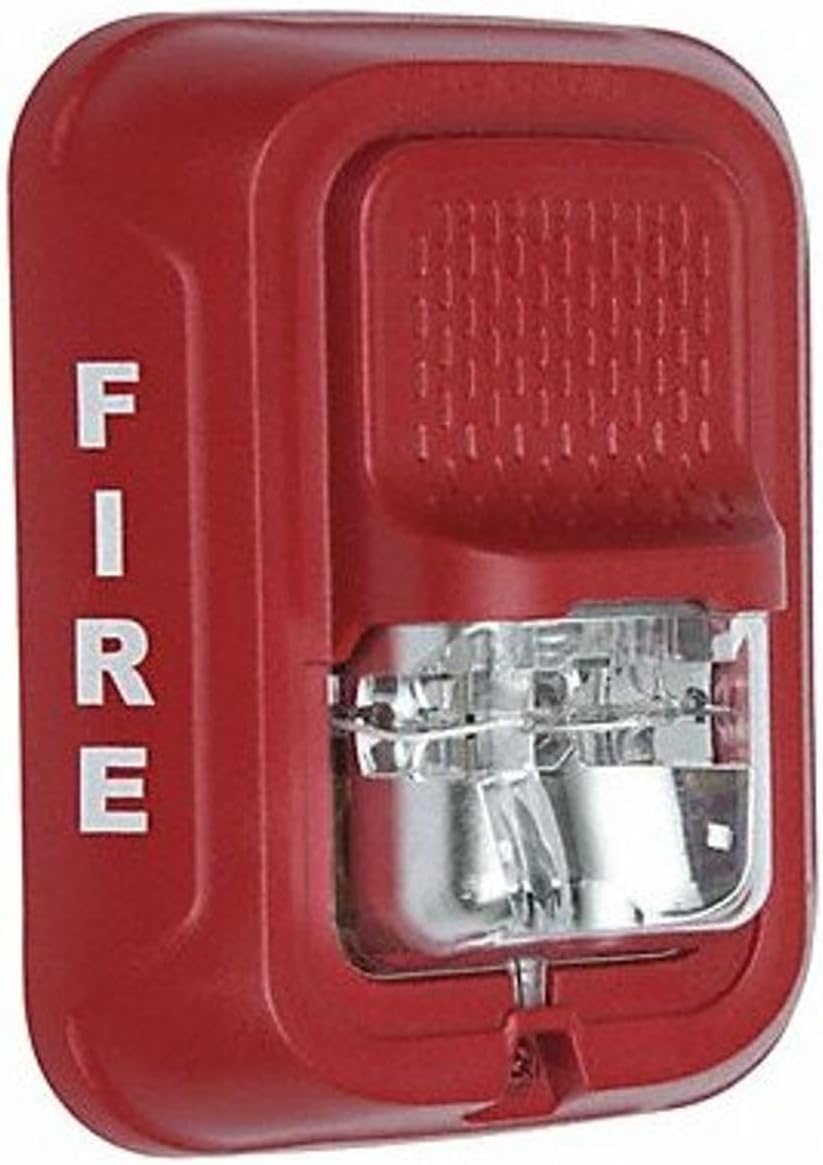
The System Sensor SRL is a red fire strobe designed to provide visual notification as part of a fire-alarm system. Its supplied rating is 4.1 gives it a favorable customer response, although the available product information is minimal. The model should be evaluated primarily as a specialized notification accessory rather than as a complete household alarm.
We may earn a commission when you buy through this link, at no additional cost to you.
Its core benefit is straightforward: a red flashing signal gives deaf and hard-of-hearing users a visible indication that the connected fire-alarm system has activated. Red is strongly associated with emergency warning, making the unit recognizable in a bedroom, hallway, or communal area. Because it is a dedicated strobe, it can supplement other notification methods without attempting to replace sound or tactile alerts.
The supplied listing does not detail candela output, mounting options, voltage, synchronization, or compatibility. Those omissions make technical verification essential. The device cannot independently detect smoke or carbon monoxide and cannot activate itself; it must be connected to appropriate equipment. Buyers should request the manufacturer's model documentation and confirm every electrical and system requirement.
This is best suited to a homeowner or installer with an established fire-alarm system that needs a red visual notification point. It may be a simpler alternative to larger speaker-strobes when audible output is unnecessary at that location. It is not the best standalone choice for someone who still needs to select a complete detector and notification arrangement.
A red strobe provides a conventional visual emergency cue without requiring the user to decode a scrolling message. That simplicity can be helpful at night, for someone with limited vision, or anywhere a fast, attention-directing warning is preferable.
This unit is most useful when the rest of the property already has reliable smoke and carbon monoxide detection and control equipment. Adding the SRL at selected locations can extend visual coverage without introducing another detector into the installation.
We may earn a commission when you buy through this link, at no additional cost to you.
The Wheelock ELFHNW Eluxa combines an LED strobe and low-frequency sounder for fire notification. No customer rating was supplied, so this review does not assign a numerical score. The product's dual-output design makes it relevant to deaf and hard-of-hearing users because visual information is delivered without requiring the alarm to rely on conventional high-pitched sound alone.
We may earn a commission when you buy through this link, at no additional cost to you.
The low-frequency sound component is intended to improve audibility in challenging environments, while the strobe supplies a clear visual warning for people who cannot hear the sounder. Together they create a redundant notification appliance for bedrooms, corridors, common spaces, and other occupied areas. Its white housing is intended to blend into finished interiors.
Like the other professional notification appliances in this guide, it is not a complete detection system. It requires compatible wiring, power, control equipment, and configuration. The supplied information does not specify mounting dimensions, voltage, candela output, or synchronization capabilities, so buyers should not infer those details from the product name. Professional documentation is necessary before installation.
This is a useful option for a properly designed fire-alarm installation that combines low-frequency audible signaling with visual notification. It may suit environments where an installer wants both modalities from one appliance. For an individual seeking a self-contained fire alarm, a complete household detector or a dedicated bed-shaker-based system would be easier to understand and install.
A strobe and sounder in one enclosure provide two routes for receiving an emergency signal. This is helpful in mixed-occupancy settings where a deaf resident needs visual notice while other people may benefit from an audible warning.
Low-frequency signaling can provide a different audible alert profile from common high-pitched alarm tones. Combined with visual output, it allows an installer to design notification around a wider range of hearing needs and environmental conditions.
We may earn a commission when you buy through this link, at no additional cost to you.
The right choice depends on whether you need complete detection, visual notification, tactile waking, or professional system integration. Consider the type of emergency, existing equipment, installation constraints, and the ways your household will actually receive alerts.
A visual notification appliance and a smoke detector perform different jobs. A unit such as the First Alert BRK 7020BSL detects smoke and includes a strobe, while the BRK 7030BSL adds carbon monoxide detection. By contrast, the SLED177, System Sensor SRL, and several Simplex products are notification components that must connect to an existing detection system. Read the full product description rather than assuming that the word alarm means the device can sense smoke.
Choose an integrated detector if you are building or replacing part of a residential alarm arrangement. Choose a notification accessory if reliable smoke and carbon monoxide detectors already exist and the priority is getting those warnings into bedrooms or other locations where sound cannot be perceived.
A deaf or hard-of-hearing user may respond differently to light, vibration, and text. The HomeAware II combines a strobe, bed shaker, audio tones, and scrolling display, offering several ways to convey the same event. The Bellman & Symfon Bed Shaker prioritizes tactile waking, while dedicated strobes rely entirely on sight. Consider the user's vision, sleep habits, hearing-aid use, bedroom layout, and ability to notice a flashing light.
Choose multiple output methods when one method may be missed. A user who sleeps deeply may benefit from a bed shaker, while a resident who cannot detect vibration may rely on a synchronized strobe visible from several positions.
The products in this guide use several different power approaches. The First Alert integrated alarms are hardwired and include backup battery protection, the SLED177 uses 120-volt hardwired power, and the Simplex 4906-9153 operates on 24-volt DC within a fire-alarm system. Notification accessories may require compatible control equipment and specific signal connections. Check your available wiring, junction boxes, power supply, and control panel before selecting anything.
Choose a model only when its installation requirements match the existing property. If the wiring is unknown, obtain professional advice rather than assuming an accessory will work with any alarm.
Not every strobe communicates the type of emergency. The First Alert BRK 7020BSL and BRK 7030BSL use separate flash patterns for smoke and carbon monoxide, which can tell a user whether to evacuate immediately or investigate a carbon monoxide condition. The HomeAware II spells out notifications on a scrolling display. These differences matter because a generic flash communicates urgency without providing details.
Choose distinct patterns or clear text if the user should be able to identify the alert type. Verify which events the selected device distinguishes and how those events are presented.
Synchronized strobes flash in unison when several compatible units are installed. This can make an emergency easier to locate, especially if the user is in another room or cannot see the first activating detector. The BRK 7020BSL, BRK 7030BSL, and SLED177 all include synchronization-related features in their supplied information. The strongest setup may place visual alarms in the bedroom, hallway, landing, and other important areas.
Choose synchronized models for a multi-location warning network, and confirm that every unit is compatible with the control arrangement. Mixing unrelated devices can prevent synchronized behavior.
An emergency can occur during an outage, so backup power deserves close attention. The BRK 7020BSL includes a sealed ten-year battery backup, and the HomeAware II listing identifies rechargeable battery backup for outages. Other hardwired professional components depend on the facility's broader system and backup-power design. Users should know whether visual and tactile alerts remain available when normal household electricity is lost.
Choose a system with an appropriate backup source and test it under realistic outage conditions. A visible backup indicator is useful only if the user checks it and knows how the system behaves after power returns.
Some options are designed for a professional installer, while others can be added to a compatible home system with clearer consumer guidance. Integrated hardwired alarms require correct placement and detector testing. Strobe-only accessories require signal wiring. The Bellman & Symfon shaker needs a separate compatible receiver and transmitter. Consider whether you want a professional installation, what documentation is available, and how often you will test each layer of the system.
Choose the product that matches your practical ability to install and maintain it. A more advanced feature set is not automatically better if regular testing or specialized wiring would be difficult to sustain.
A home alert system can be more valuable when it handles events beyond fire. The HomeAware II displays calls and texts and supports connected landline notifications, while the Bellman & Symfon bed shaker can relay emergencies, doorbells, and phone calls through the Visit system. These broader functions may justify a larger system for users who need one prominent notification hub. A dedicated strobe may be more appropriate when the requirement is limited to visual fire warnings.
Choose broader functionality when it solves a genuine daily communication need. Do not pay for complexity or extra components that will not be configured, maintained, and used.
Begin by mapping every sleeping area, exit route, hallway, and high-risk location where an emergency signal must be noticed. For an integrated detector, follow the manufacturer's placement guidance and local requirements. For a notification accessory, place the strobe where the light can be seen from the bed or main living area, and place a bed shaker where its vibration will be felt without creating an unsafe obstruction.
Test the complete chain rather than only the detector. Press a detector test button and confirm that every connected strobe, sounder, display, and bed shaker activates in the intended area. For the HomeAware II, place the unit in the same room as the compatible smoke or carbon monoxide alarm and verify that the alarm's T3 or T4 pattern triggers the scrolling display, strobe, and shaker. The Bellman & Symfon shaker also requires its separately sold receiver and compatible transmitter.
Establish a regular schedule for testing and maintenance. Replace the HomeAware II's rechargeable backup as needed, check battery dates and test buttons on household alarms, clean accessible smoke-sensing areas, and inspect strobes for dirt or damage. Keep notification devices visible and unobstructed, preserve the bed shaker's position, and ask a qualified installer to verify hardwired and professional-system components whenever wiring, placement, or equipment changes.
Accessible fire-alarm design commonly uses visual notification because an audible-only alarm may not alert a person with hearing loss. Requirements depend on the property, local codes, occupancy, and the type of building, so a homeowner should consult the applicable fire authority. A strobe should supplement reliable smoke and carbon monoxide detection rather than replace detection.
An integrated alarm includes detection, such as the First Alert BRK 7020BSL with smoke sensing or the BRK 7030BSL with smoke and carbon monoxide sensing. A strobe accessory only displays a warning triggered by another system. Integrated units are easier to add as primary alarms, while accessories are useful for extending visual coverage around an existing installation.
No. The Bellman & Symfon Bed Shaker is a notification accessory that needs compatible transmitters and a separately sold receiver, and it does not detect smoke or carbon monoxide. It should be paired with approved detectors so that a fire is detected before the vibration notification is delivered.
Testing only the detector may reveal that sound is working while a connected visual or tactile notification has failed. End-to-end testing confirms that the sensor, control equipment, wiring, strobe, sounder, display, or shaker all operate together. For products that listen to existing alarms, testing also confirms that the unit recognizes the correct alarm pattern.
Hardwired models can provide dependable operation and integrated visual warnings, but they are not automatically better for every household. Their suitability depends on existing wiring, compatible equipment, installation skill, and local requirements. Battery-powered alarms and relay-based notification systems may be more practical in some homes, while professional hardwired systems are common in larger properties.
Brightness, room placement, synchronization, and distinct flash patterns all affect noticeability. High-output models such as the SLED177 or BRK 7020BSL provide 177-candela strobes, while synchronized installations can flash together from different locations. A strobe should be visible from the bed and through the sleeping area, with furniture and decorations kept from obstructing it.
The Sonic Alert HomeAware II Basic Starter Kit includes a strobe, bed shaker, audible tones, and scrolling display. Its supplied information says the unit listens to compatible existing smoke and carbon monoxide alarms and amplifies the alarm event through multiple outputs. The Bellman & Symfon Bed Shaker is another option for vibration, but it requires additional compatible Visit-system equipment.
Test household detectors and their connected visual notifications regularly according to the manufacturers' instructions, and always perform an end-to-end test after installation or equipment changes. Professional-system appliances should be inspected by qualified personnel as required by the system design. A written schedule can help ensure that testing continues even if the everyday routine changes.
The Sonic Alert HomeAware II offers the broadest mix of visual, tactile, text, and communication alerts for homes that already use compatible smoke and carbon monoxide alarms. The First Alert BRK 7030BSL is a strong integrated option when smoke and carbon monoxide detection must live in one unit, while the BRK 7020BSL provides a powerful strobe with smoke detection for compatible hardwired installations.
Prioritize complete detection before adding notification devices, then select the output method that best matches how the intended user sleeps and perceives information. Brightness, flash-pattern clarity, vibration strength, room placement, synchronization, backup power, and system compatibility can be as important as the product category. Professional Simplex and System Sensor appliances are better suited to installations that already have compatible fire-alarm infrastructure.
Before ordering, confirm the electrical requirements, detector coverage, mounting locations, compatibility, and testing process. Prices and product availability can change, so check current listings and manufacturer documentation rather than relying on this guide as a substitute for the latest technical information. A carefully planned and regularly tested system offers the most dependable protection.