
Sony ZX Series MDR-ZX110
4.5Editor score
Lightweight 1.38-inch drivers
Swiveling earcup portability
L-shaped 3.5mm stereo plug
Explore the 10 best headphones with 3.5mm Aux Cable in 2026, comparing comfort, sound, microphones, portability, and connectivity for everyday use.
Headphones with a 3.5mm Aux Cable remain a practical choice for anyone who wants dependable wired audio across phones, laptops, gaming consoles, stereos, and other equipped devices. The right pair should balance sound quality with a comfortable fit, useful controls, durable construction, and a connector that stays securely in place.
This guide compares ten wired headphone and auxiliary cable options using their stated specifications, design features, customer ratings, and intended uses. It covers on-ear, over-ear, and earbud designs, including models with microphones, foldable construction, studio-focused sound, and flexible connection options for desktop audio.
Each review explains who benefits most from the product, while the comparison table highlights practical differences in form factor, portability, and functionality. Ratings and availability can change over time, and prices fluctuate, so verify the current listing and device compatibility before purchasing.
4.5Editor score

4.4Editor score

4.6Editor score
This side-by-side comparison covers every product in the guide, from portable earbuds and lightweight on-ear models to studio monitors and replacement auxiliary cables, with the key connection and design differences highlighted.




The ARTIX CL750 is a wired on-ear headphone designed for computer use, calls, gaming, travel, and study, with a customer rating of 4.3. Its strongest combination is practical rather than luxurious: a 3.5mm connection, an inline microphone, noise isolation, a foldable design, and padded earcups that should suit value-conscious buyers.
We may earn a commission when you buy through this link, at no additional cost to you.
The inline microphone is particularly relevant for work calls, video meetings, podcasts, and gaming communication. ARTIX describes it as crystal-clear and designed to function in noisy environments, while the long cord provides flexibility when a device sits away from the listening position. The headphones also support PC, Mac, PlayStation 4, PlayStation 5, and Xbox through their 3.5mm connection.
There are a few qualifications. The product information specifically notes that volume control works on mobile devices only, so computer users should not expect every inline function to carry over. Its noise-isolating on-ear format may also feel less substantial than a full circumaural studio headphone, although the adjustable headband and cushioned cups support extended wear.
This is a strong recommendation for someone seeking a versatile 3.5mm headset that handles music, meetings, and gaming without wireless pairing. Choose it when a microphone, broad device compatibility, and easy storage matter more than a specialized audio signature or premium studio construction.
The standard 3.5mm plug makes the CL750 easy to move between a laptop, compatible console, phone, or other equipped source. That flexibility makes it useful for a mixed-device household or for anyone who prefers a physical connection over wireless pairing.
The inline mic and noise-isolating earcups serve communication-heavy routines. They are especially relevant for virtual meetings, remote classes, and shared spaces where hearing your own voice and reducing outside distraction both matter.
We may earn a commission when you buy through this link, at no additional cost to you.
The Sony MDR-ZX110 is a straightforward, lightweight on-ear headphone with a 4.5 rating and a well-established travel-oriented design. It offers a strong combination of compact storage, cushioned earpads, a closed-back configuration, and a 3.5mm stereo plug without introducing wireless controls or charging requirements.
We may earn a commission when you buy through this link, at no additional cost to you.
Its swiveling earcups are particularly useful for travel because they can fold for storage in a bag. Sony positions the model for portable listening, and the 3.94-foot connected cord provides enough length for common phone, laptop, and media-player use. The 1.38-inch neodymium dynamic drivers are specified to produce a punchy, rhythmic response.
The listed frequency range extends from 12Hz to 22kHz, with 24-ohm impedance, indicating a conventional portable-headphone design rather than a specialized studio monitor. The L-shaped plug can also sit more neatly in a phone or laptop socket than a projecting straight connector, although it may not fit every bulky protective case.
Buy the MDR-ZX110 for travel, commuting, study, or everyday listening when portability and uncomplicated wired operation are the priorities. It is less suited to users who require a confirmed inline microphone, detachable cable, or more expansive over-ear isolation.
The swiveling earcup mechanism lets the headphones fold into a more compact package. This makes the MDR-ZX110 easier to place in carry-on luggage, a work bag, or a small everyday tote than a full-size studio model.
A physical 3.5mm connection removes pairing steps and battery management from the listening routine. It also makes the headphones straightforward to use with multiple compatible entertainment devices.
We may earn a commission when you buy through this link, at no additional cost to you.
The Audio-Technica ATH-M20x is a professional studio monitor headphone with a 4.6 rating, giving it the highest customer score among the headphone models listed. It is designed for tracking and mixing, with an emphasis on accurate, practical monitoring rather than fashion styling or travel-focused folding.
We may earn a commission when you buy through this link, at no additional cost to you.
Its 40mm drivers use rare-earth magnets and copper-clad aluminum wire voice coils, while the tuning is adjusted for enhanced low-frequency performance. The circumaural shape surrounds the ears, helping provide isolation in loud environments and making the model more appropriate for focused studio work than casual earbud listening.
The single-side cable exit is a thoughtful practical feature because it prevents a full cable from hanging across both sides of the head. The trade-off is that this is a closed-back studio headphone rather than a compact travel model. The supplied information also does not identify an integrated microphone, so it is better suited to monitoring than calls.
The ATH-M20x is the premium recommendation for musicians, editors, podcast producers, and serious listeners who want a purpose-built monitoring tool. It is less appropriate for people seeking a lightweight headset, hands-free calling, or the smallest possible carrying footprint.
The ATH-M20x is engineered around studio tracking and mixing rather than fashion or lifestyle convenience. Its driver configuration and low-frequency tuning are intended to help users judge recorded material during focused work.
The ear-enclosing construction helps reduce environmental sound during monitoring. Routing the cable from one side also keeps the lead from resting against both earcups, a useful detail during long sessions.
We may earn a commission when you buy through this link, at no additional cost to you.
The Skullcandy Riff is a compact wired on-ear model rated 4.4 by customers. It targets travelers and everyday listeners who want a direct 3.5mm connection, a built-in microphone, simple call controls, and a structure that can collapse for easier carrying.
We may earn a commission when you buy through this link, at no additional cost to you.
Its on-ear fit keeps the overall form smaller than many over-ear headphones. The flat-folding and collapsible design supports portability, while the durable headband is intended to withstand regular handling. An integrated microphone allows calls directly from a connected mobile device without a separate headset.
The inline controls add practical value by letting users answer calls, switch between audio and calls, play or pause music, and skip to the next track. As with many wired mobile headphones, actual control behavior can depend on the connected phone or device, so checking the manufacturer and device instructions is advisable.
Choose the Riff for commuters, students, and casual users who value compactness and phone controls. It is a good option when the headphones must handle both music and calls, though listeners seeking detailed driver specifications or full over-ear isolation may prefer another model.
The integrated microphone and call controls make the Riff more useful for daily phone use than a basic music-only pair. A single wired setup can cover listening, call handling, and track navigation.
The flat-folding structure is designed to make the headphones easier to pack. Combined with the lightweight on-ear format, it suits users who want easier portability than larger studio or DJ headphones.
We may earn a commission when you buy through this link, at no additional cost to you.
The JBL Tune 530 Wired is a 4.4-rated on-ear headphone built around JBL Pure Bass Sound and everyday convenience. Its 33mm drivers are designed to deliver rich, energetic audio, while the soft cups and lightweight padded headband prioritize a comfortable, uncomplicated daily setup.
We may earn a commission when you buy through this link, at no additional cost to you.
One of its most useful details is the flat 3.5mm cable. A flat profile resists twisting and tangling, while reinforced connections add durability at the points where the cable meets the earcups. The headphones also fold flat, making them simpler to organize in a drawer, desk, or travel bag.
The inline one-button remote supports hands-free calls and can activate a connected mobile device's native voice assistant when held down. That gives the model more day-to-day flexibility than a basic passive headset, although users should expect the remote to depend on mobile-device compatibility.
This is a compelling general-purpose recommendation for music, calls, and commuting. Buy it if clear physical controls, a tidy cable, and a foldable design are priorities, while keeping in mind that its on-ear format will not feel as enveloping as the Audio-Technica or OneOdio.
The flat cable and folding earcups address two common sources of annoyance. They are useful for listeners who frequently toss headphones into a bag or remove them while traveling between work, school, and home.
JBL's Pure Bass approach and 33mm drivers are aimed at lively, full-bodied listening. The model is designed for ordinary music enjoyment rather than the flatter reference role associated with studio monitoring.
We may earn a commission when you buy through this link, at no additional cost to you.
This Sony MDR-ZX110 listing offers a portable open-air headphone alternative with a 4.5 rating. It is positioned for music, phones, tablets, computers, and other 3.5mm-equipped devices, emphasizing relaxed comfort, portability, and an extra-bass stereo presentation.
We may earn a commission when you buy through this link, at no additional cost to you.
The swivel design allows the earcups to rotate for easier storage, which is useful for commuting and travel. Its 1.38-inch dome drivers use high-energy neodymium magnets, and the stated frequency response runs from 12Hz to 22kHz. That configuration aligns with the listing's emphasis on powerful, bass-forward listening.
The main design compromise is the open-air format. It can provide a more relaxed listening experience, but it generally will not create the same sense of environmental isolation as a closed-back studio headphone. The supplied details also do not confirm a microphone or inline remote, so the listing is best viewed around its audio and portability strengths.
Choose this model for listeners who want portable Sony headphones with a 3.5mm plug, strong bass positioning, and a less enclosed feel. It is a sensible alternative for casual use, especially when the priority is music rather than microphone-enabled calls.
The extra-bass positioning and neodymium-equipped 1.38-inch drivers are intended to produce energetic sound. This makes the model relevant for listeners who enjoy fuller low-end presentation in a compact format.
The open-air design offers a different experience from sealed on-ear or circumaural headphones. It may feel more relaxed, though buyers should accept that outside sound will not be blocked as thoroughly.
We may earn a commission when you buy through this link, at no additional cost to you.
The OneOdio A70 is a hybrid over-ear headphone with a 4.4 rating, offering both Bluetooth operation and a wired 3.5mm mode. This makes it more versatile than a purely wired headset and especially useful for users who want one pair for wireless listening, DJ-style equipment, and connected devices.
We may earn a commission when you buy through this link, at no additional cost to you.
It includes 3.5mm-to-6.35mm and 3.5mm-to-3.5mm cables. In wired mode, the headphones continue operating without power, while the supplied jack-lock system is designed to help the connection remain stable. Its 40mm neodymium drivers and aluminum fascia are positioned to deliver powerful bass and dynamic stereo sound.
The over-ear structure uses soft memory cotton and protein leather around the rotating, foldable headband. It can also support audio sharing: one person connects to a source, and another pair is linked through the available jacks. Wireless mode adds hands-free calling, a built-in microphone, noise reduction, and up to 72 hours of stated playback.
The A70 is ideal for someone who wants a wired connection but also values wireless freedom. It is less compelling for buyers seeking the smallest or simplest option, yet the included cables, locking connector, and sharing capability create a unusually flexible feature set.
The included cables allow the A70 to operate as a conventional wired headphone. That means the user can continue listening over 3.5mm even if the battery is depleted or the device lacks Bluetooth.
The second wired connection can support a second pair of headphones. This is a distinctive option for gaming, video viewing, or other situations where sharing one audio source would be convenient.
We may earn a commission when you buy through this link, at no additional cost to you.
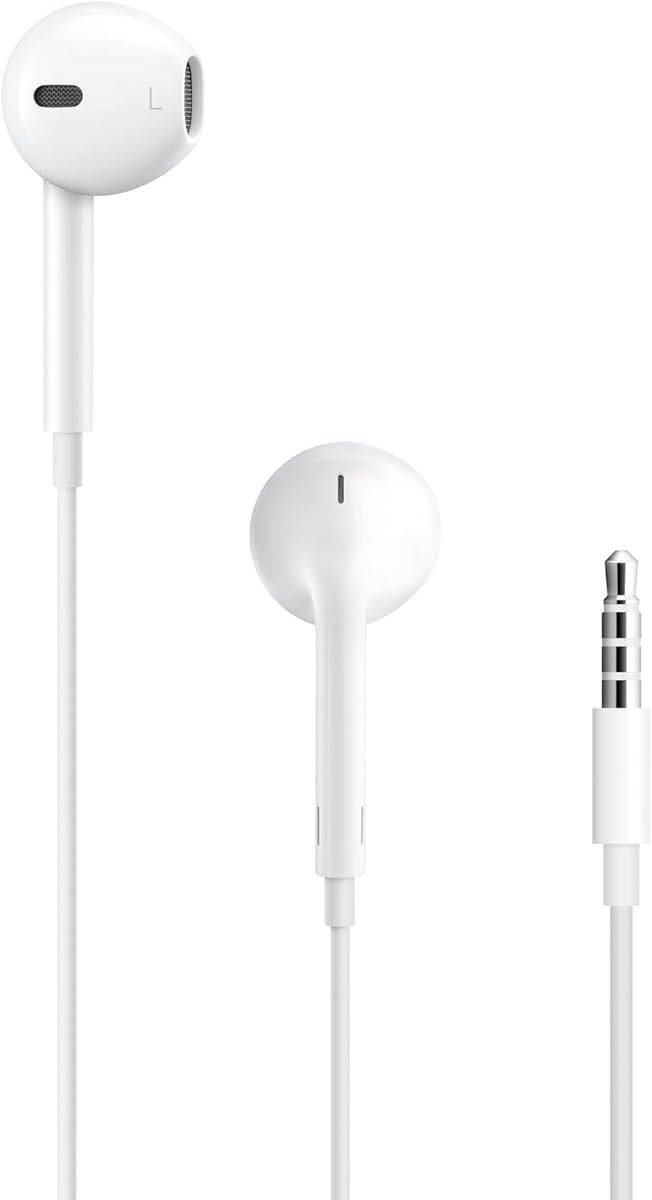
Apple EarPods with a 3.5mm plug are a 4.6-rated compact option for listeners who want familiar earbud-style geometry and direct cable control. The design is intended to sit more comfortably within the ear than traditional circular earbuds while delivering high-quality audio.
We may earn a commission when you buy through this link, at no additional cost to you.
The built-in remote adds volume, playback, and call controls directly from the cord. An integrated microphone captures voice for phone calls, FaceTime conversations, and summoning Siri, making the EarPods more versatile than passive wired earbuds for everyday phone use.
Compatibility is direct with devices that include a 3.5mm headphone jack. The biggest trade-off is physical isolation: the open-style earbud form does not surround the ear, so it will not block environmental noise as effectively as the ARTIX, Audio-Technica, or OneOdio options. Personal fit also matters more with earbuds than with padded on-ear cups.
Choose the Apple EarPods when portability, simple controls, and phone integration matter more than passive noise reduction. They are a strong everyday choice for commuters and smartphone users, while listeners wanting stronger isolation should examine the larger headphone formats.
The cord remote puts playback, volume, and call handling near the connector. This avoids opening a phone or navigating an app when a user needs to pause music or answer a call.
Earbuds take up less space than full headphones and avoid the headband and large earcups entirely. They are easy to carry, although the cable remains attached and the listening experience depends on getting a secure seal.
We may earn a commission when you buy through this link, at no additional cost to you.
The Syncwire 3.5mm Nylon Braided Aux Cable is a 4.6-rated replacement cable rather than a complete headphone. It is included because a strong connection can be as important as the headphones themselves, particularly when an original cable is damaged, poorly routed, or inconvenient at the device.
We may earn a commission when you buy through this link, at no additional cost to you.
The 3.3-foot length provides a compact connection for headphones, car stereos, speakers, tablets, laptops, smartphones, and other equipped devices. Polished 24K gold-plated connectors are designed to maintain a reliable stereo signal, while double shielding is intended to protect against interference.
Its nylon braid offers a durable, tangle-resistant exterior, and the stated testing covers more than 15,000 bends. The included organizer supports easier winding and storage. One important limitation is explicit: the cable is incompatible with LifeProof and OtterBox cases, so bulky protective cases may prevent the connectors from seating fully.
This is the best choice for someone whose compatible headphones already sound good but whose cable needs replacing. It is also a practical backup for travel, office, or car use. Remember that the cable does not add Bluetooth capability, controls, a microphone, or any other active electronic feature.
A replacement cable can restore normal audio use when a pair of otherwise serviceable headphones has a failed connector. The Syncwire cable provides broad 3.5mm compatibility without changing the headphones themselves.
The nylon braid resists tangling, and the organizer makes it easier to wind the cable neatly. These details are useful for anyone who carries wired audio gear in a bag, drawer, or vehicle.
We may earn a commission when you buy through this link, at no additional cost to you.
The Nanxudyj AUX Cord is a 4.6-rated six-foot 3.5mm cable with a right-angle connector. It stands out from ordinary straight replacement cables by reducing strain in tight spaces, making it especially relevant to car stereos, gaming controllers, and devices positioned close to a desk or chair.
We may earn a commission when you buy through this link, at no additional cost to you.
The right-angle shape directs the cable away from the socket, which can prevent the connector from being pushed sideways or bent sharply. The listing highlights compatibility with car systems, PS4 and PS5 controllers, Xbox controllers, speakers, headphones, PCs, and tablets that use a standard 3.5mm connection.
Inside, the cable uses pure copper cores and triple shielding, while the exterior has heavy-duty nylon braiding and reinforced connectors rated for more than 20,000 bends. The flat-style braided construction is also intended to remain tidy during storage and handling.
Choose this cable when connector angle, length, and durability matter more than buying an entire headset. It is a strong fit for existing wired headphones and space-conscious setups. Modern devices without a native jack will still require a separate compatible adapter, which is not included.
The right-angle connector keeps the cable from projecting straight out from the socket. In a car or at a gaming desk, that reduced leverage can make the connection less vulnerable to accidental bending.
Pure copper cores, triple shielding, reinforced connectors, and nylon braiding combine for a cable oriented toward regular use. The six-foot length offers enough reach to arrange devices without keeping the source awkwardly close.
We may earn a commission when you buy through this link, at no additional cost to you.
The most useful 3.5mm headphone depends on where it will be used, how portable it must be, and whether calls, studio monitoring, or simple music playback are the priority.
Earbuds offer the smallest footprint and place almost no weight on the head, making them convenient for short mobile sessions. On-ear headphones add padded cups and a headband without the bulk of a full over-ear model. Over-ear and circumaural designs can surround the ears more completely, while studio-oriented models emphasize isolation, driver performance, and practical cable routing. Choose based on comfort, portability, and isolation rather than treating one format as automatically better.
A 3.5mm plug only works directly with a device that has a compatible jack. Some phones, tablets, and modern laptops omit the port and require a separate adapter, which may add cost, bulk, and another possible point of failure. Also consider connector shape: the Sony MDR-ZX110 uses an L-shaped stereo mini plug, while a right-angle cable can help in confined spaces. Check the case design too, as some protective cases leave too little clearance for a plug.
A headset microphone is essential for online meetings, calls, gaming communication, and recording. The ARTIX CL750, Skullcandy Riff, JBL Tune 530 Wired, OneOdio A70, and Apple EarPods all list microphone capabilities. The Audio-Technica ATH-M20x and Sony MDR-ZX110 are presented primarily as listening or monitoring models, so buyers who need calls should not assume a microphone is included. Inline controls should also be checked for compatibility with the intended phone.
General-purpose models such as the JBL Tune 530 Wired emphasize bass and energetic everyday listening, while the Audio-Technica ATH-M20x is designed for studio tracking and mixing with enhanced low-frequency performance. The OneOdio A70 also emphasizes powerful bass and dynamic stereo sound. There is no universal signature, so consider how you listen: a studio user may need monitoring detail, while a commuter may prioritize isolation, microphone quality, and portable volume.
Comfort depends on weight, pad pressure, clamping force, fit, and whether the design is on-ear or around the ear. The Sony MDR-ZX110 is described as lightweight, while the ARTIX CL750 includes soft cushions and an adjustable headband. The OneOdio A70 uses memory cotton and protein leather over an ergonomic over-ear structure. If extended wear is common, try to assess fit carefully and avoid assuming that all users will find a particular on-ear model equally comfortable.
A foldable or collapsible design is valuable for commuting and travel. The Sony MDR-ZX110 uses swiveling earcups, the Skullcandy Riff folds flat, the JBL Tune 530 Wired folds flat, and the OneOdio A70 has a rotatable and foldable structure. Earbuds are naturally compact, but their attached cables can still tangle. Flat or braided cables improve neatness, while a right-angle connector can reduce strain when space around the device is limited.
Inline controls can make a wired headset much easier to use day to day. The Skullcandy Riff provides call and track control, the JBL Tune 530 Wired uses a one-button remote with microphone, and the Apple EarPods place volume, playback, and call functions on the cord. Remote behavior can vary between devices, so the safest approach is to check the phone or player in advance. The ARTIX CL750 includes a microphone and volume control, but its stated volume function is mobile-only.
A replacement aux cable can extend the life of otherwise usable headphones, but connector shape and length should reflect the setup. The Syncwire cable offers a straight 3.3-foot option for general use, while the six-foot Nanxudyj cable has a right-angle connector suited to tight spaces. Both use braided exteriors and shielding. Neither includes active electronics, so they cannot provide microphone functionality unless the connected headphones already contain a microphone and the cable supports that feature.
Before connecting the headphones, inspect the 3.5mm plug and the device socket for dust, bent pins, or debris. Insert the plug gently by its metal housing rather than pulling or twisting the cable. Once connected, set the device volume to a moderate level, put on the headphones, and then increase the volume gradually. For inline controls, test playback, volume, and microphone functions with the intended phone or computer.
Store wired headphones loosely rather than winding the cable tightly around the earcups. Use the folding feature where available, and take advantage of flat, braided, or right-angle cable designs to reduce kinks. Remove the headphones before pulling the plug from a recessed port, and avoid placing strain on the connector when the device is moved. For vehicles, disconnect the cable when it is not needed to reduce unnecessary wear.
Clean the earcups and headband according to the manufacturer's care instructions, using a soft, slightly damp cloth where appropriate. Do not push moisture into the earcups or around the inline microphone. Keep the cable dry, inspect it for damage, and replace it if the connector becomes loose or the insulation is compromised. Frequent users should pay particular attention to the bends nearest each plug, where cable stress tends to concentrate.
Only if you use a compatible adapter. The headphones require a 3.5mm connection, while a jackless phone needs an appropriate USB-C or Lightning audio adapter that exposes a headphone socket. The product listings for the cable accessories explicitly note that an adapter is not included. Check the phone manufacturer's supported audio accessories before buying.
It depends on priorities. Wired headphones avoid charging, pairing delays, wireless compression, and connection dropouts, while Bluetooth offers greater freedom of movement. The OneOdio A70 provides both options. For a desk, classroom, gaming setup, or device with a stable jack, the physical connection can be especially straightforward.
The ARTIX CL750 is a strong meeting-focused choice because it explicitly includes a crystal-clear inline microphone, noise-isolating earcups, and compatibility with PCs, Macs, PlayStation consoles, and Xbox. The JBL Tune 530 Wired, Skullcandy Riff, OneOdio A70, and Apple EarPods also list microphones, but users should verify that their controls and microphones are compatible with the chosen meeting platform.
Not necessarily. The Sony MDR-ZX110, ARTIX CL750, JBL Tune 530 Wired, and Apple EarPods are described with attached wired connections, and detachable cables are not stated. The Syncwire and Nanxudyj products are replacement aux cables that work with compatible wired headphones whose connectors and cable specifications match. Do not assume that all headphones accept arbitrary replacement cables.
A 3.5mm plug is common on personal headphones, phones, laptops, and portable stereos, while a 6.35mm plug is larger and commonly found on musical instruments, DJ equipment, and some studio gear. The OneOdio A70 includes both a 3.5mm-to-3.5mm cable and a 3.5mm-to-6.35mm cable to cover these different sources.
A standard 3.5mm stereo connection carries two-channel audio, so it does not inherently create surround sound. Some games, devices, or applications can simulate a wider soundstage, but that processing comes from the source rather than the connector itself. The Audio-Technica ATH-M20x and OneOdio A70 are especially relevant to monitoring and DJ-style wired use, but neither changes the underlying two-channel nature of a standard TRS connection.
Comfort varies by person, head size, pad pressure, and the length of the session. Lightweight models such as the Sony MDR-ZX110 may feel less burdensome, while the ARTIX CL750 includes soft cushioned cups and an adjustable headband. Over-ear designs like the OneOdio A70 surround the ears but are bulkier. It is best to consider fit, weight, and the possibility of heat buildup together.
Flat or braided cables, such as those on the JBL Tune 530 Wired and the two cable accessories, are easier to manage than conventional round cords. Store the cable in a loose loop, avoid tight winding around the earcups, and use the included organizer where supplied. A right-angle connector can also reduce tight bending at a car stereo or controller.
The Sony MDR-ZX110 stands out as the most economical travel pick because it combines a lightweight on-ear format, swiveling earcups, and a proven wired design. The JBL Tune 530 Wired is the strongest balanced everyday recommendation, with bass-focused sound, a flat tangle-free cable, folding cups, and an inline microphone. The Audio-Technica ATH-M20x leads the premium and specialist category for studio tracking, mixing, isolation, and low-frequency-focused monitoring.
Your priorities should determine the rest of the list. Choose the ARTIX CL750 for mixed work, study, gaming, and communication; the Skullcandy Riff or Apple EarPods for mobile convenience; the Sony open-air listing for relaxed bass-forward listening; and the OneOdio A70 when wireless and wired flexibility matter. The Syncwire and Nanxudyj cables are better understood as ways to improve an existing wired setup than as complete listening solutions.
Before buying, confirm that every intended source has a native 3.5mm jack or that you will obtain a suitable adapter. Check microphone and inline-control compatibility, then consider fit, storage, connector angle, and intended sound style. Ratings, product availability, and prices can change, so review the current listing and latest customer feedback before making a final purchase.