
ACR ResQLink View RLS
4.8Editor score
Return Link Service confirmation
No subscription required
GPS and Galileo positioning
Our Personal Locator GPS Beacon guide compares ten leading SOS beacons, satellite communicators, features, coverage, battery life, and emergency readiness.
A personal locator GPS beacon is a dedicated emergency device designed to transmit a distress signal and your position when ordinary phones, radios, or cellular networks are unavailable. The best models combine satellite reception, accurate positioning, visible signaling, dependable power, and straightforward activation for hikers, boaters, climbers, travelers, and remote workers.
This guide compares ten satellite safety devices based on the features and specifications listed for each product. It covers Return Link Service, satellite constellations, display design, strobes, waterproofing, battery life, subscription requirements, attachment options, and the different communication functions offered by beacons and satellite communicators.
Each entry explains who the device is best suited for, what stands out, and where its priorities differ from the alternatives. Ratings provide an additional point of reference, but registration, intended environment, and required communication features should determine the final choice. Product listings and availability can change over time.
4.8Editor score

4.7Editor score
4.5Editor score
The comparison below highlights each product's strongest documented features, from distress-signal support and positioning systems to visual signals, battery endurance, and connectivity. It also separates dedicated personal locator beacons from the Garmin satellite communicator, which offers a broader messaging and coordination feature set.



The ACR ResQLink View RLS combines a dedicated satellite distress beacon with one of the most reassuring feedback features in this category: Return Link Service. It can confirm that Search and Rescue has received the emergency signal, helping the owner know that help has been notified. Its 4.8 rating also places it among the strongest-reviewed products in the group.
We may earn a commission when you buy through this link, at no additional cost to you.
Its feature set is built around dependable rescue performance. GPS and Galileo GNSS support positioning, while MEOSAR compatibility provides global satellite coverage. The digital display offers useful device feedback, and both visible and infrared strobes improve the chance of detection in different conditions. A five-year stated battery life and more than 28 hours of operational life reinforce the emphasis on long-term readiness.
The device also includes built-in buoyancy, a compact and lightweight form, and a multifunction clip system for carrying or attaching it. Those details make it relevant to boating, hiking, climbing, camping, and other activities where a beacon may be dropped into water or carried in awkward gear. It requires no subscription, which simplifies long-term ownership planning.
This is the most feature-forward dedicated beacon in the list, but the additional Return Link Service capability can be especially valuable when an emergency leaves time for uncertainty. It is a strong choice for users who want satellite distress transmission, position confirmation, visual signaling, and broad GNSS support in one package. Anyone choosing it should still register the beacon correctly and test it before relying on it.
Because it is a dedicated PLB rather than a general satellite communicator, its primary strength is emergency signaling instead of routine messaging. That makes it best suited to people who want a simple rescue tool with unusually reassuring confirmation rather than an always-connected communication device.
Return Link Service provides a practical advantage during an emergency: the device can indicate that Search and Rescue has received the distress signal. This does not replace emergency planning, but it gives the user more information about the activation process than a beacon that only transmits silently.
GPS and Galileo GNSS support accurate positioning, while the digital display, LED strobe, and infrared strobe provide both information and visual signaling. This combination is useful when rescuers need a location fix and a person also needs to be easier to detect in poor light.
We may earn a commission when you buy through this link, at no additional cost to you.
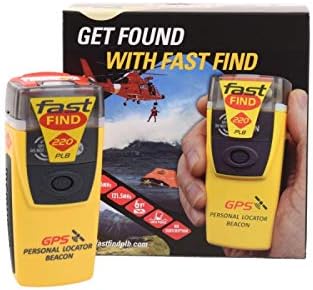
The McMurdo FastFind 220 is a focused personal locator beacon with a 4.5 rating and a straightforward operating concept. It sends an emergency distress signal through the international satellite rescue system and is programmed for registration with the US country code. Its main appeal is simplicity rather than an expansive collection of secondary features.
We may earn a commission when you buy through this link, at no additional cost to you.
Activation requires deploying the antenna, pulling the anti-tamper seal, and pressing the ON button. That sequence is easy to explain and practical for a device intended to be operated in a stressful outdoor emergency. The product information notes that PLBs have been proven in remote and challenging conditions, although users still need to follow the manufacturer's instructions exactly.
Registration is the most important consideration for this particular listing. The beacon can function around the world, but its initial emergency contact is with US Search and Rescue authorities because of its country-code programming. Travelers outside the US should obtain the appropriate regional listing or confirm that the device is correctly programmed and registered for their location.
The FastFind 220 suits users who want a dedicated distress beacon without routine satellite messaging, mapping, or a touchscreen interface. It is a practical choice for hiking, boating, camping, and other trips where cellular service is unreliable. Its 4.5 rating reflects a well-regarded product, while the lack of a display and expanded communications makes it less suited to travelers who want to check in routinely.
Overall, this is a disciplined emergency tool. If straightforward activation, international operating potential, and focused distress signaling are the priorities, it deserves close consideration. Proper registration and an understanding of the severe-and-imminent-danger activation policy remain essential.
The antenna, anti-tamper seal, and ON button form a short activation process that can be learned before an emergency. Simple controls are valuable because a user may be injured, cold, wet, or otherwise impaired and need to deploy the beacon without navigating a complex interface.
The US-programmed listing operates internationally, but its emergency point of contact depends on the programmed country code. International travelers should select the appropriate regional version rather than assuming that worldwide capability automatically includes correct local registration.
We may earn a commission when you buy through this link, at no additional cost to you.
The ACR ResQLink View PLB425 is a buoyant GPS personal locator beacon rated 4.6. It is designed for outdoor users who need a robust emergency signal, a visual position display, and multiple ways to carry the device. Its support for hikers, boaters, campers, climbers, and RV travelers reflects its broad outdoor orientation.
We may earn a commission when you buy through this link, at no additional cost to you.
Once activated, the beacon sends an SOS distress signal with a GPS position through the 406 MHz emergency system and includes a 121.5 MHz homing signal. It uses the COSPAS-SARSAT satellite constellation to send distress messages directly to Search and Rescue agencies worldwide without requiring a subscription or rescue monitoring center.
A bright LED strobe and infrared strobe make the device visible in different conditions, while the buoyant housing is especially relevant on the water. The supplied attachment system includes a belt clip, oral inflation tube clip, straps, and a lanyard. Optional 406Link testing subscriptions can support pre-canned self-test and GPS-test messages, but emergency distress transmission itself does not require that subscription.
This model is a good fit for buyers who want a display and visual signals but do not need the Return Link Service confirmation found in the RLS versions. It balances emergency capability, buoyancy, and flexible mounting options. The principal trade-off is that some messaging and testing features are tied to an optional service rather than included as a broader communication platform.
For general outdoor and marine safety, the ResQLink View PLB425 offers a compelling mix of global distress signaling, GPS positioning, strobes, and secure carry options. Register it properly and use the available test functions before traveling so that the device and its contacts are ready if needed.
Built-in buoyancy distinguishes this model for boating and other activities where a beacon may enter the water. Multiple clips, straps, and lanyards let users keep it accessible on a belt, inflatable tube, pack, or clothing.
The 406 MHz emergency signal carries the distress alert and position information, while the 121.5 MHz homing signal supports nearby directional finding. COSPAS-SARSAT compatibility provides international coverage without an ongoing subscription.
We may earn a commission when you buy through this link, at no additional cost to you.
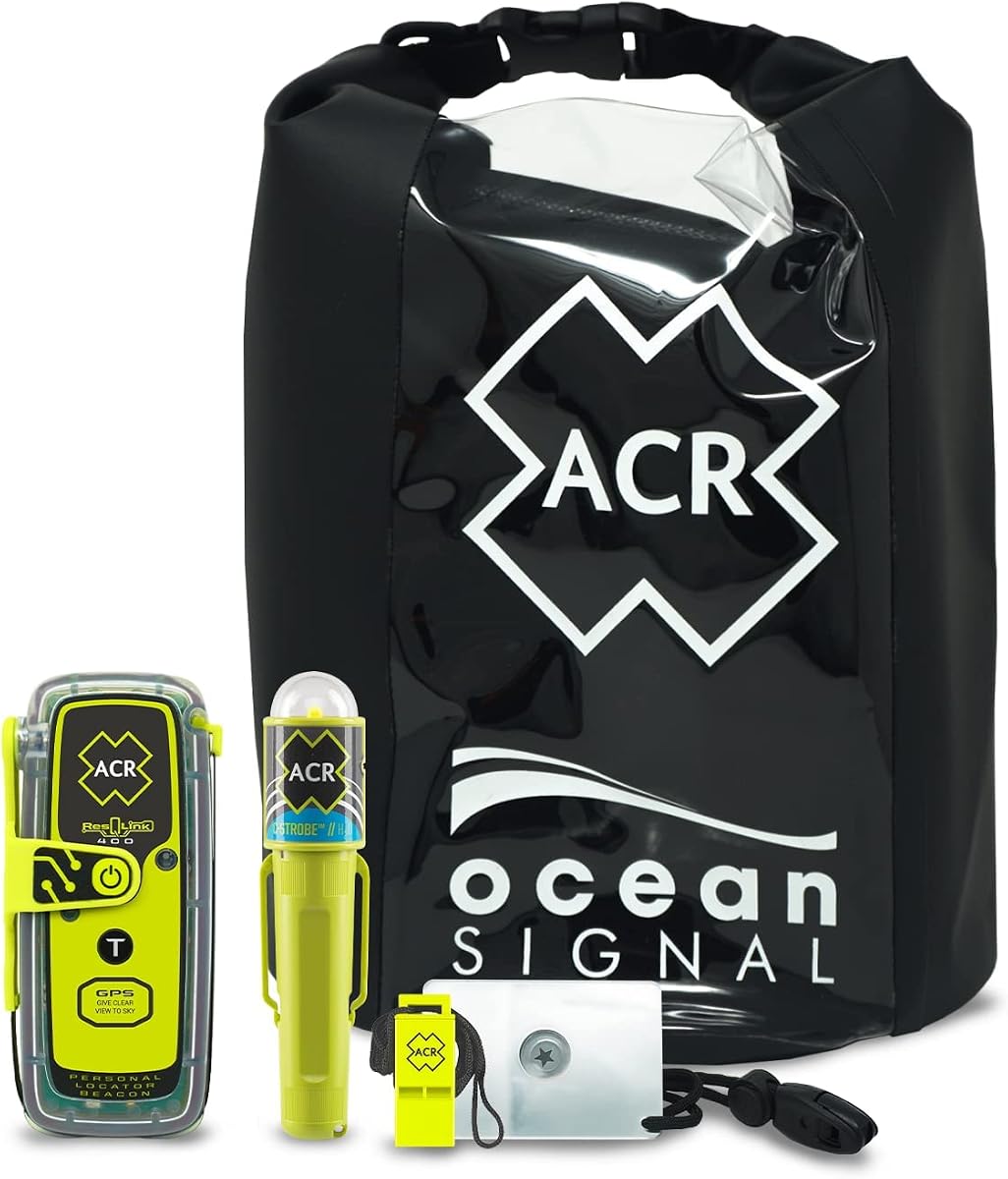
The ACR ResQLink 400 Survival Kit pairs a GPS personal locator beacon with several complementary signaling and protection tools. It carries a 4.7 rating and offers a broader emergency package than a standalone beacon. The included C-Strobe H2O rescue light, Res-Q whistle, RapidDitch drybag, and signal mirror cover visibility, sound, gear protection, and reflected sunlight.
We may earn a commission when you buy through this link, at no additional cost to you.
The beacon itself is intended to provide GPS tracking, a strobe, and rapid rescue signaling in a compact design. Around it, the rescue light uses a waterproof housing and high-visibility LED for day or nighttime use. The whistle delivers a loud, clear sound, while the signal mirror can reflect sunlight over distance. Together, these features provide several ways to attract attention when a phone or satellite signal is unavailable.
The RapidDitch drybag adds a less obvious but valuable benefit. It keeps essential survival gear dry and makes it easier to access items in wet weather. That is particularly relevant for marine trips, rainy hikes, and pack-based adventures, although buyers who already own a suitable waterproof container may see it as redundant.
This kit is most appealing to users who want a ready-made emergency package rather than selecting every accessory individually. It could serve as a gift for a new hiker, boater, or camper, provided the beacon is registered for the intended user's location. Its trade-off is that the bundle may include equipment an experienced user already owns, and the beacon itself does not offer the display seen in some View models.
The ResQLink 400 Kit is a strong all-around choice when redundancy and ready-to-use accessories matter. A registered beacon remains the centerpiece, while the extra light, whistle, mirror, and drybag broaden the response options if a person is conscious and able to use them.
The waterproof strobe, whistle, and signal mirror create visible, audible, and reflected-light signals. Redundancy matters because visibility, sound, and weather conditions can differ at the moment a rescue team approaches.
The included drybag gives small survival items a protected, accessible home. It complements the beacon by helping users keep emergency supplies organized and dry during wet or demanding conditions.
We may earn a commission when you buy through this link, at no additional cost to you.
The Ocean Signal rescueME PLB1 is a compact satellite SOS beacon built around portability and simple emergency operation. Its 4.6 rating reflects a well-regarded product, and its listed weight of just four ounces makes it easy to carry without dedicating substantial space in a pack or jacket.
We may earn a commission when you buy through this link, at no additional cost to you.
One-handed operation is a central benefit. The device is designed so a user can activate it without navigating a complex menu or handling several small controls. Its 66-channel GPS receiver supports positioning, and a one-candela high-intensity strobe helps make the wearer visible. The stated battery life is seven years, with more than 24 hours of operational life after activation.
Water resistance is another major strength. The PLB1 is rated waterproof to 49 feet, making it suitable for marine use as well as land activities. Its unique mounting clip makes it easy to attach to a lifejacket, while its small body avoids the bulk associated with larger emergency electronics. It uses international government rescue satellites and requires no subscription.
The trade-off is its focused role. The rescueME PLB1 is intended for distress activation rather than daily messaging, weather forecasts, or interactive trip tracking. Users who need to communicate with family or coordinate routine updates should consider a satellite communicator instead. Even dedicated users should understand that the beacon is for grave and imminent danger.
For travelers who prioritize minimum weight, one-handed activation, and water resistance, the rescueME PLB1 is highly practical. It is especially attractive for boaters, paddlers, hikers, and solo adventurers who want reliable emergency signaling without a large device or ongoing service.
At four ounces, the PLB1 is among the lightest dedicated beacons listed. Its small footprint and lifejacket mounting clip make it realistic to carry continuously rather than leaving it behind because it seems too bulky.
One-handed operation reduces the number of steps a person must manage during a stressful emergency. The result is a device focused on activation, positioning, satellite transmission, and visibility rather than everyday connectivity.
We may earn a commission when you buy through this link, at no additional cost to you.
The ACR ResQLink 400 PLB is a dedicated satellite SOS beacon with a 4.7 rating. It combines GPS and Galileo GNSS positioning with COSPAS-SARSAT and MEOSAR compatibility, giving it a broad foundation for emergency detection and global rescue coverage. It does not require a subscription to use its core rescue function.
We may earn a commission when you buy through this link, at no additional cost to you.
The device sends a 406 MHz distress signal and provides a 121.5 MHz homing signal. Its LED strobe and infrared strobe provide visual signals suited to different ambient conditions. These features make it a practical choice for people who want a straightforward PLB without a large display or a collection of routine communication tools.
The absence of a screen is the defining trade-off compared with the ResQLink View models. It is not designed for weather forecasts, interactive messaging, or regular location checks, which keeps its emergency purpose clear. The smaller feature set may appeal to users who value simplicity, dependable satellite compatibility, and a form that is easy to carry on outdoor trips.
This ResQLink 400 works well for hikers, climbers, paddlers, campers, and boaters who want the beacon to perform one job exceptionally well. Its position information supports Search and Rescue, while the homing signal and strobes help responders locate the person after arrival. It is also a sensible alternative to the survival kit for buyers who already own their own emergency accessories.
For a dedicated global distress beacon with multiple positioning and satellite systems, this model offers a strong balance of capability and simplicity. Registration is still essential, and users should become familiar with the activation procedure before traveling into remote areas.
Compatibility with COSPAS-SARSAT and MEOSAR supports international emergency coverage, while GPS and Galileo GNSS contribute positioning information. Supporting several systems can be reassuring for trips that cross remote regions and borders.
The lack of a display and messaging interface keeps this model centered on emergency activation. That simplicity can be an advantage for users who do not want to manage a connected device during an expedition.
We may earn a commission when you buy through this link, at no additional cost to you.
The ACR ResQLink View Survival Kit combines a display-equipped GPS personal locator beacon with four supporting emergency items. Its 4.7 rating reflects a favorable view of the package, which includes a C-Strobe H2O waterproof rescue light, a Res-Q whistle, a RapidDitch drybag, and a signal mirror.
We may earn a commission when you buy through this link, at no additional cost to you.
The beacon contributes GPS tracking, a visual display, a bright strobe, and fast rescue signaling. The screen is a useful distinction from display-free models because it gives the user more feedback during operation and testing. The rest of the kit broadens the ways to call attention to a missing or injured person.
The rescue light supplies a bright LED strobe in a waterproof housing, making it suitable for low-light, nighttime, or wet conditions. The whistle provides an audible signal, and the mirror can reflect sunlight over a distance. The drybag offers waterproof storage with quick access to emergency essentials. None of these accessories replaces the beacon's satellite distress function, but each can help in a different scenario.
Compared with a standard beacon-only purchase, this kit is more comprehensive and convenient for someone assembling an emergency kit from scratch. Its disadvantages are added bulk and the possibility of duplicate equipment for experienced users. The display-equipped beacon is also not identical to the RLS model because Return Link Service confirmation is not listed as a bundle feature.
This is a versatile option for households, families, and outdoor beginners who want both a capable beacon and supporting rescue equipment. It offers a reassuring balance of satellite communication, visual feedback, audible signaling, and weather protection, making it easier to build one coordinated emergency setup.
The display sets this View model apart from simpler, screen-free PLBs. It provides an additional way to interact with and understand the beacon, which can be valuable during routine checks as well as emergency operation.
The waterproof strobe, whistle, mirror, and drybag complement the beacon with light, sound, reflected signal, and protected storage. The bundle gives new users several practical tools without requiring separate accessory selection.
We may earn a commission when you buy through this link, at no additional cost to you.
The ACR ResQLink 410 RLS is a buoyance-equipped personal locator beacon with a 4.5 rating. Its defining feature is Return Link Service, which confirms that Search and Rescue has received the emergency distress signal and can alert the owner. Like the other RLS selections, it is designed to give users more certainty after activation.
We may earn a commission when you buy through this link, at no additional cost to you.
GPS, Galileo GNSS, and MEOSAR compatibility provide its positioning and global rescue foundation. The beacon requires no subscription and has a stated five-year battery life, along with more than 24 hours of operational life. A strobe and infrared strobe make it more visible, while built-in buoyancy supports water-related use.
The multifunction clip system allows flexible attachment and quick access, and the small, lightweight construction keeps carrying convenient. Its feature priorities are similar to the ResQLink View RLS, although the documented operational endurance is slightly shorter. That difference does not remove the central value of distress receipt confirmation and global compatibility.
The ResQLink 410 RLS is well suited to hikers, boaters, climbers, and campers who want a dedicated PLB with no recurring service. Its main limitation is that it does not provide the routine messaging, weather, tracking, and touchscreen functions of a full satellite communicator. It is an emergency instrument rather than a communications hub.
For buyers who prioritize Return Link Service, buoyance, GNSS support, and long battery readiness, this beacon is a compelling option. Just as with every PLB, proper registration, periodic testing, and familiarity with the controls are essential parts of making the device useful.
Return Link Service confirms receipt of the emergency distress signal by Search and Rescue. That feedback can reduce uncertainty during a critical event and differentiates this model from beacons that transmit without indicating the acknowledgment status.
Built-in buoyancy adds a clear safety benefit on the water, while the multifunction clip system simplifies attachment. The result is a beacon that can move comfortably between a belt, pack, lifejacket, or other suitable carry point.
We may earn a commission when you buy through this link, at no additional cost to you.
The ACR ResQLink 400 No Display is a compact personal locator beacon that carries a strong 4.8 rating. Its appeal lies in a deliberately simple approach: no screen and a focus on emergency use. The listing identifies manufacturer part number 2921 and describes the product as being sold by an authorized dealer.
We may earn a commission when you buy through this link, at no additional cost to you.
Compared with the View models, this device omits the display and emphasizes a more traditional PLB format. That can make it suitable for users who do not need on-device position viewing or routine interaction. The seller also states that return shipping for damaged or defective items is covered, which adds some purchase reassurance even though the listing provides less technical detail than the other entries.
The limited product information is the main consideration. While the title and image identify it as a ResQLink 400 without a display, this listing does not repeat the detailed specifications, coverage descriptions, and attachment information found on other ResQLink pages. Buyers should therefore review the current manufacturer documentation and confirm the device's features before ordering.
For an experienced outdoor user who already understands PLBs, the screen-free format may be an advantage rather than a limitation. It should appeal to people seeking a straightforward emergency beacon without a subscription or communication interface. It is less appropriate for buyers who need the listing itself to explain detailed satellite support, strobe behavior, or attachment options.
The high rating and authorized-dealer status make this listing worth considering, but informed purchasing is essential. Confirm the exact model number, registration requirements, included accessories, and operating specifications. If those details align with a dedicated PLB's priorities, it may be a solid and economical way to carry satellite distress capability.
Removing the display emphasizes emergency activation over status navigation or routine use. For experienced users, fewer controls and less screen content can make the device conceptually simpler, although visual confirmation of information is unavailable.
The product is identified as manufacturer part number 2921 and comes from an authorized dealer, but the listing includes less feature detail than the other options. Buyers should verify current specifications, registration instructions, and package contents directly.
We may earn a commission when you buy through this link, at no additional cost to you.
The Garmin inReach Mini 3 Plus is more than a conventional distress beacon: it is a compact satellite communicator designed for messaging, media sharing, live location, and interactive emergency coordination. Its 4.7 rating reflects a versatile feature set, and it stands apart from the dedicated PLBs in this comparison through two-way communication and smartphone app integration.
We may earn a commission when you buy through this link, at no additional cost to you.
Using the Iridium satellite network, the device can exchange texts, voice messages, and group messages outside cellular coverage. When paired with a compatible smartphone, it can also capture and send photos through the Garmin Messenger app. That makes it useful for hikers, workers, and travelers who need to remain contactable between emergencies rather than waiting to activate a distress beacon.
Its interactive SOS function sends an alert to Garmin Response, a 24/7 staffed emergency coordination center that receives the location and supports two-way communication during a crisis. The rugged enclosure has an IP67 rating and a scratch-resistant color touchscreen. The internal rechargeable battery can provide up to 350 hours in 10-minute tracking mode or up to 95 hours in performance messaging mode.
The Garmin Explore and Messenger apps add trip planning, weather forecasts, LiveTrack sharing, distance, time, and elevation information. Voice commands allow hands-free check-ins, while preset messages help users communicate without using every available text allotment. The bundle also includes a microfiber cleaning cloth, a 10-foot USB Type-A to USB Type-C cable, and a USB wall charger.
This is the most versatile option for users who want regular satellite communication as well as emergency support. Its main trade-off is the ongoing service required for network connectivity and a more complex feature set than a dedicated PLB. It is a strong choice for coordinated travel, field work, and peace of mind between emergencies, while dedicated-beacon buyers may prefer a simpler device with no subscription.
Two-way texts, voice messages, group messaging, and compatible photo sharing allow users to check in throughout a trip. LiveTrack, trip planning, weather forecasts, and elevation data add value between emergency activations.
An interactive SOS alert reaches a staffed Garmin Response center with the user's location and opens a channel for two-way crisis communication. This adds a direct coordination layer that a one-way distress beacon does not offer.
The scratch-resistant color touchscreen and IP67-rated housing are designed for demanding terrain and severe weather. Rechargeable battery options support extended tracking and performance messaging for multi-day trips.
We may earn a commission when you buy through this link, at no additional cost to you.
The right personal locator GPS beacon depends on whether you want a dedicated emergency transmitter or a full satellite communicator, as well as the environments you visit and the amount of setup you are willing to manage.
A dedicated personal locator beacon is optimized for one primary action: sending an SOS distress alert and position information when rescue is needed. These devices generally require registration but do not need an ongoing communication subscription. A satellite communicator adds two-way messaging, check-ins, weather, tracking, and sometimes media sharing, but it normally requires an active service plan. Choose based on whether routine contact matters as much as emergency signaling.
Registration is required by law in many countries and gives Search and Rescue personnel important information about the beacon owner and emergency contacts. Some listings are programmed for a particular country code, such as the McMurdo FastFind 220 US version. A beacon can still operate internationally, but the initial emergency contact may be with the home-country authorities. Travelers should choose the appropriate regional programming and register the device wherever required.
Look for compatibility with the international rescue satellite systems relevant to your destinations. The listed products reference COSPAS-SARSAT, MEOSAR, or both, while positioning systems include GPS and Galileo GNSS. Broader support can be reassuring on remote international trips. A dedicated PLB handles position automatically during activation, whereas a communicator may also offer manual check-ins, LiveTrack, weather, and route information.
Return Link Service can confirm that Search and Rescue has received the distress signal and alert the beacon owner. The ACR ResQLink View RLS and ResQLink 410 RLS both list this capability. Feedback does not guarantee the timing or outcome of a rescue, but it removes the uncertainty of not knowing whether an activation was received. Users who place a high value on post-activation information should prioritize this feature.
Battery readiness has two parts: how long the device can remain in storage and how long it can operate after activation. The ACR View RLS lists a five-year battery life and 28+ hours of operating life, while the PLB1 lists seven years and more than 24 hours. The Garmin inReach Mini 3 Plus uses a rechargeable battery and lists up to 350 hours in 10-minute tracking mode or 95 hours in performance messaging mode. Compare both categories for the trip type.
Marine users should look specifically for built-in buoyancy and an appropriate waterproof rating. The ACR View RLS, ACR ResQLink 410 RLS, and Ocean Signal rescueME PLB1 are described as buoyant, while the PLB1 is waterproof to 49 feet. Water resistance protects the electronics, but buoyancy can improve the chance that a person and beacon remain at the surface. A lifejacket mounting clip or compatible attachment should also be part of the plan.
A bright strobe helps rescuers locate a beacon in poor light, and an infrared strobe adds another visual signal. Display-equipped models can show device information, while screen-free units offer a simpler operating concept. Attachment systems also differ: some include belt clips, straps, lanyards, inflation-tube clips, or multifunction clips. Choose features that make the device easy to reach and keep it accessible during the activity rather than buried in a pack.
Most dedicated PLBs in this list require no subscription for their core emergency function. The Garmin inReach Mini 3 Plus supports texts, voice messages, group messages, photos, weather, and tracking through the Iridium network, but its connectivity depends on a service. Some ACR testing features may also use an optional 406Link subscription. Check all service requirements before travel because a monthly plan or activation process can affect setup and ongoing readiness.
Before relying on a beacon, read its manual, register it with the appropriate authority, and enter accurate emergency contacts. Learn the activation sequence while you have time to concentrate. Practice reaching the antenna or clip, removing any seal, and pressing the required button without triggering a real rescue alert. Use only the manufacturer's test functions for routine checks.
Carry the device according to the activity. Keep it accessible on a belt, jacket, pack, or lifejacket rather than sealed in storage. For water use, secure it with an appropriate clip and verify that its closure and attachment remain intact. Read any operating guidance for the specific model because activation steps can differ, and never activate a PLB for testing or convenience.
Inspect the device, antenna, clip, battery indicator, and any included accessories before every trip. Keep contacts and travel information current. Replace or service the unit as directed by the manufacturer, and avoid exposing it to damage or moisture beyond its rated specifications. After use, follow the activation instructions to determine whether the device can be safely returned to standby mode.
The dedicated PLBs featured here state that their core emergency operation does not require a subscription. Some optional testing functions may use an additional service. The Garmin inReach Mini 3 Plus is different because its satellite messaging, tracking, and interactive SOS features require ongoing connectivity through its service plan.
Yes. These devices communicate with satellite systems rather than relying on cellular towers, which makes them useful in remote areas. A dedicated PLB sends emergency distress information and a position, while a satellite communicator can also provide two-way messages, check-ins, and location sharing.
Registration is required by law in many countries and is strongly recommended everywhere. It identifies the owner and gives Search and Rescue authorities useful contact and travel information. A beacon may transmit without registration, but emergency services may have difficulty identifying the person or coordinating the response.
A PLB is primarily an emergency distress beacon, often activated for grave and imminent danger. A satellite communicator is designed for regular two-way communication and may also include tracking, weather, media, and interactive emergency coordination. Your preferred communication style and need for routine check-ins should guide the choice.
It may not be essential for ordinary land-only hiking, but it adds an important safety layer for boating, paddling, canyoning, or routes near water. A waterproof rating protects the device, while buoyancy helps the beacon remain accessible if it falls into the water. Consider both features whenever water is part of the trip.
Most modern PLBs are designed for global satellite rescue coverage, but their registration and country programming matter. Some product listings are configured for a particular country code even though they can operate elsewhere. International travelers should confirm that the beacon is registered correctly and that its initial point of contact is appropriate for their destination.
Use the test mode or self-test function described in the manual, and verify that the unit and registered contacts receive the expected confirmation. Do not activate the actual SOS function to test the device, because false alerts can divert rescue resources and endanger lives. Perform the test before trips and when the battery or registration status changes.
Carrying a phone is still useful because it provides familiar communication, apps, navigation, and access to local information when cellular or Wi-Fi service exists. A beacon adds a dedicated emergency layer that can work beyond cellular coverage, so the two devices can complement rather than replace each other.
The ACR ResQLink View RLS stands out for buyers who want a premium dedicated beacon with Return Link Service, digital feedback, infrared and visible strobes, global compatibility, and extended battery readiness. The McMurdo FastFind 220 offers a more focused and budget-conscious emergency beacon with simple activation, while the Garmin inReach Mini 3 Plus is the most versatile option for two-way satellite communication and interactive coordination.
Your priorities should determine the rest of the field. Boaters should pay close attention to buoyancy and waterproofing, hikers may value weight and attachment options, and travelers can benefit from multiple satellite and GNSS systems. Choose Return Link Service if signal acknowledgment is especially valuable, or select a communicator when regular check-ins and two-way contact matter as much as SOS transmission.
Before making a final purchase, verify the current listing, registration requirements, included accessories, service terms, and manufacturer specifications. Product features, bundles, and availability can change, so checking the latest listing and documentation helps ensure that the device remains aligned with your intended activities and emergency plan.