
3-in-1 RCA Audio Cable
4.8Editor score
Lightning USB-C and 3.5mm
Gold-plated stable connectors
Reinforced braided cable design
Lightning to RCA Cable guide comparing 10 options for iPhone compatibility, connector design, sound quality, cable length, durability, and easy setup at home.
A Lightning to RCA cable gives an iPhone or iPad a straightforward way to send analog stereo audio to a car stereo, home receiver, amplifier, powered speaker, or other equipment with red and white RCA inputs. A worthwhile cable should combine dependable device compatibility, balanced left and right channels, solid connectors, and enough flexibility for the intended setup.
The ten products in this guide were compared using their published specifications and stated features, including connector configuration, supported devices, construction, length, installation needs, and customer ratings. The list covers dedicated Lightning cables, MFi-certified options, compact 3.3-foot models, extended 10-foot leads, and versatile 3-in-1 designs with USB-C or 3.5mm inputs.
Each review explains the strongest reasons to consider a particular cable while also noting practical limitations. The three highlighted picks cover different priorities: a flexible multi-device option, a compact Lightning-focused cable, and a budget-friendly dedicated adapter. As with all marketplace products, prices and availability can change, so check the current listing before buying.
4.8Editor score

4.5Editor score

4.4Editor score
This side-by-side comparison shows the source options, length, construction, channel design, and intended equipment compatibility of all ten cables, making it easier to identify the model that fits a particular iPhone, iPad, amplifier, speaker, or car stereo.


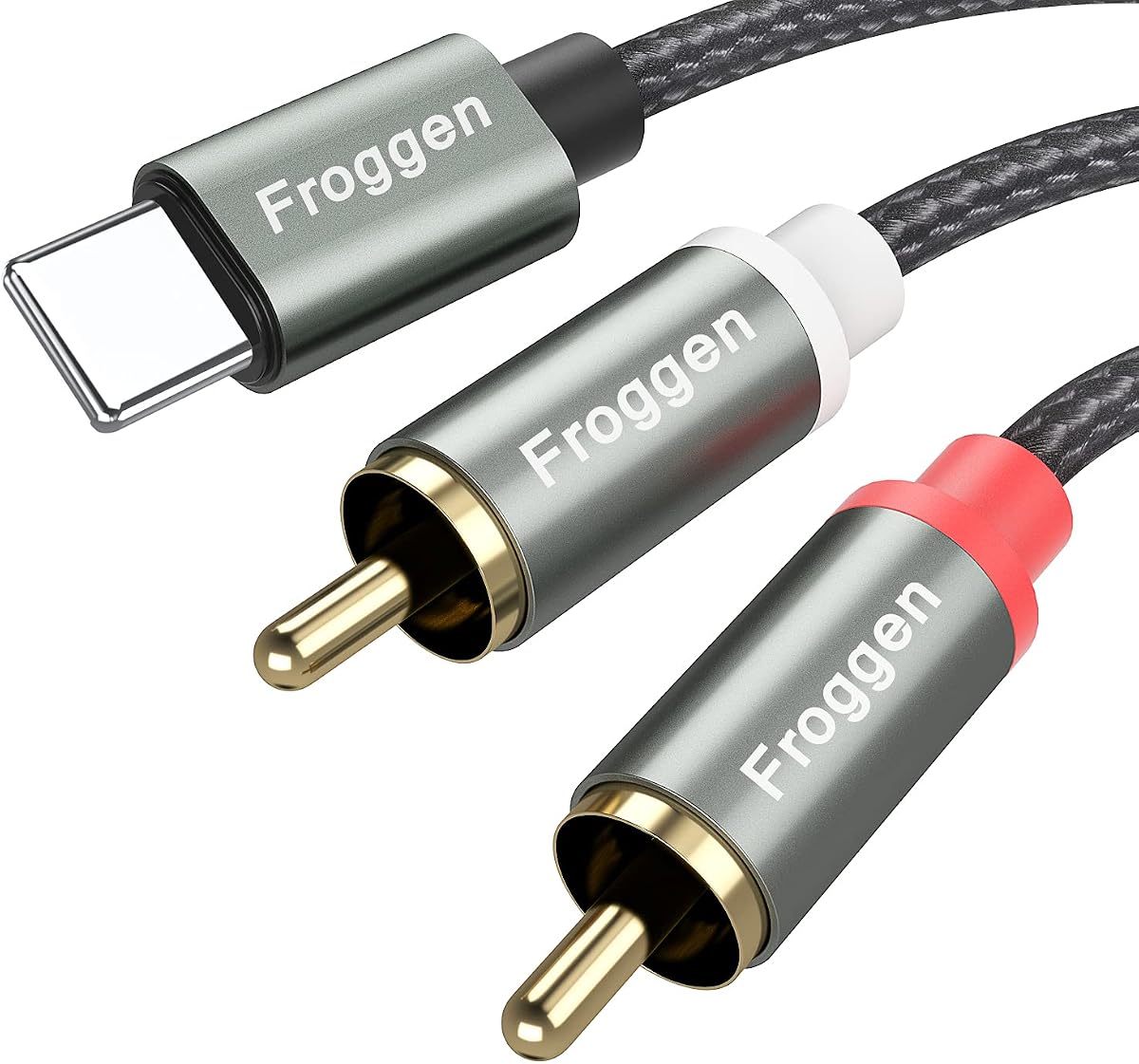
This 3-in-1 cable is the most flexible option in the guide because it combines a Lightning connector, a USB-C connector, and a 3.5mm audio connector with a pair of RCA outputs. It carries a 4.5 customer rating and is positioned for anyone who wants one cable to serve several phones, tablets, laptops, and other audio sources rather than maintaining a separate adapter for each device family.
We may earn a commission when you buy through this link, at no additional cost to you.
The construction details are particularly useful for a permanent installation. Gold-plated contacts and an oxygen-free copper core support signal conductivity, while dual shielding is intended to reduce outside interference. The double-braided nylon jacket should also make the lead easier to route behind a dashboard, around an entertainment center, or along the edge of a desk without creating a bulky, easily tangled cable.
The main trade-off is that a multi-purpose cable is not as simple as a dedicated Lightning lead. A buyer must identify the appropriate input and make sure the chosen connector actually matches the source device. Its 20,000-plus bend rating is reassuring, although actual longevity still depends on the severity of daily use, storage habits, and whether the cable is repeatedly bent at the connector joints.
This is the recommended choice for households or car audio setups that mix Lightning and USB-C devices. It offers the strongest all-in-one convenience in the list, requires no apps or drivers, and is supported by broad compatibility with iPhone, iPad, USB-C phones, car auxiliary systems, amplifiers, receivers, speakers, and home theater equipment.
The three source connectors let the same RCA output work with an iPhone, a USB-C phone, or a source with a headphone jack. That versatility can simplify travel, shared vehicles, and mixed-device homes without requiring a separate adapter for every connection.
Dual shielding, gold-plated connectors, an oxygen-free copper core, and a double-braided jacket make this a practical option for permanently routed or frequently handled installations.
We may earn a commission when you buy through this link, at no additional cost to you.
This dedicated Lightning to 2 RCA cable offers a direct, uncomplicated route from an iPhone, iPad, or compatible iPod to a stereo system. Its 4.4 rating, six-foot length, and stated support for iOS 17 make it a sensible budget-oriented choice for users who want more placement flexibility than a very short adapter allows.
We may earn a commission when you buy through this link, at no additional cost to you.
The cable uses gold-plated connectors and copper to support conductivity and stereo transmission. It works with car stereos, home stereos, speakers, power amplifiers, and other RCA-equipped equipment, and the installation is genuinely plug and play. There is no need to install an app, add a driver, or navigate a complicated setup process.
Compatibility deserves attention because the product description specifically mentions iOS 17 and earlier. It lists an extensive range of iPhone, iPad, and iPod models, including several older generations, but the absence of a Lightning connector means it will not work with a USB-C-only iPhone. Checking the relevant port and current operating system before ordering is sensible.
This is a good pick for a basic car, office, meeting room, or home audio arrangement that needs a longer dedicated Lightning cable. It offers the essentials—stereo RCA output, useful length, and simple installation—without paying for multi-device functionality that the buyer may never use.
At six feet, the cable provides enough distance to place a phone comfortably while still reaching a dashboard input, shelf-mounted receiver, or nearby amplifier. That makes it more adaptable than a compact adapter without creating a cumbersome run.
The Lightning end and color-coded RCA plugs connect directly to compatible equipment. The listed plug-and-play design avoids application installation and works with a broad selection of older and newer listed iOS devices.
We may earn a commission when you buy through this link, at no additional cost to you.
This cable's defining feature is its stated Apple MFi certification, which makes it appealing to buyers who prioritize a standardized, recognizable connection for Lightning iOS devices. It has a 4.2 rating and provides dedicated Lightning-to-stereo-RCA conversion for speakers, receivers, car stereos, amplifiers, and home theater systems.
We may earn a commission when you buy through this link, at no additional cost to you.
The product is advertised as plug and play, with no app required, and its description specifically states support for iOS 14 and earlier. The listed compatibility extends across many iPhone generations, iPad families, and iPod touch models. Red and white RCA plugs identify the right and left stereo channels, reducing the chance of an incorrect connection.
The principal limitation is the explicitly stated iOS 14 ceiling. A current iPhone may run a much newer version of iOS, and buyers should not assume that MFi certification alone guarantees operation with every future software release. It is also important to recognize that a passive analog cable does not add power amplification for passive speakers.
This model makes the most sense for a compatible older or still-supported Lightning iPhone used with an RCA-equipped stereo. Its certification is a strong selling point, but buyers should confirm both the device port and operating system before making it part of a permanent installation.
MFi certification provides a clear assurance that the Lightning accessory has been built to Apple's accessory program requirements. That can be reassuring for owners who want a dedicated cable rather than a multi-connector alternative.
Separate red and white male RCA plugs make it easy to preserve the intended left and right channels. Their familiar color coding also helps when connecting to a car receiver or home amplifier with a crowded input panel.
We may earn a commission when you buy through this link, at no additional cost to you.
This 3.3-foot MFi-certified cable is a compact option for connecting a Lightning iPhone or iPad directly to an RCA-equipped stereo. Its 4.5 rating places it among the stronger customer-rated products in the list, while the short lead makes it especially convenient for travel and setups where the source stays close to the amplifier.
We may earn a commission when you buy through this link, at no additional cost to you.
The listing describes gold-plated connectors and copper for conductivity and durability, along with shielding intended to support a clean stereo signal. Compatibility is extensive within the product's stated device list, including numerous iPhone models, iPad families, and iPod touch devices. Installation requires only connecting the Lightning and RCA ends, with no application or driver.
Short length is both its main advantage and its chief limitation. It can be ideal for a phone held near a car stereo or an iPad connected to a nearby desktop system, but it offers little slack when the equipment is mounted farther away. Buyers should measure the distance between the source and the RCA input rather than assuming all three-foot-class cables will be sufficient.
This cable is a strong recommendation for a compact, close-range setup that uses a Lightning device and needs a recognized MFi connection. It combines a favorable rating, certified construction, and uncomplicated operation, while its compact format makes it easier to carry than the longer alternatives.
The short cable can be coiled into a drawer, vehicle console, or small equipment bag without creating excess bulk. It is a practical choice when the phone or tablet will remain near the connected stereo.
MFi certification gives the product a clear compatibility identity, and the description lists support across many iPhone, iPad, and iPod touch models. The gold-plated copper contacts support a practical stereo connection.
We may earn a commission when you buy through this link, at no additional cost to you.
This 3-in-1 RCA audio cable combines Lightning, USB-C, and 3.5mm source connectors with a stereo RCA output. Its 4.4 rating and six-foot length make it a well-rounded choice for users who want one lead to connect phones, tablets, laptops, and other audio sources to an amplifier, speaker, home theater, or car stereo.
We may earn a commission when you buy through this link, at no additional cost to you.
The product description emphasizes balanced left and right stereo output and a clean connection without delay or static. It does not require applications or drivers, so setup is limited to choosing the appropriate source connector and plugging it into the RCA-equipped equipment. This makes the cable especially useful for shared spaces where different people bring different devices.
As with any multi-input lead, the user must understand which connector belongs to which source. A USB-C source and a 3.5mm source may look similar at a glance, so labeling or familiarizing oneself with the design is worthwhile. The six-foot cable also adds more bulk than a three-foot model, although it remains manageable and less cumbersome than many older analog leads.
This cable is recommended for buyers who want multi-device versatility without moving to the longest option in the guide. It covers modern phones and tablets, traditional headphone outputs, and common RCA equipment, while its stated six-foot reach offers enough flexibility for most car, living room, and desktop installations.
The Lightning input serves compatible iPhones and iPads, while USB-C and 3.5mm options cover many Android devices, laptops, tablets, and MP3 players. One cable can therefore cover a wide mix of source hardware.
The six-foot length gives the source enough freedom to sit on a desk, table, or armrest while remaining connected to nearby equipment. It is a practical middle ground between a short adapter and a ten-foot lead.
We may earn a commission when you buy through this link, at no additional cost to you.
This 3-in-1 cable stands out with the highest customer rating in the guide at 4.8, while combining Lightning, USB-C, and 3.5mm inputs with two RCA outputs. It is the strongest overall choice for a buyer who wants a single cable to connect several generations of source devices to a car system, amplifier, receiver, speaker, PA system, or home theater.
We may earn a commission when you buy through this link, at no additional cost to you.
Its construction details support everyday use. The product description cites gold-plated connectors, a braided exterior, sturdy metal connector housings, and flexible strain relief at connection points. Red and white RCA plugs are clearly marked for left and right channel setup, which is helpful when the input panel is crowded or difficult to reach.
Compatibility is broad within the supplied details, covering numerous Lightning iPhone generations, USB-C iPhone models, recent Samsung Galaxy devices, and Google Pixel models. The 3.5mm option supports compatible smartphones, tablets, MP3 players, and other analog sources. As always, a product's included device list should be checked against the exact hardware being connected.
The main point to consider is that MFi certification is not stated for this model, even though it supports Lightning devices. Buyers particularly concerned about official program status should verify the product and their device requirements before purchasing. For most users, however, the combination of a 4.8 rating, three input styles, clear channel markings, and durable construction makes this an especially well-rounded recommendation.
A 4.8 rating is the highest listed among these ten products. Combined with the broad compatibility claims and practical construction, it makes this cable a strong confidence-based choice within the guide.
Metal connector housings and flexible strain-relief sections are designed to withstand repeated plugging and bending. The braided exterior adds another layer of protection for cables that are routinely moved or routed.
We may earn a commission when you buy through this link, at no additional cost to you.
The AGVEE cable is a premium, dedicated Lightning option with a 4.3 rating and a 6.6-foot length. Its most distinctive feature is the stated use of six-gap, high-elasticity pure copper contacts, a design intended to lower contact resistance and signal loss while improving the connection between the cable and an RCA input.
We may earn a commission when you buy through this link, at no additional cost to you.
The product description also emphasizes Apple MFi certification, aluminum alloy connector shells created with micro-arc oxidation, a braided nylon exterior, and a 2021-2022 MFi chip. The stated support extends to iOS 16 and earlier. These details may appeal to buyers who value a dedicated certified cable and more elaborate connector construction rather than a multi-source design.
Durability is addressed through a 15,000-plus bend test and a TPE material described as capable of tolerating extreme temperatures without cracking. The product listing also discusses how to identify the correct RCA connection and test for excessive noise. While that guidance is useful, a cable cannot replace an amplifier for passive speakers, and the system still needs compatible RCA inputs.
This model is a good fit for a compatible Lightning iPhone or iPad used in a car or home audio system where a long, dedicated cable is preferred. Its specialized plug construction and MFi identity distinguish it from budget adapters, but buyers should confirm that their operating system falls within the listed support range and decide whether the premium details justify a dedicated cable.
The six-gap pure copper plug design is intended to maintain a secure electrical connection with less signal loss. For an analog stereo path, stable contact can be as important as the length or flexibility of the cable.
The aluminum alloy housings use a micro-arc oxidation finish for surface hardness and wear resistance. Combined with the nylon fabric exterior, the cable is designed for regular handling in demanding environments.
We may earn a commission when you buy through this link, at no additional cost to you.
At 10 feet, this 3-in-1 cable is the longest dedicated option in the guide. Its 4.4 rating, three input styles, and extended reach make it useful when a phone, tablet, or portable player must sit well away from a stereo receiver, amplifier, television, car system, or set of RCA-equipped speakers.
We may earn a commission when you buy through this link, at no additional cost to you.
The listing describes a double-shielded, gold-plated connector and an oxygenated copper core intended to reduce external interference and support seamless stereo transmission. The double nylon braid adds strength and helps limit tangling, while the 10,000-plus bend rating indicates attention to repeated flexing. The RCA plugs are color coded for left and right, and their handles are intended to make insertion and removal easier.
The main issue is that three feet of extra length is not always an advantage. A long cable can be inconvenient to pack, may hang loosely in a compact car, and can make a signal path look cluttered even if the underlying connection is sound. It is most valuable when the source genuinely needs the reach and the cable can be routed safely out of walkways.
This model is recommended for installations with unusually large distances between the source and amplifier, especially when users also need Lightning, USB-C, or 3.5mm flexibility. For a nearby desktop or compact vehicle setup, a shorter three-in-one option may be easier to manage.
The ten-foot length is well suited to a source placed across a room, near a workbench, or behind a large installation. It reduces the need for an additional extension or intermediary connection.
Double shielding, an oxygenated copper core, a gold-plated connector, and a double-braided exterior address both signal stability and physical durability. The stated 10,000-plus bend rating supports use in frequently handled setups.
We may earn a commission when you buy through this link, at no additional cost to you.
This 3.4-foot RCA Y-adapter is a compact option for older Lightning iPhones and other listed iOS devices. Its 4.3 rating, braided cable, MFi-certified chip, and gold-plated RCA terminals make it a practical choice when the phone will remain near the connected sound system.
We may earn a commission when you buy through this link, at no additional cost to you.
The product description highlights oxygen-free copper wire and an anti-interference shielding layer, both of which support signal transfer through the analog stereo path. The adapter is also described as soft, lightweight, and easy to store, with a design intended to resist tangling. No app is required for setup, and the red and white ends make the channel arrangement clear.
Compatibility limitations are important here. The listing explicitly says that the cable is not compatible with iPhone 15 and later models and may not work with an iPod case. It also advises updating iOS if a connection is not recognized, which reflects the importance of software and accessory recognition in older Lightning setups.
This cable is best for a compatible Lightning iPhone used with a nearby amplifier, sound box, home theater, or car receiver. Its short, flexible form makes storage and travel convenient, but exact device and case compatibility should be confirmed before ordering.
The 3.4-foot length is short enough for a nearby source and easy to coil without excess bulk. The braided exterior adds tensile strength while remaining flexible for storage or travel.
The listing explicitly excludes iPhone 15 and later and notes possible interference with iPod cases. Those limitations help buyers make a more informed decision than relying on a generic Lightning label.
We may earn a commission when you buy through this link, at no additional cost to you.
This three-foot Lightning to RCA adapter is a straightforward option for connecting an iPhone to a car stereo, home receiver, power amplifier, speaker, or other RCA-equipped system. It has a 4.3 rating and keeps the design focused: one Lightning source connection feeding separate red and white stereo RCA outputs.
We may earn a commission when you buy through this link, at no additional cost to you.
Gold-plated connectors and copper are cited as supporting conductivity, durability, and stable stereo transmission. The cable requires no app and can be used with a broad range of listed smartphone generations, making it suitable for a straightforward phone-to-receiver arrangement. Its relatively short three-foot length also keeps the installation visually tidy.
The compact design can be restrictive when the amplifier sits in a cabinet, under a desk, or farther from the phone than the cable can reach. It also does not offer USB-C or 3.5mm inputs, so it is less versatile than several three-in-one alternatives. As with any analog lead, it cannot power passive speakers without an appropriate amplifier.
This model is a sensible final recommendation for a close-range Lightning setup where simplicity matters more than maximum reach or multi-device capability. It provides the essential right and left RCA connections, a durable contact design, and a straightforward installation for compatible equipment.
The pair of male RCA plugs connects directly to standard left and right inputs on a car radio, receiver, amplifier, or speaker system. No intermediate box is required for playback through powered or amplified equipment.
The three-foot lead is easy to organize and works best when the source is close to the amplifier. It is a practical option for a car console, bedside setup, or compact home audio system.
We may earn a commission when you buy through this link, at no additional cost to you.
The most important considerations are the source connector, operating-system compatibility, stereo output design, cable length, and the type of equipment being powered. Reviewing those details before ordering prevents the most common issues, including an unusable device connection, insufficient reach, or the expectation that a passive cable can operate unpowered speakers.
A Lightning to RCA cable only works when the source device has a compatible Lightning port and the attached iPhone, iPad, or iPod is supported by the product and operating system. Some listings provide extensive compatibility lists, while others mention specific iOS versions or identify exclusions for newer hardware. A USB-C-only iPhone cannot use a cable whose source side is exclusively Lightning, even if the adapter appears physically capable of connecting.
Choose the cable only after checking the exact device model and current iOS version. MFi certification can be a useful sign of attention to Apple accessory requirements, but it does not guarantee that a product will support every future software release. Always read the listing for version limits and device exclusions.
A dedicated Lightning cable keeps the setup simple and often provides a cleaner, more compact path. A 3-in-1 design includes Lightning, USB-C, and 3.5mm source connectors, allowing one RCA lead to serve multiple phones, tablets, laptops, MP3 players, and other analog sources. This is useful in shared households, mixed-device offices, and vehicles where different people connect different equipment.
Use a dedicated model if every connected source uses Lightning. Choose a multi-input cable when USB-C and analog sources are part of the plan, but pay close attention to connector labeling so the proper input is selected each time.
Compact cables around three feet are convenient for a phone placed close to a receiver, small amplifier, or car console. Six-foot leads offer more freedom in a living room or vehicle without taking up excessive space. A ten-foot cable can be necessary when the source and amplifier are far apart, although it adds bulk and requires careful routing to avoid creating a trip hazard.
Measure the route from the source position to the RCA input, then add enough slack to prevent the Lightning plug from carrying the cable's weight. Choose the shortest practical length that still allows comfortable placement.
A proper stereo adapter should provide separate red and white RCA plugs so the right and left channels remain distinct. Color coding makes installation faster and reduces the chance of reversing the channels. Some listings also include connector handles or markings to make insertion, removal, and channel identification easier.
Look for explicit references to two male RCA outputs and left-right channel separation. A listing that mentions only one RCA connector may be intended for mono use and will not provide the same stereo experience as a complete Y-shaped adapter.
Gold-plated contacts, copper or oxygen-free copper wiring, and shielding are common construction features intended to support stable signal transmission. A braided nylon exterior adds flexibility and resistance to tangling, while a bend rating indicates how many flexing cycles the cable is designed to withstand. These details are especially relevant when a cable will remain permanently routed or be plugged and unplugged frequently.
Prioritize a balanced combination of good contacts, shielding, and a flexible jacket rather than relying on a single material claim. A well-constructed cable is better suited to car vibration, desktop movement, and repeated handling than a bare, minimally covered lead.
A Lightning to RCA cable carries an analog audio signal; it does not provide meaningful power for passive speakers. The destination must be an amplifier, powered speaker, active subwoofer, car receiver, home receiver, or another device that can accept an RCA line-level input and drive the speakers correctly. Connecting the cable directly to passive speakers will not reproduce the intended audio.
Check the documentation for the destination equipment and use the correct input section. Some amplifiers label RCA connections differently for stereo, surround, subwoofer, or other channels, so the cable should connect to a compatible stereo input unless the system is designed for another purpose.
MFi certification, stated operating-system support, and explicit device exclusions can be more useful than a vague compatibility claim. The guide includes one product that states support for iOS 17 and earlier, another that identifies iOS 16 support, and one that explicitly excludes iPhone 15 and later models. These boundaries reflect how accessory compatibility can change across devices and software versions.
Look for a clear warranty or customer-service commitment as an additional reassurance, but also consider the physical design, listed construction, and exact device support. A comprehensive listing should clarify what the product is designed to connect and how it should be used.
The best connector does not prevent a poor installation. In a car, route the cable away from sharp edges, moving pedals, and hot surfaces. At home, keep the run behind a television or entertainment center when possible, and avoid placing a long lead where someone might trip over it. For a portable setup, a shorter braided cable is generally easier to coil and store.
Choose a length that can be secured neatly without excessive slack. If a long cable is necessary, use appropriate cable clips or ties and leave enough free length at the source to avoid tension on the Lightning connection.
First, identify the correct source connector. On a 3-in-1 model, choose the Lightning, USB-C, or 3.5mm end that matches the phone, tablet, laptop, or player. Connect that end directly to the device, then attach the red RCA plug to the right channel and the white plug to the left channel on the car stereo, home receiver, amplifier, powered speaker, or other compatible input. Turn the equipment volume down before connecting the cable, then raise it gradually after the source begins playing.
The destination equipment must provide amplification for the speakers. An RCA input transfers the left and right audio channels, but it does not power passive speakers. Select an appropriate line-level or auxiliary input on the receiver, confirm that the source is playing, and adjust the equipment's balance and volume controls if either channel seems louder. If a multi-input cable has been used, reconnect the appropriate source before changing to another connector.
To care for the cable, disconnect it by gripping the plug housing rather than pulling the cable itself. Keep both the Lightning and RCA connectors free of dust, oil, and moisture, and avoid sharply folding the lead at either strain-relief section. Store a long cable loosely coiled, secure a routed cable so it cannot be pinched or stretched, and replace the cable if a connector becomes loose, the jacket cracks, or playback develops a persistent hum, channel imbalance, or intermittent drop.
It can connect an iPhone to an amplifier, receiver, powered speaker, or active subwoofer with compatible red and white RCA inputs. It cannot meaningfully power ordinary passive speakers because a passive speaker has no built-in amplification. In that situation, the iPhone must feed an amplifier that then drives the speakers.
No. The iPhone must have a Lightning port, and the cable's listed device and operating-system support must include that model. The products in this guide vary in their stated support, with some identifying particular iOS versions and one explicitly excluding iPhone 15 and later models. Check the current listing and the connector on your device before buying.
A dedicated cable has a Lightning source connector and sends its audio to two RCA outputs. A 3-in-1 cable also includes USB-C and 3.5mm source connectors, allowing it to serve several device types. The multi-input design is more convenient for mixed equipment, while a dedicated model can be simpler and more compact.
The red plug normally carries the right audio channel, while the white plug carries the left channel. Connecting both is necessary for stereo playback. If only one is connected, the system may play mono audio or only one side of the recording.
The listed products are designed for plug-and-play use and do not require apps or drivers. The phone or tablet must still have a compatible port, and the destination must have usable RCA audio inputs. Operating-system recognition and device compatibility remain important even when no software installation is required.
The supplied product information focuses on music and stereo audio playback rather than call handling or microphone return. A basic Lightning-to-RCA cable should not be assumed to support phone calls, Bluetooth calling, charging, or bidirectional communication. Treat it as an audio-output route unless the manufacturer explicitly states otherwise.
No. A longer cable provides more placement freedom but can be harder to store, more difficult to route neatly, and inconvenient in a compact car. A three-foot option is often sufficient for a phone close to a receiver, while six or ten feet can be useful when the equipment is farther away. Measure the intended route before choosing.
Check that the red plug is connected to the right channel, the white plug is connected to the left channel, and both are seated firmly in the amplifier or receiver. Confirm that the correct input and source are selected, and try a different RCA input if the equipment offers one. Persistent noise, imbalance, or intermittent sound can indicate a connection, compatibility, or cable fault.
The 3-in-1 Lightning USB C 3.5mm cable is the most versatile all-around selection, accepting several source types while adding shielded construction and a double-braided jacket. The 3-in-1 USB-C Lightning cable stands out for its 4.8 customer rating, clearly marked stereo connectors, and reinforced design, while the dedicated six-foot Lightning to RCA Y Splitter provides a more focused and budget-friendly route for compatible iOS devices.
Prioritize exact device and operating-system compatibility first, followed by the type of source connector and destination equipment. Cable length should reflect the actual installation rather than a desire for extra reach, and shoppers should confirm that the destination can accept stereo RCA input and properly drive the connected speakers. Construction details, certification, and customer feedback are useful secondary differentiators.
Before making a final purchase, verify the current product listing, recent customer feedback, device compatibility, connector layout, and available length. Prices, promotions, and marketplace availability can change, and the same product title may contain revisions or updated compatibility information. Taking a few minutes to check those details can prevent an unsuitable connection and help ensure a much smoother setup.