
Samsung B-Series HW-B400F
4.0Editor score
Automatic dialogue amplification
Built-in subwoofer
Single-remote TV control
Our soundbar for clear speech guide compares ten models for dialogue clarity, connectivity, room-filling audio, compact design, and easy setup.
A soundbar for clear speech should make conversations easier to follow without sacrificing the scale, detail, or impact of movies and television. The right model can separate voices from effects, balance quiet dialogue against loud scenes, and provide a more balanced presentation than the small speakers built into many televisions.
We compared ten soundbars using their published specifications and listed features, focusing on dialogue processing, center-channel design, voice-enhancement modes, wireless subwoofers, surround capabilities, connections, room calibration, and everyday usability. The guide covers compact all-in-one systems, traditional soundbar-and-subwoofer bundles, and premium models designed to create a wider soundstage.
Each review explains how a product approaches clear speech and identifies its most useful trade-offs. The Bose TV Speaker prioritizes simplicity, the Samsung B-Series models offer increasingly capable dialogue features, and higher-end systems add object-based surround, spatial processing, and extensive streaming options. Prices and promotions can change, so verify current listings before buying.
4.0Editor score

4.5Editor score

4.4Editor score
This side-by-side comparison highlights each soundbar's dialogue tools, channel configuration, wireless-bass options, room-aware features, and connection choices so readers can identify the model that best matches their television, room, and viewing habits.


The Bose TV Speaker receives a 4.3 rating and stands apart as a straightforward upgrade for viewers who mainly struggle to understand quiet conversations. Its most relevant feature is the included remote's dialogue mode, which is designed specifically to enhance speech and vocal pronunciation. Rather than burying essential functions in a complex app, Bose places the most useful adjustment in immediate reach.
We may earn a commission when you buy through this link, at no additional cost to you.
Two angled full-range drivers give the compact enclosure a wider, more natural presentation than the small array of speakers found in many televisions. That spatial placement helps voices feel less compressed, while the dialogue control can make them easier to follow during news, interviews, or quiet scenes. Bluetooth also turns the speaker into a useful music and podcast system when the television is off.
The trade-off is a straightforward 2.0-style design without a bundled subwoofer, height channels, or advanced surround decoding. Bass can be deepened with a separate Bose Bass Module 500 or 700, but that requires another component and a suitable connection cable. Buyers seeking theater-style height effects should consider a more specialized system instead.
This is an appealing recommendation for a living room, bedroom, secondary television, or anyone who values uncomplicated setup and direct vocal control. It is particularly well suited to renters and first-time soundbar owners. If your main goal is making speech intelligible without learning a complicated interface, its focused design is hard to dismiss.
The remote's dialogue mode gives viewers an immediate way to emphasize voices. That direct control is useful when program dialogue becomes difficult to follow, particularly at lower listening levels or during scenes with substantial background effects.
At just over two inches tall, the speaker can sit in front of a television without blocking the display or remote sensor. HDMI, optical, and AUX connections make it adaptable to a wide range of source equipment, while Bluetooth adds wireless music streaming.
We may earn a commission when you buy through this link, at no additional cost to you.
The Samsung HW-B400F earns a 4.0 rating and provides one of the most approachable ways to improve television dialogue. Its 2.0-channel body incorporates a built-in woofer, avoiding the need for a separate subwoofer while still adding more low-end weight than a typical all-in-one television speaker.
We may earn a commission when you buy through this link, at no additional cost to you.
Its standout speech feature automatically amplifies dialogue, helping viewers hear voices more clearly without requiring continual manual adjustment. A dedicated Voice Enhance mode provides another way to shape the presentation. These features are joined by surround sound expansion that spreads audio across the room, although the system does not reproduce the same overhead effects as a true height-channel or object-based system.
Its limitations are tied to the budget-oriented architecture. There is no physically dedicated center channel, no included wireless subwoofer, and no mention of advanced room calibration. Some movies may therefore lack the same sense of depth or precise vocal isolation available from premium models, even though normal speech remains a central strength.
This is a strong recommendation for buyers seeking clear speech, uncomplicated installation, and a modest footprint. Using a compatible Samsung television remote for power, volume, and sound effects also reduces remote clutter. It suits everyday television viewing, news, and streaming without requiring a home-theater installation.
Samsung designed the system to prioritize voices automatically, reducing the need to raise the overall volume when characters are quiet. This makes it especially practical for news, panel discussions, and dialogue-heavy streaming series.
The integrated woofer adds impact to explosions, music, and effects without requiring floor space for a separate subwoofer. It is a convenient solution for smaller rooms and simpler television setups.
We may earn a commission when you buy through this link, at no additional cost to you.
The detachable soundbar earns a 4.1 rating and targets viewers who want flexible placement along with dedicated tools for quiet, detail-heavy speech. Its three equalizer modes cover movie, music, and news, while automatic volume boost is intended to lift faint sounds that might otherwise disappear during quiet passages.
We may earn a commission when you buy through this link, at no additional cost to you.
Four high-performance drivers provide 80W of stated output and support a two-in-one detachable construction. The separate sections can be arranged horizontally or vertically, creating different room-filling patterns without requiring additional speakers. Its connection options include Bluetooth 5.0, ARC, optical, and AUX, allowing it to work with televisions, computers, gaming systems, and projectors.
The main concern is the absence of a named surround codec or a more recognizable product ecosystem. Its surround impression comes from driver placement and processing rather than a documented Dolby Atmos or DTS implementation. Buyers who require standardized object-based audio should verify whether their content and television use that format before choosing.
For viewers who regularly watch news, documentaries, or subtitled programs, the news preset and automatic boost are useful advantages. The flexible construction also suits renters and people who cannot place a conventional soundbar directly beneath a television. It is a versatile, feature-oriented choice, though its brand support and long-term component ecosystem may be less reassuring than those of established audio manufacturers.
The news mode is tailored to spoken programming, where intelligibility and consistent level matter more than deep impact effects. It can be a convenient starting point for documentaries, talk shows, and newscasts.
Horizontal, vertical, tabletop, and wall-mounted arrangements give users several ways to shape sound distribution. This is especially helpful in rooms where a low profile would conflict with television placement.
We may earn a commission when you buy through this link, at no additional cost to you.
The Sonos Beam Gen 2 holds a 4.4 rating and combines clear dialogue with one of the strongest premium feature sets in this group. Dolby Atmos creates a three-dimensional presentation, while the soundbar's broader soundstage gives voices a defined place within films, series, and sports broadcasts.
We may earn a commission when you buy through this link, at no additional cost to you.
Its setup process is refreshingly direct: only two cables are needed, and Trueplay tuning adapts playback to the room. Users can control the system through the Sonos app, a television remote, Apple AirPlay 2, or voice commands. Music, radio, podcasts, and audiobooks remain available when the television is off, extending the device well beyond conventional soundbar use.
The main limitation is that the richest spatial effect depends on the room and content, and a standalone Beam cannot reproduce the full rear-speaker presentation of a larger surround system. Sonos solves that through expansion, allowing compatible rear speakers and other ecosystem products to be added over time. Those components increase both cost and complexity.
This model is best for a premium living room, connected-home household, or viewer who wants cinematic sound without a complicated receiver-based setup. It is especially attractive when clarity, streaming flexibility, and future expansion all matter. Among the higher-end options, its balance of sound quality, usability, and ecosystem support makes it an especially complete recommendation.
The Beam's room-filling sound and vocal emphasis make quiet conversations easier to follow while preserving the atmosphere of a film. It works well for viewers who want a cinematic presentation without multiple floor-standing speakers.
Sonos Beam can become the foundation of a wider multiroom audio system. The same platform also supports later expansion into true surround configurations when the room and budget allow it.
We may earn a commission when you buy through this link, at no additional cost to you.
The Bose Smart Dolby Atmos Soundbar earns a 4.1 rating and places sophisticated voice balancing at the center of its design. A.I. Dialogue Mode is intended to separate and emphasize voices relative to surround effects, making it a compelling choice for viewers who still struggle with dense soundtracks or quiet characterizations.
We may earn a commission when you buy through this link, at no additional cost to you.
Five transducers fit inside the relatively compact enclosure, including two upward-firing drivers. TrueSpace analyzes non-Dolby Atmos signals such as stereo and 5.1 content, then upmixes them into a more spacious multichannel presentation. That processing broadens the experience for ordinary television broadcasts and older surround formats as well as native cinematic content.
The soundbar also supports Bluetooth, Apple AirPlay 2, Spotify Connect, and built-in Chromecast, giving it far more flexibility than a basic TV speaker. Amazon Alexa and Bose Voice4Video add voice control, while a bundled remote is available for conventional operation. The personal-surround option can pair with Bose Ultra Open Earbuds, though that solution is optional and dependent on compatible hardware.
The main uncertainty is how much viewers will appreciate artificial intelligence-based voice balancing; some may prefer a more neutral mix. The product also adds smart features that are unnecessary for viewers focused only on television. Even so, it is an excellent choice for a modern, connected home where clear speech, streaming convenience, and compact Dolby Atmos performance are all priorities.
A.I. Dialogue Mode continuously balances the vocal layer against environmental sounds. It is most useful for dialogue-heavy content where automatic processing can save viewers from constantly changing the volume.
TrueSpace and upward-firing transducers create height and width effects without requiring a large speaker array. The result is particularly useful for ordinary stereo broadcasts that lack native surround information.
We may earn a commission when you buy through this link, at no additional cost to you.
The Sonos Ray has a 4.2 rating and delivers a refined alternative for people who want clearer speech and better television sound without the size or complexity of a premium home-theater system. Its compact body is designed to fit neatly in front of a television, while its processing creates a surprisingly wide soundstage.
We may earn a commission when you buy through this link, at no additional cost to you.
The emphasis is on improving the basics. The system delivers clearer, more powerful sound than a television's built-in speakers, adds greater width to the presentation, and creates more drama for films. Its two-cable installation and app-assisted setup keep the process approachable even for viewers with little experience with home audio.
Sonos also supports Wi-Fi streaming, Apple AirPlay 2, and Spotify Connect, so the Ray can serve as a music and podcast speaker when the television is not in use. That flexibility makes it more useful than a dedicated TV speaker. However, its listed features do not include Dolby Atmos decoding, a dedicated center channel, or a subwoofer, and its surround expansion options are more limited than those of the Beam.
The Ray is a good recommendation for apartments, bedrooms, offices, and medium-sized rooms where physical simplicity matters. It serves viewers who prioritize vocal clarity, tidy placement, and a strong streaming platform over maximum cinematic impact. For the money spent on components, it offers a more mature software and control experience than many conventional compact alternatives.
The Ray focuses on making ordinary television dialogue and music sound cleaner and more substantial. Its compact enclosure reduces visual and physical clutter, making it especially suitable for smaller rooms.
Wi-Fi streaming and AirPlay 2 support turn the unit into a useful independent audio system. Listeners can move from a television program to a playlist, podcast, or radio station without changing equipment.
We may earn a commission when you buy through this link, at no additional cost to you.
The Samsung HW-S60D earns a 4.4 rating and stands out as a sophisticated all-in-one solution for clear speech. Its 5.0-channel configuration, built-in subwoofers, up-firing speakers, and acoustic beam provide a room-filling presentation without the separate subwoofer or satellite speakers found in many competing systems.
We may earn a commission when you buy through this link, at no additional cost to you.
Speech clarity is supported by Adaptive Sound, which analyzes scenes and adjusts audio in real time, plus the Active Voice Analyzer, which separates onscreen voices from room noise. These features are particularly useful for films, shows, and sports where commentary can compete with crowd effects or ambient noise. SpaceFit Sound Pro also analyzes the environment and automatically optimizes the output for the room.
The all-in-one design is convenient, but some features work best within a Samsung ecosystem. Q-Symphony is designed to combine compatible Samsung television speakers with the soundbar, while Wireless Dolby Atmos can reduce cable clutter when paired with suitable televisions. Gamers may appreciate Game Mode Pro and its synchronized three-dimensional presentation, although those extras are not necessary for speech-focused viewing.
This soundbar is an excellent recommendation for Samsung television owners who want a sophisticated upgrade without several separate components. It also suits anyone willing to use a television or game console as the primary control. The combination of calibration, voice analysis, and wireless height effects goes well beyond the minimum needed to improve speech clarity.
Adaptive Sound evaluates what is happening on screen and prioritizes the most relevant audio. During dialogue scenes it can pull voices forward, while Active Voice Analyzer works to separate them from ambient room noise.
SpaceFit Sound Pro automatically analyzes the playback environment. This reduces the need for extensive manual correction and can make a compact all-in-one system sound more balanced in an imperfectly treated living room.
We may earn a commission when you buy through this link, at no additional cost to you.
The TCL S65K S Series receives a 4.4 rating and offers a complete 5.1-channel package for viewers who want dedicated equipment for every major part of a soundtrack. The system includes a soundbar, wireless subwoofer, and wireless surround speakers, providing more placement flexibility than an all-in-one enclosure.
We may earn a commission when you buy through this link, at no additional cost to you.
Its built-in center channel and center tweeter are particularly relevant to clear speech. A dedicated center speaker helps anchor voices in the middle of the soundstage, while the tweeter is intended to reproduce precise high-frequency detail. That combination can keep dialogue intelligible during loud action scenes and improves the consistency of onscreen narration.
Ray Danz technology expands the perceived soundstage, while Dolby Atmos and DTS:X add spatial effects from above and behind. AI Sonic Auto Room Calibration tailors the output to the room, and the 6.5-inch wireless subwoofer supplies low-frequency impact with a Bass Boost option. Bluetooth expands the system's use beyond the television for music playback.
The trade-off is complexity. This is not the simplest or least visually noticeable option because it includes several components and requires strategic placement of the subwoofer and surrounds. Even so, buyers who struggle most with dialogue during large-scale cinema may appreciate the anchored center channel more than the extra processing found in many compact systems.
The center channel gives dialogue a consistent location across the front of the room. This is a meaningful advantage over smaller systems that must simulate the same placement with processing.
Wireless rear speakers can be positioned where they best serve the room rather than being confined to the main bar. The wireless 6.5-inch subwoofer adds impact while reducing cable clutter.
We may earn a commission when you buy through this link, at no additional cost to you.
The Samsung HW-B630F has the highest listed rating in the group at 4.5, earning a place as the strongest overall recommendation for clear speech. Its dedicated built-in center channel is designed to enhance voices, while the included wireless subwoofer supplies bass that can be felt without overwhelming dialogue.
We may earn a commission when you buy through this link, at no additional cost to you.
Adaptive Sound recognizes different forms of content and adjusts the settings to emphasize clear voices and detailed effects. The Voice Enhance mode provides an additional manual option, allowing viewers to strengthen vocals when necessary. Multi-directional DTS Virtual:X audio moves sound around the listening area, creating a wider impression without requiring physical rear speakers.
The main compromise is that virtual surround cannot match the rear-to-front separation of a full physical surround system. The subwoofer also requires floor space and cable management for power, even though its connection to the main bar is wireless. Some listeners may find the virtual effects less natural than a properly placed system such as the TCL S65K.
Despite that limitation, the HW-B630F balances speech-focused hardware, useful automation, strong bass, and convenient operation unusually well. It also supports switching between two Bluetooth devices, while a compatible Samsung television remote can control key functions. For viewers who want a dedicated center channel without building a multi-component rear-speaker system, this is the most compelling general-purpose option in the guide.
Voices generally belong in the center of a conventional soundtrack. Giving that role to a dedicated speaker makes speech more consistent, especially when music, effects, or ambient noise occupy the wider soundstage.
Adaptive Sound changes its approach according to the content. The system can emphasize voices for conversations while preserving detail and impact for films, sports, and games, reducing the need for repeated manual adjustments.
We may earn a commission when you buy through this link, at no additional cost to you.
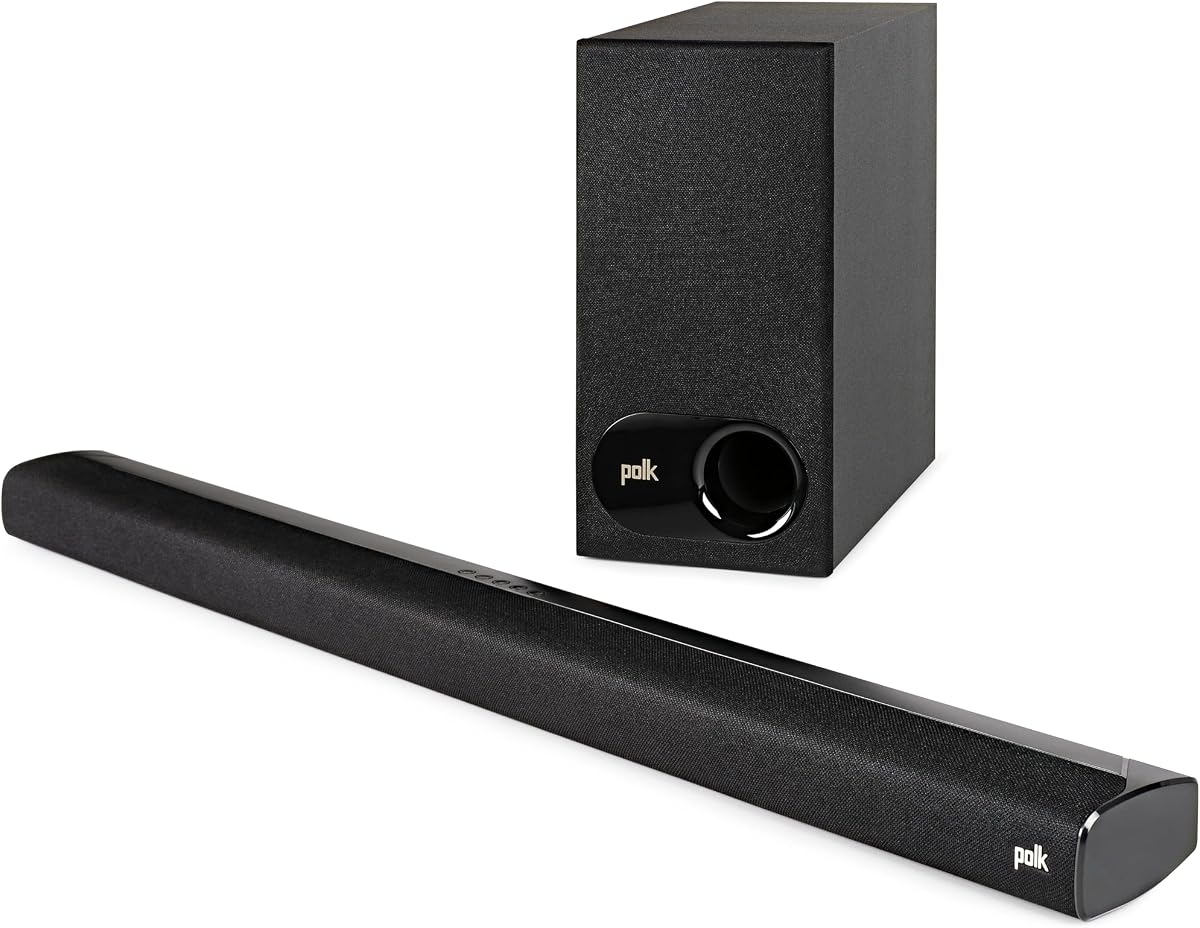
The Polk Audio Signa S2 carries a 4.4 rating and combines a slim soundbar, a wireless subwoofer, and a dedicated focus on vocal intelligibility. Its exclusive VoiceAdjust technology is designed to maximize audio clarity, while Dolby Digital decoding helps reproduce familiar television and streaming formats.
We may earn a commission when you buy through this link, at no additional cost to you.
Five full-range drivers provide a fuller main soundbar than the smallest two-driver designs. The subwoofer handles deeper bass independently, allowing movies and music to gain impact without taking the burden of low-frequency reproduction away from the part of the system responsible for dialogue. This separation can make voices seem more stable during loud scenes.
The ultra-slim enclosure is just over two inches tall, so it can sit in front of many televisions without blocking the bottom edge or infrared remote sensor. Wall mounting is also possible. HDMI, ARC optical, and AUX inputs provide broad compatibility, while Bluetooth permits wireless streaming from compatible phones and tablets.
Its limitations center on modern spatial audio. There are no listed height channels, upward-firing drivers, or object-based surround codecs, so it cannot create the same overhead presentation as Dolby Atmos models. Even so, it is a strong option for people who want clear voices, substantial bass, and a slim physical design without a complicated installation.
VoiceAdjust gives the system a direct method for improving intelligibility. It is a useful complement to the separate subwoofer, which keeps bass energy from making the main bar's vocal presentation less clean.
The low-profile main unit suits televisions with limited shelf space. The included wireless subwoofer can then be positioned separately, providing low-frequency impact and greater placement flexibility.
We may earn a commission when you buy through this link, at no additional cost to you.
The best soundbar for clear speech is not simply the model with the most impressive surround specifications. Speech intelligibility depends on vocal processing, channel design, room acoustics, source quality, viewing distance, and how comfortably the system responds to adjustments.
A dedicated center speaker is one of the strongest indicators that a soundbar is equipped to reproduce dialogue faithfully. Television dialogue is normally mixed to the center, so a focused speaker gives voices a consistent location and helps them remain audible when music, crowd noise, and effects spread across the wider soundstage. Models such as the Samsung HW-B630F and TCL S65K explicitly include a center channel, while other systems create a similar effect through their full driver array.
Prioritize a physical center channel when voices are frequently buried or you watch a great deal of news, sports, and dialogue-heavy drama. Virtual center imaging can be helpful, but a dedicated driver generally offers a more consistent foundation.
Dialogue modes can adjust the relative level of vocals, reduce background effects, or emphasize high frequencies that support consonant recognition. Useful systems offer both automatic and manual control. Automatic adaptation is convenient when program material varies, while a manual dialogue button lets viewers respond immediately to a quiet or dense scene. Look for features that adjust the vocal mix rather than merely raising overall volume.
Choose processing that sounds natural and easy to disable. Excessive voice isolation can make dialogue sound thin, detached, or overly processed, so compare the mode with your normal sound setting whenever possible.
A separate subwoofer can improve movie impact while allowing the main bar to concentrate on voices. It also helps prevent forceful low-frequency effects from masking midrange consonants. Some systems include a wireless woofer, while compact alternatives use a built-in driver. A wireless subwoofer reduces cable clutter but still requires its own power outlet and suitable placement away from nearby walls.
Choose a separate subwoofer for fuller home-cinema sound, or a built-in woofer when simplicity and a smaller footprint matter more. In either case, start with moderate bass so speech remains balanced.
A soundbar's sound changes with television size, furniture placement, room dimensions, and reflective surfaces. Automatic calibration can measure these conditions and make broad tonal corrections, reducing the need for complicated manual tuning. The Samsung HW-S60D and TCL S65K both advertise room-analysis features. Even with calibration, the bar should have breathing room and the subwoofer should not be tucked into a corner.
Favor a system with calibration when your room is irregular, but still position it thoughtfully. A well-placed model with basic processing can outperform a capable system that is obstructed or poorly positioned.
Clear speech and cinematic immersion are related but separate goals. Dolby Atmos, DTS:X, and virtual surround processing can create a convincing sense of space, while dedicated rear speakers provide more precise separation than simulation. For everyday dialogue, a dependable center channel and voice mode may matter more than height effects. For action films, a robust 5.1 system with a subwoofer and rear speakers offers greater spatial realism.
Match the format to your content and television capabilities. Native surround is most useful when the source provides it, whereas upmixing engines such as TrueSpace can make ordinary stereo broadcasts sound wider.
HDMI or ARC provides the primary path for television audio, while optical and AUX inputs broaden compatibility with older televisions, projectors, and game systems. Bluetooth is useful for music and podcasts, and Wi-Fi streaming adds convenient access to services. Consider whether you want one remote, a mobile app, voice control, or a combination. A compatible television remote can simplify operation, although soundbars with additional modes may still benefit from a dedicated controller.
Check the ports and control options before buying, especially if you already own a particular television, streaming device, or gaming console. Ensure the included cables and required connection methods align with your setup.
The best-sounding bar is not useful if it blocks the display or crowds the media console. Compact systems such as the Bose TV Speaker, Sonos Ray, and Samsung HW-B400F suit smaller spaces and secondary televisions. A full 5.1 package requires room for a subwoofer and rear speakers. Wall-mounting can save shelf space, but it changes the sound field and may require suitable brackets.
Measure both the television area and the intended listening distance. Choose a size that fits the furniture, remains unobstructed, and matches the room's scale without overwhelming nearby seating.
A soundbar that doubles as a streaming speaker can provide more value than a minimal TV-only model. Sonos and Bose options offer extensive wireless music platforms, while several Samsung models include voice assistants and smart integrations. These features are convenient for users who want podcasts, radio, albums, and television audio from one device. They are less essential when another speaker already serves those roles.
Prioritize smart features when they improve daily convenience, but avoid paying for capabilities you will not use. Core sound quality, reliable television connection, and effective speech controls should remain the foundation of the decision.
Begin with the correct source format. Connect the soundbar to the television using the highest-quality supported digital connection, then select the matching television audio output. Keep the television's own speaker processing disabled when possible so the soundbar receives a clean signal. Update the television and soundbar software, then perform any room-calibration process before deciding whether additional adjustments are necessary.
For clearer speech, begin with a neutral or dialogue-oriented setting and set the overall volume to a comfortable level. Avoid compensating for quiet voices by turning everything up loudly, because this can make the soundbar's automatic volume boost or dialogue mode work harder than intended. Adjust voice enhancement and bass separately, listening to dialogue across several programs rather than judging the result from one brief scene.
Place the main bar directly below or above the television when space allows, and leave a small gap for ventilation. Position a wireless subwoofer near the front wall, then adjust it away from corners if bass becomes boomy. Keep rear speakers at ear height and away from enclosed cabinets. Dust the grille gently, use a dry microfiber cloth, and avoid pushing buttons or cables into narrow spaces.
The most important features are a dedicated center channel, dialogue-enhancement modes, and a voice-balanced default sound profile. Automatic scene analysis can also help by emphasizing voices during quiet or effect-heavy scenes. The room itself, source quality, and correct placement have a major influence on perceived intelligibility.
A center channel usually provides a more stable and natural presentation for dialogue because television dialogue is commonly mixed to the center. Compact systems can still produce clear voices through full-width drivers or virtual processing, but a physical center driver offers a consistent foundation when music and effects are also present.
Not necessarily. Dialogue mode is most useful for news, interviews, documentaries, and quiet scenes rather than every type of content. Leaving it on can make films sound overly processed or separate voices unnaturally from the action. Try it when needed and compare the result with the normal sound setting.
No. A subwoofer primarily adds low-frequency impact and can help prevent bass effects from masking midrange details, but it is not required for intelligible dialogue. A model with a dedicated center speaker and good voice processing can deliver clear speech without a separate woofer, while many buyers may prefer the fuller balance provided by one.
Leave enough room for ventilation and for the television's front speakers, microphone, sensors, and controls. Avoid enclosing the bar in a tight shelf. If it is wall-mounted, follow the manufacturer's brackets and positioning guidance, and make sure the room calibration is repeated after installation.
Yes. Optical and AUX inputs allow many soundbars to work with older televisions, while modern models may also support Bluetooth music independently. Check the television's available audio outputs and the soundbar's input compatibility before purchasing, and select the proper output setting on the television.
Virtual surround can create a convincing sense of width and movement from a compact system, but it cannot provide the same rear-to-front separation as physically placed speakers. A full 5.1 package is usually better for large films and a dedicated gaming room, while a virtual system is more convenient for smaller spaces.
Use the soundbar's dialogue, voice-enhance, or adaptive sound feature, and keep bass moderate so low-frequency effects do not obscure consonants. Correct placement and a stable center channel also help. If speech remains difficult, reducing surrounding room noise can make a noticeable difference.
The Samsung HW-B630F is the strongest all-around recommendation because its dedicated center channel directly supports intelligible dialogue while adaptive processing, virtual surround, and an included wireless subwoofer provide a complete home-theater feature set. The Samsung HW-B400F serves budget-conscious buyers who want automatic voice amplification and integrated bass, while the Sonos Beam Gen 2 is the premium choice for Dolby Atmos, refined room tuning, streaming, and future expansion.
Your priorities should guide the remaining decisions. Choose a physical center channel when speech is the main concern, a subwoofer and rear speakers when movie impact matters, and automatic dialogue processing when you regularly watch programs with widely varying levels. Room calibration, placement, and bass control remain essential even when a soundbar offers advanced voice features.
Before making a final purchase, confirm compatibility with your television, check which cables and components are included, and review the latest product listing for updated specifications. Prices, bundles, and promotions can change, so compare the complete system rather than judging only by the headline channel count or temporary discount.