
YesBes Cord Hider Kit
4.4Editor score
116-inch total raceway length
Adhesive installation without drilling
Cuttable and paintable design
Our Cable Hider for Wall Mount TV guide compares surface raceways, in-wall kits, capacity, installation methods, and cable-management features.
A wall-mounted television can look polished while the cables below it undermine the entire installation. A well-chosen cable hider conceals exposed cords, creates a cleaner viewing area, and can make cables less accessible to children and pets. The right solution depends on wall type, routing plan, cable quantity, and whether you prefer surface-mounted or in-wall installation.
We compared ten cable-hiding products by examining their stated dimensions, installation methods, included components, paintability, flame-rating information, and suitability for television connections. The list includes adhesive raceways, low-profile hinged covers, longer multi-piece kits, and more involved in-wall systems with power modules, pass-throughs, cutting tools, or recessed outlets.
Each pick highlights a different practical advantage, from flexible cable capacity to discreet finishes or a nearly invisible wall installation. Product ratings reflect the supplied customer feedback, while features and limitations are based on the manufacturers' stated information. Retail prices and promotions change frequently, so check the current listing before making a final purchasing decision.
4.4Editor score

4.6Editor score

4.7Editor score
The comparison below covers ten solutions with distinct installation requirements, from adhesive surface raceways to recessed in-wall power systems. Review cable capacity, total coverage, included hardware, and wall compatibility before choosing the approach that best suits your television setup.
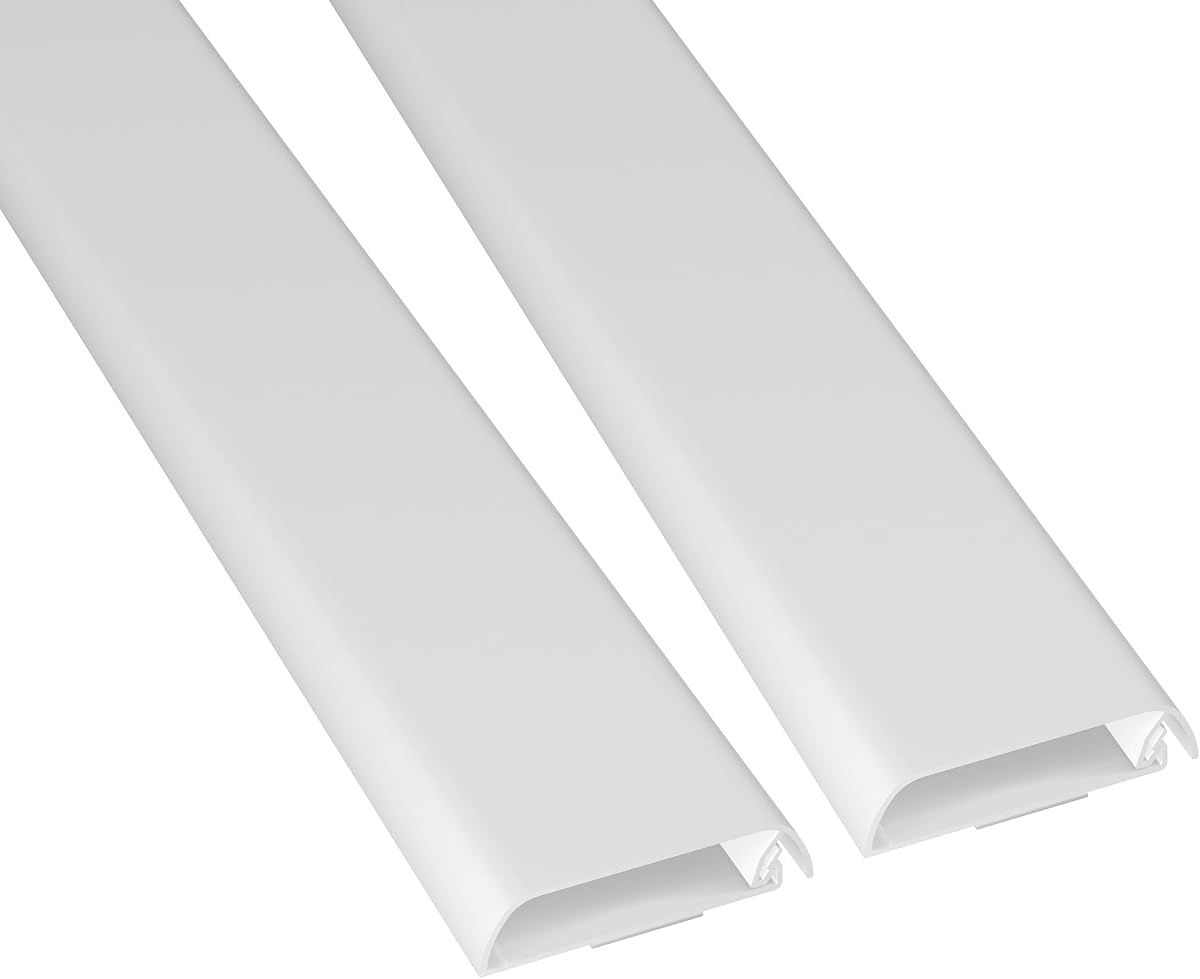


The YesBes Cord Hider Kit is a self-adhesive surface raceway designed to organize the cables associated with a wall-mounted television. It holds a 4.4 rating and stands out for its 116-inch total length, included corner fittings, and unusually generous accessory package. The 0.96-inch internal width and 0.57-inch internal height provide a practical route for a selection of common television cables.
We may earn a commission when you buy through this link, at no additional cost to you.
Installation is based on strong adhesive backing rather than screws, making this kit appealing for renters, homeowners, and anyone who wants a fast cosmetic improvement without drilling. Six couplings, two L-shaped elbows, and one T-fitting allow the route to turn corners or branch when the television setup requires a more complex path. The cover can also be cut with a sharp tool and painted to blend with the surrounding wall.
The most important limitation is that the manufacturer specifically advises against using the tape on textured walls. Surface texture, dust, residue, or paint condition can affect adhesion, so every section should be positioned carefully rather than repeatedly removed and repositioned. Its interior is also smaller than the wide-body kits in this list, making cable diameter and quantity important considerations before purchase.
This is a strong choice for viewers who want substantial cable coverage without a complicated in-wall project. It is especially useful for a straight or modest corner route, and the included fittings make it more versatile than a simple one-piece cover. For smooth walls, several household cables, and a preference for tool-free installation, it is a practical budget-oriented recommendation.
The couplings and L-elbows turn separate raceway sections into a continuous-looking route. A T-fitting also allows a branch when a device cable needs to travel in a different direction from the main television run.
The white cover is designed to be cut and painted, allowing it to blend into a wall rather than remain an obvious plastic strip. Careful trimming and light surface preparation help produce a cleaner finished appearance.
We may earn a commission when you buy through this link, at no additional cost to you.
The D-Line TV Wall Mount Cord Hider is a two-piece surface system built around a low-profile hinged design. It carries a 4.3 rating and offers 31.4 inches of total length. Its notable feature is the concealed flexible hinge, which allows the cover to open for cable placement and then close with a click-lock finish.
We may earn a commission when you buy through this link, at no additional cost to you.
The broad 2.36-inch width may be useful around a television bracket or service area, while the 0.59-inch height keeps the channel relatively shallow. Strong self-adhesive backing makes installation a peel-and-stick process. The manufacturer recommends cleaning the wall first so dust or residue does not interfere with the bond.
This product is less comprehensive than the long Delamu, EVEO, and YesBes kits because it includes only two raceway lengths and no stated corner connectors. It is therefore better suited to a short cable drop than a complicated path extending around a room. The requirement to sand and apply two coats of paint for a matched finish also adds a little finishing work.
Choose the D-Line when a clean, hinged appearance matters more than maximum route length. It is a good match for a compact installation where the main goal is concealing a short bundle of television cables directly below the screen. Its straightforward access mechanism also makes later cable adjustments more convenient than with a permanently closed raceway.
The flexible hinge opens wide enough to place cables and clicks shut after installation. This makes the product practical when a connection may need to be added, replaced, or adjusted later.
At 0.59 inches high, the raceway sits close to the wall. Combined with its white finish and paintable surface, it can appear less prominent than bulkier surface-mounted alternatives.
We may earn a commission when you buy through this link, at no additional cost to you.
The Delamu 157-Inch Cord Hider is a long surface raceway intended for organizing several household cables. Its 4.5 rating, 157-inch total length, and stated ability to cover two to four wires make it a versatile middle ground between short cosmetic covers and whole-house cable systems.
We may earn a commission when you buy through this link, at no additional cost to you.
The attach-and-snap structure allows the cover to be opened after cables are placed. High-quality PVC construction is highlighted in the product information, as is a UL94 V-0 plastics flammability rating. The raceway can be cut to fit a shorter route and painted to coordinate with the wall or surrounding décor.
Its narrow profile may not suit unusually bulky power adapters or a large number of overlapping cables. The supplied information also emphasizes following the instructions and planning the installation route. Because adhesive-backed raceways can damage paint if repeatedly pulled away, deciding the complete path before mounting is sensible.
This Delamu kit is a good all-around choice for a television setup that includes several wires and may extend beyond the area immediately beneath the screen. It offers greater length than compact models and a less involved installation than an in-wall kit. It is particularly attractive for users who want a clean route, straightforward cable access, and the option to match the cover to their wall.
The raceway is intended for groups of common household cables, including television power, speaker, network, and similar cords. Checking cable thickness first helps confirm that the planned bundle will fit without forcing the lid closed.
The removable cover lets installers place wires first and close the channel afterward. That design also makes it easier to reach a connector if the television or attached equipment is repositioned.
We may earn a commission when you buy through this link, at no additional cost to you.
The Delamu Large TV Cord Hider combines a useful internal size with six separate raceway sections. It has a 4.6 rating and is specifically described as accommodating three to four television, audio, network, HDMI, optical, Cat6 Ethernet, or USB wires. The 1.18-inch width and 0.67-inch height give it noticeably more room than the standard narrow kits.
We may earn a commission when you buy through this link, at no additional cost to you.
Installation uses strong adhesive and a snap-on cover. A slide-on option is also mentioned, adding flexibility when working in a confined area beneath a television. The raceway can be cut to a required length and painted to match the wall, while the stated UL94 V-0 rating adds a meaningful material-safety consideration.
The product information warns that the tape is very sticky and recommends planning the route before installation. Accessories are not included, so buyers should not expect separate elbows or couplings beyond the six stated pieces. Its wider profile may also be less suitable when the space behind a television is extremely tight.
This is the most versatile surface-mounted option in the list for a conventional home entertainment setup. It offers a better balance of cable capacity, manageable section length, paintability, and straightforward access than the narrow covers. Choose it when you expect to route three or four cords along a wall and want a clean result without cutting into the wall.
A broad interior makes this kit more practical when power, HDMI, Ethernet, and audio cables need to travel together. The stated three-to-four-wire capacity provides a clearer target than simply choosing a cover by its exterior length.
Six individual sections can be arranged around furniture or along a multi-direction wall route. Cutting and joining the pieces as needed helps avoid forcing a rigid full-length channel into an awkward space.
We may earn a commission when you buy through this link, at no additional cost to you.
The TV Wire Hider In-Wall Kit offers a different solution from surface raceways by routing television cables through the wall cavity. It has the highest supplied rating in the group at 4.8. The kit includes two pass-throughs and a hole saw drill attachment, providing the core components needed for a concealed installation.
We may earn a commission when you buy through this link, at no additional cost to you.
Its stated compatibility covers perforated walls between 12 and 18 millimeters thick, including plaster and wood-plank walls. Thicker hole-saw and drilling accessories are designed to help the pass-throughs fit neatly, while the white fittings are intended to blend into the surrounding wall once the opening is finished.
Unlike a peel-and-stick raceway, this method requires drilling and some care around the television mounting location. Wall composition and thickness must be confirmed before cutting, and the available cavity space should be checked. It also focuses on cable passage rather than providing a recessed power outlet.
This kit is a strong fit for a homeowner who wants cables to disappear between wall surfaces and already has suitable drilling equipment. It offers a particularly clean result when a surface raceway would be conspicuous. Confirm wall construction, cable paths, and local requirements before beginning this more involved installation.
Cables pass between the visible wall faces rather than remaining in an external channel. Once the openings are finished, this approach creates less visual interruption around the television.
The stated 12–18 millimeter range is important because wall thickness affects how the fittings seat. Plaster and wood-plank construction are identified as suitable examples, but other walls may require different hardware.
We may earn a commission when you buy through this link, at no additional cost to you.
The ECHOGEAR In-Wall Cable Management Kit is designed to conceal both television power and low-voltage cables. It carries a 4.7 rating and pairs upper and lower modules with a six-foot extension cord, drywall hole saw, driver bit, and pre-wired grommets. The stated installation goal is a professional-looking result without hiring an electrician.
We may earn a commission when you buy through this link, at no additional cost to you.
Its flexible interior can accommodate up to four large HDMI cables along with Ethernet and audio cords. Locking wings secure the modules behind the wall, while the grommets are paintable for a more integrated finish. ETL certification is a key distinction from basic decorative raceways because the product includes an in-wall power connection.
Installation is more involved than applying adhesive to a wall. The drywall must be cut with the supplied hole saw, and the location must be checked for obstructions, wiring, and sufficient space for the 3.25-inch-deep modules. The manufacturer says the complete process can take less than 30 minutes, although experience and wall conditions will affect the actual time.
This is the strongest premium pick for a finished home theater or a renovation where concealing cables within the wall is worth the added complexity. It handles power and signal wiring together, reduces exposed cord clutter, and leaves the visible wall looking more deliberate. It is less appropriate for renters or anyone unwilling to cut into drywall.
The upper and lower module arrangement separates the power extension from the low-voltage path while keeping both behind the wall. This is more comprehensive than a simple decorative cover that merely conceals a cable bundle.
Locking wings hold the modules securely behind the wall, and the paintable grommets help reduce the visual impact of the openings. The result is designed to look intentional beside a mounted television.
We may earn a commission when you buy through this link, at no additional cost to you.
The EVEO 306-Inch Cable Hider is a comprehensive surface system consisting of 20 individual raceway sections totaling 306 inches. It has a 4.6 rating and is intended for cable management across a home, office, or multiple entertainment areas rather than only a short television drop.
We may earn a commission when you buy through this link, at no additional cost to you.
Each section measures 16 inches long with an internal width of 0.95 inches and an internal height of 0.5 inches. That low profile suits tight spaces, and the numerous short sections can be arranged around corners or divided among different cable routes. Installation may use either adhesive tape or screws, depending on the surface and the desired permanence.
The narrow interior may be less suitable for thick power cords, oversized adapters, or a very large bundle. With 20 pieces, accurate measurement and planning are essential to avoid cutting excess material or ending with unwanted leftovers. Screw installation also requires appropriate wall hardware when used.
EVEO is a good choice for a household seeking one cable-management system across several rooms. It offers unusual flexibility because the many short sections can be distributed according to the available routes. If your requirement extends beyond a single television wall, its total coverage and low-profile proportions make it more versatile than a short decorative cover.
The 306-inch total and 20 separate sections allow the same kit to serve entertainment centers, offices, lamps, and other cable routes. Unused sections can remain available for future projects.
The raceway may be installed with tape or screws, providing flexibility for different surfaces and preferences. The final method should match the wall material and how permanently the route is intended to remain.
We may earn a commission when you buy through this link, at no additional cost to you.
The Mount-It! in-Wall TV Cable Concealer Kit combines a recessed triple outlet with a dedicated path for low-voltage cables. It has a 4.7 rating and is designed for a polished home-theater installation. Its plug-in power system includes a nine-foot cord and does not require hard-wiring the outlet into household wiring.
We may earn a commission when you buy through this link, at no additional cost to you.
The recessed opening can accommodate HDMI, Ethernet, and other A/V cables while keeping the power connection close to the television. The package includes two wall plates, pre-installed screws, a drywall hand saw, a cutting template, and instructions. ETL in-wall certification is an important safety detail for a product intended to carry power behind drywall.
The fit requirements are significant. The large plate is 6.3 by 7.9 inches, requires a cutout between studs, and needs at least 2.4 inches of cavity depth. The smaller plate is 4.5 inches, but buyers should still verify their wall conditions. Cutting errors can enlarge the opening beyond what the plate conceals.
This kit is best for homeowners who want a conveniently accessible, hidden power source and are willing to cut the wall. It combines more integrated power functionality than basic raceways or pass-through kits. Measure carefully, confirm cavity depth, and use the supplied template before making any cut.
The recessed triple outlet gives connected equipment a nearby power source without a cable extending visibly to a conventional wall receptacle. Its plug-in design also avoids requiring a hard-wired electrical connection.
The large wall plate has explicit space and stud-placement requirements. Confirming those measurements before drilling protects the wall and helps prevent an opening that is larger than the cover can conceal.
We may earn a commission when you buy through this link, at no additional cost to you.
The Yecaye TV Cord Hider is a compact three-piece system intended to conceal dangling HDMI, power, and internet cables beneath a wall-mounted television. It has a 4.5 rating and provides 42 inches of total length. Each of the three sections can be installed separately or joined together for a continuous route.
We may earn a commission when you buy through this link, at no additional cost to you.
Its internal width of 1.18 inches and internal height of 0.6 inches create enough room for an estimated three to four typical wires. The cover can slide on or snap on, offering more than one way to handle installation in the restricted area below a television. Pre-applied adhesive makes the mounting process tool-free.
Forty-two inches is less coverage than the larger surface kits, so the product is most appropriate for a compact drop rather than a route spanning much of the room. The dimensions of the actual cables should be checked, particularly if one includes a bulky power connector. For a neat result, the three section joints also require careful alignment.
This is a useful option for a smaller television wall or an installation with only a short exposed run. It offers more internal width than narrow raceways without requiring wall cutting. Choose it when convenience and a tidy underside treatment matter more than total system length.
Separate 14-inch sections are easier to position in the limited space below a television than one long rigid cover. They can be arranged independently when the cable path does not form a single straight line.
The cover supports both snap-on and slide-on handling, giving users flexibility in tight spaces. The connection points also allow three sections to form a longer route when required.
We may earn a commission when you buy through this link, at no additional cost to you.
The Large Cord Hider is the broadest surface-mounted product in this comparison, measuring 1.6 inches wide and 0.8 inches high. It has a 4.6 rating and consists of three 15.7-inch sections totaling 47 inches. The manufacturer states that the internal channel can accommodate up to four HDMI cables or five Cat6 Ethernet cables.
We may earn a commission when you buy through this link, at no additional cost to you.
Its generous cross-section is useful for installations where several cables or substantial connectors need to travel together. Strong pre-applied adhesive supports tool-free installation, and the smooth, glazed surface is designed to be painted for a more integrated appearance. The three sections can be joined or used for separate routes.
The large profile may protrude more than a low-profile raceway, which matters behind a shallow-mounted television or in a narrow room. The installation guidance emphasizes pre-positioning because removing strong tape can damage the wall. Slightly heating the adhesive at low temperature is suggested for a stronger bond.
Choose this kit when cable capacity is the main concern or when the television setup includes several unusually thick wires. It offers more room than most narrow raceways while remaining easier to install than an in-wall power system. Its broad dimensions are an advantage for bundling and a tradeoff for visual bulk.
The wide and tall interior can handle multiple HDMI or Ethernet cables, including installations where a narrow raceway would become crowded. It is particularly useful for complex entertainment centers.
Strong tape helps the raceway remain stable, but repeated removal may damage the wall. Measure the route, clean the surface, and attach each section only after its final position is confirmed.
We may earn a commission when you buy through this link, at no additional cost to you.
The most suitable cable hider depends on your wall construction, available space, cable bundle, and tolerance for installation work. Use the following factors to narrow the field before comparing surface raceways, pass-throughs, and recessed power systems.
A surface raceway is the simplest option because it remains visible as a narrow channel attached to the wall. It avoids cutting and is well suited to smooth surfaces, temporary installations, and renters. An in-wall system hides cables within the wall cavity for a cleaner appearance, but it requires drilling, careful measurements, and enough space behind the drywall. Surface systems are easier to adjust, while in-wall installations are generally more permanent and visually refined.
Choose a surface product when convenience matters, and choose an in-wall product when a built-in appearance outweighs installation complexity.
Cable capacity depends on both the internal width and the internal height of the raceway. Count the power, HDMI, Ethernet, optical, audio, and other wires that must travel together, and consider the diameter of the largest cable. A channel advertised for three or four wires may be tight if those wires are unusually thick or fitted with bulky plugs. Larger models offer extra room but protrude farther from the wall.
Select a channel with comfortable internal space, not merely a stated wire count, and verify the dimensions of your actual cords.
A television mounted above a media console may need only a short drop, while a setup with components on a side wall may require a longer horizontal route. Total kit length should cover the visible cable path plus any planned vertical section. Long kits with many pieces are useful for several rooms but require more planning. Short, modular systems are easier to position in confined areas and may be sufficient for a compact installation.
Measure the full intended route, including corners, before choosing a total length, and favor modular kits when the path is irregular.
Self-adhesive raceways work best on smooth, clean, dry surfaces. Dust, residue, texture, and incompatible paint can weaken the bond. The YesBes kit specifically warns against use on textured walls, while other products encourage pre-positioning to avoid removing and reapplying tape. Screw-mounted raceways offer a different option, but they still require suitable wall hardware. In-wall systems demand a more exacting assessment of drywall, plaster, wood framing, and cavity depth.
Test the surface when possible, clean it before mounting, and choose screws or an in-wall solution if adhesive conditions are uncertain.
A hinged or snap-on cover is valuable if cables will be added, replaced, or serviced after installation. The D-Line uses a concealed hinge and click-lock lid, while several Delamu and Yecaye sections open or slide for access. Permanently sealed covers may look tidy but can make maintenance inconvenient. Ensure the selected design can be opened without removing the entire raceway or damaging the wall.
Prioritize removable access when your equipment changes often, and favor a simpler closed profile when appearance is the only concern.
White raceways can blend into a white wall, but paintable surfaces allow a closer match when walls use another color or textured finish. Light sanding and multiple coats of compatible paint may be needed for the best result. Cutting the cover to the exact route and carefully aligning section joints further reduces its visual impact. For in-wall fittings, painting the grommets or wall plates can also make the finished opening look deliberate.
Plan trimming, joint alignment, and paint preparation before installation, because moving a mounted section can mar the wall.
Adhesive raceways generally need only cleaning and positioning, although a saw or sharp scissors may be used to shorten them. Kits that route cables through walls include hole saws, drill attachments, templates, or hand saws. Recessed power kits may also include extension cords, wall plates, driver bits, and locking components. Confirm that the supplied tool matches your drill and that you have the required wall access before beginning.
Inventory every included component and compare it with your wall type, cable list, and available tools before ordering.
For decorative raceways, flame-rating information can help distinguish the stated material construction. For systems that place power behind a wall, ETL in-wall certification is a more relevant safety feature because the assembly includes electrical components. Even with a certified kit, follow the instructions, avoid extending or altering the supplied power connection, and check local requirements where applicable. Low-voltage cables should remain separate from the power path as directed by the manufacturer.
Prioritize certified in-wall power systems for concealed electrical connections and follow all included safety instructions exactly.
Begin by planning the complete cable route. Identify every power and signal cable that needs to travel from the television to its source, then measure the wall path and test the raceway's internal width. Clean the selected area thoroughly and allow it to dry. For in-wall products, inspect the cavity for obstructions and confirm wall thickness, stud position, and required clearance before making any cut.
For a surface-mounted system, position the cover without pressing it into place, mark the route, and trim sections as needed. Remove the adhesive liner one section at a time and press firmly along the full length. Place the cables inside and close the hinged, sliding, or snap-on cover. For in-wall systems, follow the supplied template and assembly instructions, avoid damaging concealed utilities, and confirm that modules or grommets sit securely before reconnecting the television.
To maintain the installation, inspect the route periodically for loose sections, pinched cables, or accumulated dust. Clean the visible cover with a soft, lightly damp cloth and avoid harsh chemicals that could damage the finish. If painting is required, use a compatible product and allow each coat to dry before handling the lid. Never force unusually thick cables into a narrow channel, and disconnect power before changing a concealed connection.
The best type depends on your wall and cable layout. A surface raceway is easiest to install and works well on smooth walls, while an in-wall kit creates a cleaner appearance but requires drilling. Choose based on how much the visible cover will bother you and whether you can accommodate a permanent wall opening.
Yes, most of the listed surface raceways are described as paintable, and the ECHOGEAR and Mount-It! systems include paintable wall components. Light surface preparation and compatible paint can help the cover blend into the wall. Confirm the product instructions before painting and allow the finish to cure before installing or handling the cover.
Use the stated internal width and height, then compare them with the thickness of your actual wires. A rating for three or four cables assumes ordinary household cables and does not account for every bulky power adapter. The extra-wide 47-inch kit is the strongest choice when you expect several thick cables.
They work best on smooth, clean surfaces because texture can reduce contact area and weaken adhesion. The YesBes kit specifically warns against using its tape on textured walls. For textured surfaces, consider a screw-mounted raceway, an appropriate in-wall solution, or another fastening method recommended by the manufacturer.
It is possible only with a system designed and certified for in-wall power, and you must follow its instructions carefully. The ECHOGEAR and Mount-It! options include power-related components and stated safety certifications. Low-voltage cables should be routed as directed by the manufacturer, and local electrical rules still apply.
A slim raceway looks less noticeable and works well for a small number of thin cables. A wide model provides more capacity for HDMI, power, Ethernet, and audio wires but protrudes farther from the wall. Measure the space behind the television and prioritize comfortable capacity over a minimal profile if your bundle is substantial.
Yes, the D-Line, Delamu, and Yecaye products are designed with hinged, snapping, or sliding access. This makes it easier to add or replace a cord without removing the complete raceway. Products with fixed covers may require removal of the entire channel, so check the installation method before purchasing.
Measure twice before cutting and align the sections carefully before pressing the adhesive into place. Many kits include matching connectors, couplers, or designed splice points that help close small gaps. Avoid removing repositioned sections after mounting because strong adhesive may lift paint or damage the wall.
The YesBes Cord Hider Kit offers the most economical surface-routing approach, with 116 inches of coverage and useful corner fittings. The Delamu Large TV Cord Hider is the standout general choice for viewers who need room for three or four cables, while the ECHOGEAR In-Wall Cable Management Kit delivers the most polished concealed result with integrated power and ETL certification.
Prioritize the installation method that suits your wall, then confirm the route length and internal capacity. Compact systems are easiest to place beneath a television, long modular raceways suit extended routes, and extra-wide covers are useful for dense cable bundles. If the visible profile is unacceptable, select an in-wall pass-through or recessed power kit and verify all cutout dimensions first.
Product availability, customer feedback, and retail promotions can change over time, so review the current listing before purchasing. Compare the latest ratings, package contents, dimensions, and installation instructions rather than relying only on a product photograph. The right cable hider should fit your cables, wall, and future maintenance plan while making the mounted television area look cleaner and more intentional.